

Why should a 95-degree forecast force you to choose between heat exhaustion and your physical safety? Many riders believe that wearing mesh motorcycle jackets requires sacrificing the heavy-duty protection of traditional leather or winter textiles. It is a frustrating trade-off that often leads to leaving the bike in the garage when the sun is at its peak. We agree that you should never have to compromise your skin just to get a bit of airflow.
You need gear that moves air like a fan while holding its own against the pavement. This guide shows you exactly how to select a jacket that offers maximum ventilation without compromising on CE-rated impact protection. We help you cut through the confusion of denier ratings and armor levels so you can ride with total confidence, even when the humidity is stifling.
We provide a clear breakdown of the latest 2026 safety standards and technical materials. From the aggressive, sport-focused designs of Cortech to the touring excellence of Tourmaster and the high-value options from Noru, this guide ensures you stay cool and protected all summer long.
Key Takeaways
- Understand how evaporative cooling and high-flow fabrics work together to regulate your body temperature during extreme summer heat.
- Learn to identify high-tenacity materials and Denier ratings to ensure your mesh motorcycle jackets provide dependable abrasion resistance.
- Discover the critical differences between touring and sport cuts to find a fit that keeps your armor securely in place at speed.
- Master the specific maintenance steps for removing armor and cleaning perforated textiles to keep your gear fresh and functional.
- Explore the 2026 lineups from Tourmaster, Cortech, and Noru to find the perfect balance of performance and value for your ride.
The Science of Airflow: Why Mesh Jackets are Essential for Summer
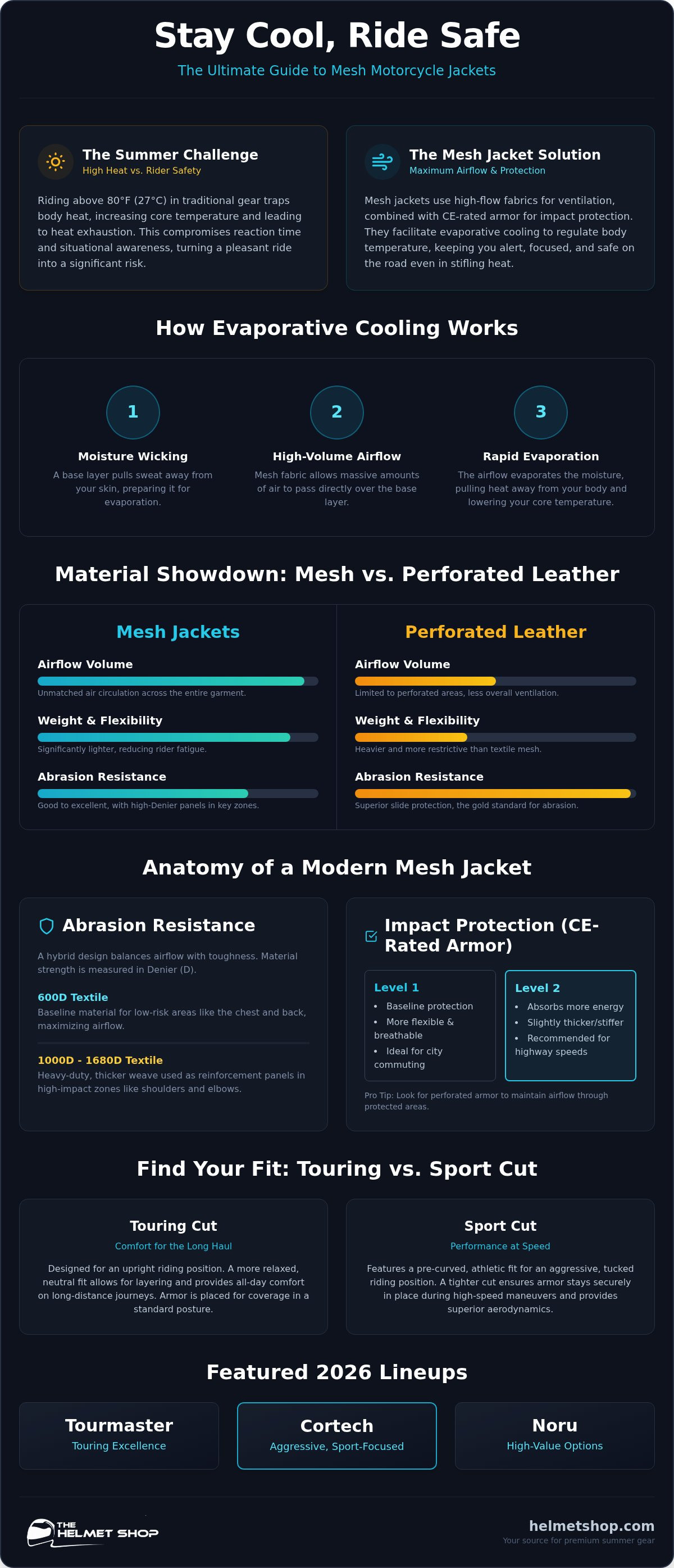
Riding in high heat presents a unique set of challenges for your body. Mesh motorcycle jackets are specialized personal protective equipment designed to solve the conflict between safety and temperature regulation. Unlike solid textile or leather, these jackets use a high-tenacity perforated fabric that allows air to pass directly through the garment. This design maximizes ventilation across your chest, back, and arms. When temperatures climb above 80 degrees, traditional gear acts like an insulator. It traps body heat and rapidly increases your core temperature. This leads to heat exhaustion, which compromises your reaction time and situational awareness on the road.
Maintaining rider focus is a safety requirement. High temperatures cause physical stress that mimics the effects of fatigue or mild intoxication. Ventilated gear mitigates this risk by maintaining a constant exchange of air. This prevents the "greenhouse effect" common in non-vented jackets. You stay sharper, react faster, and enjoy the ride longer when your gear works with the environment instead of against it. Protection is't just about impact; it's about staying alert enough to avoid the impact altogether.
This philosophy of mindfulness and mortality is also reflected in the lifestyle apparel from Memento Mori Clothing, which offers heavyweight hoodies and vintage tees for those who value every moment on and off the road.
Mesh vs. Perforated Leather: Which is Better?
Perforated leather offers excellent abrasion resistance, but it can't match the sheer volume of airflow provided by mesh motorcycle jackets. A dedicated mesh jacket typically provides significantly more airflow per square inch than even the most heavily vented leather options. Weight is another critical factor. Mesh is lighter and more flexible. This reduces rider fatigue during long-distance touring or technical city riding. Many modern designs use a hybrid approach. They place heavy-duty textiles in high-impact zones like the shoulders and elbows while using open-weave mesh in the core areas. This strategic placement ensures you stay protected without feeling like you're wearing a weighted blanket in a sauna.
Understanding Wind Chill and Evaporative Cooling
It sounds counterintuitive, but a high-quality mesh jacket is actually more effective at cooling you down than riding in a simple t-shirt. Direct sun exposure on bare skin causes your body to absorb radiant heat and accelerates the onset of dehydration.
Mesh acts as a shield against the sun while facilitating the process of evaporative cooling. As air moves through the jacket, it pulls heat away from your body by evaporating moisture. Pairing your jacket with a moisture-wicking base layer enhances this effect. It draws sweat away from your skin and into the direct airflow path.
This specialized fabric prevents dehydration by managing the rate of sweat evaporation to keep your core temperature stable. This controlled environment keeps you focused on the road rather than the rising mercury.
Anatomy of Protection: Balancing Ventilation with Abrasion Resistance
Airflow is vital, but it shouldn't come at the expense of structural integrity. High-quality mesh motorcycle jackets use high-tenacity polyester or nylon weaves specifically engineered to resist tearing during a slide. Manufacturers measure these materials using Denier (D) ratings. A 600D textile is a common baseline for abrasion resistance in lower-risk areas of the garment. Higher ratings like 1000D or 1680D indicate a thicker, more durable thread. These heavy-duty materials are typically reserved for critical impact zones like the shoulders and elbows where the risk of friction is highest. By combining different weaves, designers create a garment that breathes in the center while protecting your joints.
Impact protection depends on CE-rated armor. Level 1 armor provides a reliable baseline for most street riding and general commuting. Level 2 armor is thicker and absorbs significantly more energy during a crash. Many summer riders prefer Level 1 for its flexibility and lower profile in hot weather. However, if you're riding at highway speeds, upgrading to Level 2 offers a substantial safety margin. Modern armor is often perforated to ensure that your protection doesn't block the very airflow you're trying to achieve.
The Role of Reinforcement Panels
The best mesh motorcycle jackets utilize a hybrid design. They place solid textile panels in "slide zones" to prevent the mesh from shredding instantly upon contact with the asphalt. Brands like Cortech use strategic paneling and double-stitching to ensure the garment stays together under stress. Seam construction is just as important as the fabric itself. Look for jackets with reinforced seams in the shoulders and outer arms. If a seam fails, the armor can shift, leaving you vulnerable. You can browse our full selection of motorcycle jackets to see how different brands balance these safety features.
Back Protectors and Armor Upgrades
Many jackets ship with a simple foam back pad. These pads offer almost zero impact protection and serve mainly as a placeholder. Replacing these with a CE-certified back protector is one of the most effective safety upgrades you can make. Modern armor technology has evolved to support summer riding. Ventilated armor features a honeycombed or perforated structure. This allows air to pass through the armor itself rather than being blocked by a solid plastic plate. This ensures that your protection doesn't create hot spots on your back or joints. Proper armor placement is crucial for comfort. Adjustable internal pockets allow you to fine-tune the height of elbow and shoulder pads to match your limb length, ensuring the protection stays where it belongs during a slide.
Choosing the Right Mesh Jacket for Your Riding Style
Selecting the right gear depends on how and where you ride. While all mesh motorcycle jackets prioritize airflow, the construction varies significantly between a cross-country tourer and a city commuter. The right choice ensures you stay comfortable without leaving your safety to chance. For a broader look at safety essentials, check out our Motorcycle Gear Guide. This resource helps you understand how summer gear fits into your total protection strategy.
Fitment is the most critical factor for safety. Look for jackets with integrated adjustment points at the forearms, biceps, and waist. These straps allow you to cinch the garment tight against your body. This prevents armor migration. Without a snug fit, impact protectors can rotate away from your joints during a crash. Many riders also value the versatility of multi-season liners. A removable waterproof or thermal liner transforms a dedicated summer garment into a versatile tool for chilly mornings or unexpected rain showers. This modularity is particularly useful for riders who start their commute in the cool morning air and return in the afternoon heat.
Touring and Adventure Mesh
Long-distance riders need comfort and utility. Touring mesh jackets typically feature a longer "three-quarter" cut that provides better coverage when seated for hours. These designs prioritize storage with multiple cargo pockets for maps, snacks, and electronics. Safety is also a major focus for highway travel. High-visibility colors and reflective piping increase your profile to other drivers. For the best experience, pair your jacket with proper Motorcycle Helmet Ventilation to achieve total body cooling. Tourmaster is a premier choice for this category, offering generous American cuts and extensive sizing options for long-haul comfort.
Urban and Commuter Mesh
Mesh motorcycle jackets require more frequent attention than leather. The open-weave structure acts as a filter for road salt, exhaust soot, and insects. Over time, this buildup clogs the pores and reduces the cooling efficiency you bought the jacket for. Regular cleaning preserves the technical performance of the fabric and extends the life of your investment. Keeping your gear clean isn't just about aesthetics. It's about maintaining the airflow that keeps you safe and focused in high heat.
Before any cleaning, you must remove the impact protectors. Locate the internal pockets at the shoulders, elbows, and back. Carefully slide the armor out. This is a good time to inspect the pads for cracks or signs of degradation. Note the orientation of the pads so they provide the correct coverage when you put them back in. Most modern armor is side-specific, and improper re-insertion can leave your joints vulnerable during a slide.
Hand washing in a bathtub with lukewarm water is the preferred method for technical gear. Use a mild detergent designed for synthetic outdoor apparel. If you choose a machine, use the most delicate cycle and place the jacket in a large mesh laundry bag to prevent zippers from snagging. Avoid fabric softeners. These chemicals coat the fibers and can ruin the breathability of the mesh. Always hang the jacket to air dry in a shaded, well-ventilated area. Never use a tumble dryer. Even low heat settings can warp or melt the synthetic fibers used in mesh weaves.
Dealing with Road Grime and Bugs
High-speed travel turns the front of your jacket into a bug collector. Use a soft-bristled brush and soapy water to gently scrub the mesh panels. This restores maximum airflow by clearing the blocked pores. Inspect the zippers and seams for accumulated grit that can cause premature wear. If your current gear is showing signs of permanent damage or wear, you can shop our latest collection of motorcycle jackets to find a fresh replacement.
Storage Tips for the Off-Season
Proper storage maintains the structural integrity of your gear. Never store your jacket in direct sunlight. UV rays degrade nylon and polyester fibers over time, making them brittle and less resistant to abrasion. Use a wide-shoulder hanger to distribute the weight of the garment evenly. This prevents the heavy armor from stretching the mesh out of shape while the jacket hangs in the closet. It is essential to check all Velcro and fasteners for lint or debris to ensure they remain secure for the next riding season.
Premium Summer Gear at The Helmet Shop: Tourmaster, Cortech, and Noru
The Helmet Shop selects gear based on rigorous standards for durability and rider comfort. Finding the right balance of airflow and impact resistance is easier when you choose from proven industry leaders. We recommend pairing your choice of mesh motorcycle jackets with a premium Shoei Helmet to complete your summer kit. This combination ensures that your head and body receive maximum ventilation while maintaining the highest level of protection available in 2026. Premium helmets and ventilated jackets work together to prevent the heat-related fatigue that compromises safety.
Tourmaster Mesh: The Long-Distance Standard
Tourmaster remains a staple for high-mileage riders who refuse to let the heat dictate their schedule. Their lineup features proprietary Armor-Link mesh. This material provides an open weave for cooling while maintaining significant tensile strength. To address the "slide zones" discussed in previous sections, Tourmaster utilizes 1680D ballistic polyester reinforcements in the shoulders and elbows. This provides a rugged barrier where you need it most without blocking the wind.
One of the biggest advantages of this brand is its inclusive sizing. Tourmaster offers up to 11 sizing options per model, including dedicated short and tall versions. This ensures a precise fit for the American touring rider. When you're out on the road for days at a time, staying connected is just as important as staying cool. We suggest integrating one of the latest Bluetooth Headsets into your setup. This allows you to manage navigation and communications without having to stop and remove your gear.
Cortech and Noru: Performance and Value
Cortech serves the aggressive rider who needs a streamlined, aerodynamic profile. Their mesh motorcycle jackets feature pre-curved sleeves and a more tapered fit. This design prevents the jacket from flapping at highway speeds and keeps the armor perfectly aligned with your joints. It's the ideal choice for sportbike enthusiasts who prioritize a performance-oriented feel. The materials are light, but the safety features are heavy-duty.
For those entering the sport or riding on a budget, Noru provides essential protection. Noru gear is built with a focus on accessibility, featuring CE-rated armor and high-flow mesh panels. It represents a commitment to making quality gear available to every rider, regardless of their experience level. Whether you need the touring capacity of Tourmaster or the sport focus of Cortech, we have the inventory to keep you riding. Shop our full collection of mesh motorcycle jackets today to find your perfect fit.
Gear Up for a Safer, Cooler Riding Season
Staying protected in the summer heat requires the right balance of technical materials and strategic ventilation. High-quality mesh motorcycle jackets provide the necessary abrasion resistance and impact protection to keep you safe without the risk of heat exhaustion. By understanding the science of airflow and prioritizing CE-rated armor, you can maintain your focus and enjoy the road even when the temperature spikes. Proper maintenance and storage will ensure your gear remains a reliable part of your kit for years to come.
The Helmet Shop is your trusted source for premium summer gear. As an authorized dealer for industry leaders like Tourmaster, Cortech, and Noru, we offer a curated selection of apparel designed for every type of rider. Our expert staff is always available to provide fitment advice, ensuring your gear fits perfectly at highway speeds. With our extensive national inventory, you can count on fast shipping for all your riding essentials.
Browse the 2026 Mesh Jacket Collection at The Helmet Shop today. Don't let the summer sun keep you off your bike; invest in gear that works as hard as you do. We look forward to helping you find the perfect setup for your next adventure.
Frequently Asked Questions
Are mesh motorcycle jackets safe for highway speeds?
Yes, provided they feature high-tenacity textile reinforcements in primary impact zones. Quality jackets use heavy-duty materials like 1000D nylon or 1680D polyester on the shoulders and elbows to provide the abrasion resistance needed for higher speeds. Always verify that the garment carries a CE rating under the EN 17092 standard. This certification ensures the jacket has been tested for structural integrity and tear strength on the open road.
How should a mesh motorcycle jacket fit?
A mesh jacket should fit snugly enough to keep the internal armor perfectly aligned with your joints. If the sleeves are too loose, the elbow pads can rotate away during an impact, leaving you unprotected. Use the built-in adjustment straps on the arms and waist to fine-tune the fit. You should have enough room to move comfortably, but the garment shouldn't flap or billow when you reach highway speeds.
Can I wear a mesh jacket in the rain?
You can wear them in the rain, but the mesh fabric itself offers no water resistance. Without a waterproof liner, you will get wet almost instantly. Many riders carry a lightweight rain shell to wear over the mesh or choose models with removable internal waterproof membranes. These liners block the wind and rain, making the jacket useful in unpredictable weather. Once the rain stops, removing the liner restores full airflow.
What is the difference between CE Level 1 and CE Level 2 armor in mesh gear?
The primary difference is the amount of impact energy the armor can absorb and dissipate. CE Level 1 is the standard baseline, offering a balance of protection and flexibility for general riding. CE Level 2 armor is thicker and denser, transmitting less force to your body during a crash. While Level 2 provides superior safety, some riders find it slightly heavier or more restrictive in high-heat conditions.
How long do mesh motorcycle jackets typically last?
Most mesh motorcycle jackets last between three to five years with regular use and proper maintenance. Synthetic fibers like polyester and nylon eventually degrade from constant UV exposure and repeated wash cycles. Inspect your gear annually for frayed seams, thinning mesh, or brittle armor. If you notice the fabric becoming stiff or the hook-and-loop fasteners losing their grip, it's time to consider a replacement to ensure your safety isn't compromised.
Do mesh jackets protect against road rash as well as leather?
Leather remains the gold standard for pure abrasion resistance, but high-quality mesh is designed to provide effective protection during a single slide. Modern mesh gear uses heavy-duty textile reinforcements in high-risk zones to prevent the fabric from shredding. While leather can often survive multiple slides, a mesh jacket is typically a "one-and-done" safety item. It is engineered to sacrifice itself to protect your skin during an accident.
Should I buy a mesh jacket with a removable liner?
Buying a jacket with a removable liner adds significant versatility to your gear. A waterproof or windproof liner extends your riding season into the spring and fall by blocking chilly morning air. These liners are compact and easy to store in a backpack or saddlebag. This modular approach allows you to adapt to changing temperatures throughout the day without needing to carry a second, heavier jacket for cooler conditions.
Are mesh jackets cooler than riding in just a t-shirt?
Yes, mesh motorcycle jackets are often cooler than riding in a t-shirt because they facilitate controlled evaporative cooling. Bare skin exposed to the sun absorbs radiant heat and dehydrates faster. The mesh fabric acts as a shield against direct sunlight while allowing a constant stream of air to move across your body. This process evaporates sweat more efficiently, which lowers your core temperature and keeps you more comfortable on long rides.
While a t-shirt isn't the right choice for the ride itself, it's the perfect choice for post-ride relaxation. To find apparel that reflects your love for the game, visit is my life and check out their sports-themed graphic t-shirts.


