

Last Updated: November 7, 2026
Quick Summary
Winter riding gear works as a three-layer system: a moisture-wicking base layer, an insulating mid layer, and a windproof, waterproof outer shell. Add cold-weather gloves, heated gear for long or very cold rides, and a balaclava with an anti-fog shield to stay warm and in control.
- Merino wool and quality synthetics wick moisture and hold warmth even when damp; avoid cotton.
- Heated grips only warm the palm, so pair them with insulated or heated gloves for fingertips.
- A jacket liner, pants, and gloves together can pull more current than a small bike's stator produces at idle.
- Heat the core first with a heated liner, then add heated gloves and socks for extremities.
- Postpone the ride when temperatures near freezing combine with moisture, ice, or frost on bridges.
Table of Contents
- Layering for Motorcycle Winter Riding Gear
- Winter Motorcycle Base Layers: Start Against Your Skin
- Waterproof Motorcycle Riding Gear for Wet and Cold Days
- Cold Weather Motorcycle Gloves and Hand Warmth
- Heated Motorcycle Gear: When Powered Warmth Beats Extra Layers
- Helmet and Head Protection for Cold-Weather Rides
- Cold-Weather Safety, Fit, and Riding Limits
- Building Your Winter Riding Gear Kit at The Helmet Shop
- Frequently Asked Questions
Layering for Motorcycle Winter Riding Gear
Cold air pulls heat off your body faster than any other riding condition, and the fix is not one thick jacket, it is a system. Good motorcycle winter riding gear works in layers, so you can add warmth on the highway and shed it in traffic without stopping. Below are the seven essentials that keep you warm, dry, and in control.
The Three-Layer System That Works
The three-layer system pairs a moisture-wicking base layer against your skin with an insulating mid layer and a windproof, waterproof outer shell. Each layer does one job, and together they trap warmth while letting sweat escape.
- Base layer: moves sweat away so you stay dry
- Mid layer: traps body heat, often a thermal or heated liner
- Outer shell: blocks wind and rain, the two things that steal warmth fastest
The mistake most riders make is buying the heaviest jacket they can find and skipping the base and mid layers. That works until you stop moving, then the sweat you built up turns cold against your skin.
Winter Motorcycle Base Layers: Start Against Your Skin
Winter motorcycle base layers are the foundation of any cold-weather kit, and the material matters more than the thickness. Merino wool and quality synthetics wick moisture and hold warmth even when damp. Cotton does the opposite: it soaks up sweat and holds it against your skin.
- Merino wool: warm, odor-resistant, comfortable across a wide temperature range
- Synthetic blends: fast-drying and affordable, good for high-effort rides
- Avoid cotton: it stays wet and pulls heat away from your body
Add an armored base layer if your jacket has thin or missing armor pockets, so protection stays in place under all those layers.
Waterproof Motorcycle Riding Gear for Wet and Cold Days
Waterproof motorcycle riding gear is non-negotiable once the temperature drops, because wet and cold together drain body heat far faster than either alone.
Look for a shell with sealed seams and closeable vents.
Watch out: a "water-resistant" jacket is not a waterproof one. Water-resistant fabric sheds light spray but soaks through in steady rain, and once the outer layer is wet, your insulation stops working.
Cold Weather Motorcycle Gloves and Hand Warmth
Cold weather motorcycle gloves protect the part of you that goes numb first. Your hands sit still on the bars, out in the wind, with no way to generate heat, so gloves deserve more attention than almost any other item in your winter kit.
- Insulated gloves: built for cold, with a waterproof membrane and a warm lining
- Heated gloves or liners: run power to the fingers, the hardest area to keep warm
- Heated grips: warm the palm, but leave the fingertips exposed to wind
Heated grips help, but they only heat the palm side, so fingertips still go cold, pair grips with insulated or heated gloves. If you want powered warmth in the gloves themselves, our heated glove liner adds heat without replacing your favorite pair.

Heated Motorcycle Gear: When Powered Warmth Beats Extra Layers
Heated motorcycle gear wins once the temperature drops below what passive layers can handle. Passive insulation traps the heat you make; powered gear adds heat of its own, so you stay comfortable on long rides instead of counting the miles until the next stop. The real question is which heated system fits your bike, your ride length, and your budget.
Heated vs. Passive: A Decision Framework
Use this to choose before you shop. Wind chill at highway speed pulls heat off faster than passive layers can replace it, so the point where heated gear becomes worthwhile tends to arrive sooner on long highway rides.
- Choose passive layers when: your rides are short commutes, you stop often, you ride in the 40s and above, or your bike has a weak charging system.
- Choose heated gear when: you ride long stretches at highway speed, you ride below freezing, you have Raynaud's or poor circulation, or you want to wear fewer bulky layers.
- Choose a hybrid when: you want a heated liner for the core and passive insulation for the extremities, which is the most common setup for year-round commuters.
The Electrical Trade-Off Nobody Explains
Heated gear draws power, and your bike has a finite charging budget. A jacket liner, pants, and gloves run together can pull more current than a small-displacement bike's stator produces at idle.
Battery packs trade wiring hassle for runtime. A pack that runs a jacket liner for a few hours will not run it all day, and cold temperatures cut lithium battery capacity, so plan to carry a spare or recharge at stops.
Matching Heated Pieces to the Cold Spots
Heat the core first, then the extremities. A heated jacket liner warms the blood that circulates to your hands and feet, which is why riders often need less glove and sock heat once the core is warm.
Tourmaster Synergy Pro Plus Jacket
The Tourmaster Synergy Pro Plus Jacket is one heated piece riders can build a system around.
It connects directly to your bike's 12V system, or you can add an optional battery pack for use off the bike. See the full specs on the Tourmaster Synergy Pro Plus Jacket page.

Watch out: a heated liner sized to fit over a thin base layer will compress and lose effectiveness if you try to wear it over a thick mid layer, so fit it to the layering system you actually plan to use.
Helmet and Head Protection for Cold-Weather Rides
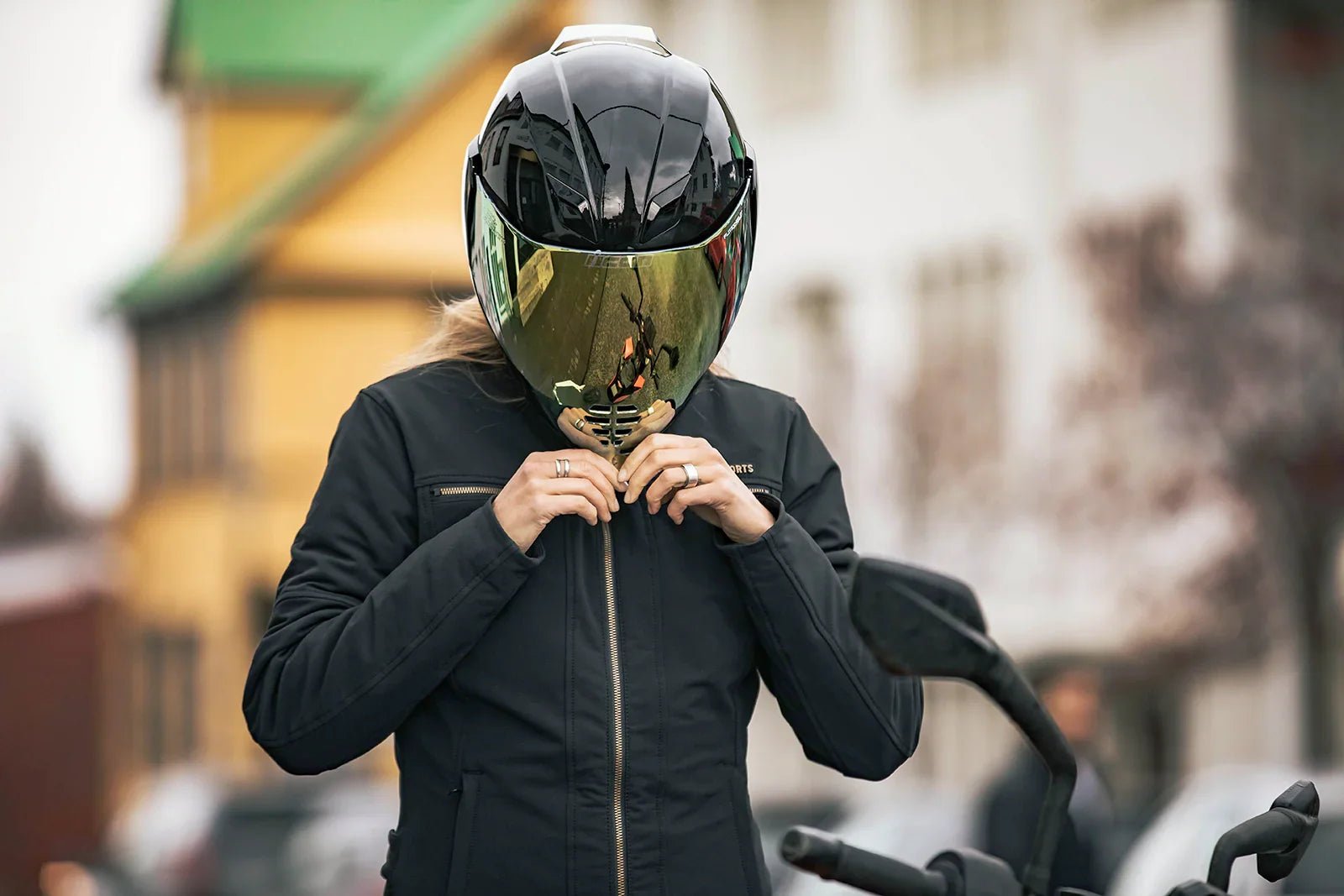
Your helmet is cold-weather gear too, and the biggest winter problem is fog. A fogged shield cuts visibility at the worst moment, so a full-face or modular helmet with an anti-fog setup is worth the upgrade.
A balaclava or neck warmer fills the gap between helmet and jacket collar, where cold air pours in. If you wear a larger helmet and struggle to fit a winter liner or balaclava, our helmets for big heads cover that fit.
Cold-Weather Safety, Fit, and Riding Limits
Cold weather changes how you and your bike perform, and the smart move is to respect the limits. This section covers what cold actually does to you and your machine, how to plan gear around real conditions, and when the right call is to leave the bike parked.
How Cold Affects You and the Bike
- Traction: tires are designed to work in a temperature window, and cold rubber is harder and grips less. Shaded corners, bridges, and overpasses stay colder than sunlit asphalt, so treat the first miles and any shaded surface as low-grip until the tires warm.
- Reaction time and dexterity: cold hands lose fine motor control before they feel numb, so throttle, brake, and clutch inputs get coarser. If you cannot feel the levers through your gloves, gear is no longer helping.
- Fatigue: shivering burns energy and drains focus, which is why core warmth matters more than any single extremity.
- Visibility: low winter sun, early dusk, and fogged shields stack up, so a clear shield and high-visibility outer layer matter more in winter than in summer.
Temperature and Wind Chill Planning
Air temperature understates the cold you actually feel at speed. Wind chill rises with speed, so a 40-degree day at highway speed feels closer to freezing.
Dress for the coldest point of the ride, not the start. If your route climbs elevation or crosses open ground where wind is stronger, plan for that segment, and carry a packable windproof layer you can add or shed without stopping long.
When to Postpone the Ride
There is no universal cutoff, but a common pattern among year-round riders is to postpone when any of these stack up: temperatures near or below freezing with any moisture on the road, visible ice or frost on bridges and shaded pavement, wind chill that makes your hands numb within minutes, or a forecast that puts you in the dark on the return leg.
Fit and Armor Placement With Layers On
Fit matters as much as warmth. Add a back protector to keep protection in place, and our back protector slips under a jacket without fighting the layers. For the coldest rides, our 12V heated socks round out a full kit.

- Check that armor stays put over shoulders, elbows, and back
- Make sure you can still turn your head and reach the controls
- Test your heated gear before a long ride, not on the shoulder
- Confirm your gloves seal over the jacket cuff and your balaclava seals under the chin bar
Watch out: a waterproof shell that fits snug over a thin base layer can compress the insulation beneath it and create cold spots at the shoulders and chest, so size the shell for your full winter layering system.
Building Your Winter Riding Gear Kit at The Helmet Shop
Building a winter kit is a sequence, not a shopping spree. Start with the base layer and waterproof shell, then add insulation and powered warmth where you feel the cold most.
Here is how we would plan it:
| Priority | Item | Why It Matters |
|---|---|---|
| 1 | Waterproof outer shell | Blocks wind and rain, the fastest heat thieves |
| 2 | Winter base layers | Wicks sweat so you stay dry and warm |
| 3 | Cold-weather gloves | Hands go numb first and control suffers |
| 4 | Heated jacket or liner | Adds heat for long or very cold rides |
| 5 | Balaclava and anti-fog shield | Keeps your view and face clear |
Helmet Shop stocks Tourmaster, Scorpion, HJC, Shoei, and Arai, with free shipping over $49 and a 30-day return policy so you can check fit at home.
Cold-weather riding rewards preparation, and the right gear turns a miserable commute into a comfortable one.
Frequently Asked Questions
What should you wear under motorcycle gear in winter?
Start with a moisture-wicking winter motorcycle base layer in merino wool or a synthetic blend, then add a mid layer for insulation, and finish with a waterproof, windproof outer shell. Avoid cotton against your skin because it holds sweat and chills you once you stop moving. A three-layer system lets you remove a layer when the afternoon warms up and add it back for the cold ride home.
Are heated gloves better than heated grips for cold-weather riding?
Heated gloves warm the whole hand, including the fingers and knuckles, while heated grips only heat the palm side. Heated grips only heat the palm side and work best as a supplement. For sub-freezing commutes, cold weather motorcycle gloves with their own heating elements, or heated glove liners wired to your bike, keep your hands functional for the controls. Many riders run both for the most consistent warmth.
Is waterproof motorcycle riding gear enough for winter riding?
Waterproofing blocks rain and wind but does not add warmth on its own. Waterproof motorcycle riding gear works best as the outer shell over insulating base and mid layers, or over heated motorcycle gear. Look for a windproof, breathable membrane so sweat vapor escapes, and pair it with a thermal liner or heated layer for genuine cold protection. Waterproof without insulation will still leave you cold on a long ride.
How should winter riding gear fit when you add layers?
Size your outer jacket and pants to fit over your thickest base and mid layers without compressing them, since crushed insulation traps less heat. Check that protective armor stays in place over your shoulders, elbows, and knees when you are layered up, and that you can still reach the controls and turn your head freely. Try gear on with the layers you actually ride in, not over a t-shirt.


