

Would you trust your safety to a pair of gloves that limits your ability to feel the bike? While leather motorcycle gloves remain the undisputed champion of road rash protection, many riders struggle with stiff materials that hinder throttle response or seams that fail after a single season. It's a common frustration to find gear that feels great in the showroom but leaves your hands sweaty and cramped after an hour on the road. You shouldn't have to compromise between professional-grade safety and the comfort needed for a long tour.
This guide cuts through the marketing noise to help you master the technical nuances of high-quality leather. You'll learn exactly how to identify the right grain and construction for maximum abrasion resistance and long-term durability. We'll examine the essential features of 2026's top offerings from trusted brands like Cortech and Tourmaster, focusing on ventilation and palm reinforcement. By the end of this article, you'll have the expertise to select a pair that provides superior grip and a perfect tactile feel for every mile ahead.
Key Takeaways
- Understand why leather's high tensile strength makes it the superior choice for abrasion protection during high-speed slides.
- Learn to distinguish between cowhide, goatskin, and kangaroo hides to find your ideal balance of protection and tactile feel.
- Identify critical safety features and learn how to interpret CE Ratings to ensure your gear meets international safety standards.
- Master the "finger-tip gap" rule to ensure your leather motorcycle gloves offer a perfect fit that doesn't compromise throttle control.
- Match your equipment to your specific riding style, from high-performance track days to long-distance touring with specialized gear.
Why Leather Remains the Gold Standard for Motorcycle Gloves
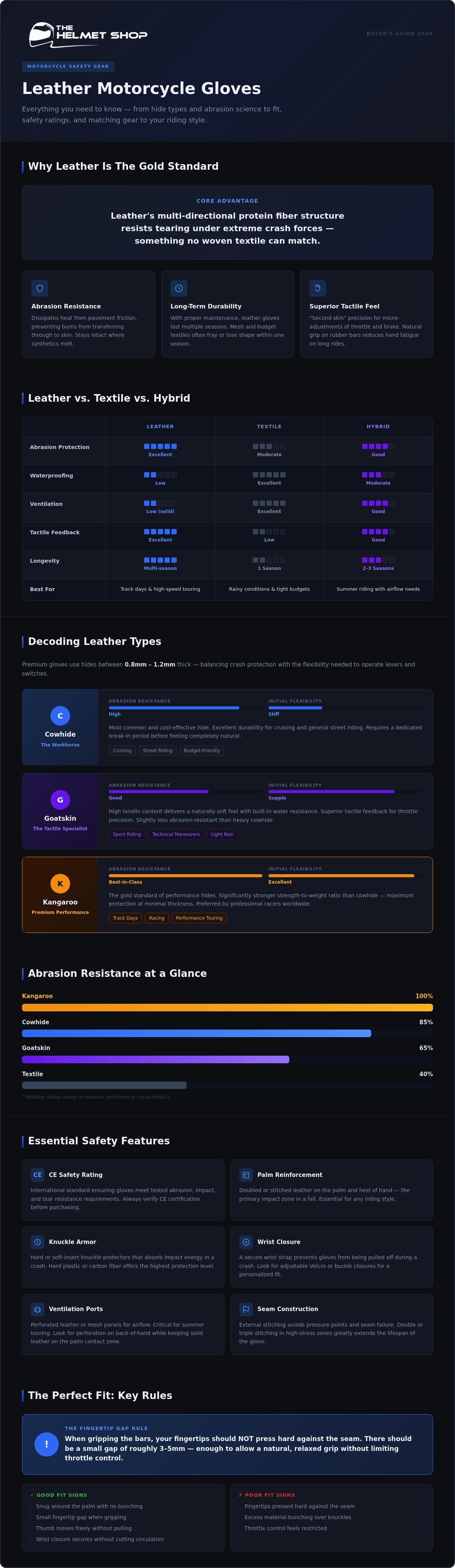
Leather remains the premier choice for protective gear because it offers unparalleled abrasion resistance. In a high-speed slide, the primary threat is the heat and friction generated by the asphalt. High-quality leather motorcycle gloves act as a sacrificial layer. They absorb the energy of the slide to protect your skin from severe injury. This performance is rooted in high tensile strength. Unlike woven textiles that can pull apart under stress, leather's natural protein fibers are tightly intertwined in a multi-directional web. This biological structure resists tearing even when subjected to the extreme force of a crash.
Beyond safety, leather provides a natural grip on rubber handlebars. The material's unique texture creates consistent friction without requiring a heavy grip. This reduces hand fatigue on long rides. It's the reason professional racers and serious long-distance tourers consistently choose leather over synthetic alternatives. It provides a level of dependable performance that synthetic fibers struggle to replicate over time.
The Science of Abrasion Resistance
When your hand hits the pavement, friction instantly creates intense heat. Leather is remarkably effective at dissipating this thermal energy; this prevents friction burns from transferring through the material to your skin. Many synthetic materials can melt or degrade when exposed to these high temperatures, but quality leather stays intact. It also offers a "second skin" feel. This allows for precise micro-adjustments of the throttle and brake levers. This tactile feedback is necessary for safe, high-performance riding. With proper maintenance, a pair of leather gloves can last for several seasons. Mesh or budget textile options often fray or lose their shape much faster.
Leather vs. Textile: Making the Right Choice
Choosing the right material depends on your specific mission and environment. Consider these factors when deciding between leather and textile gear:
- Leather: Select this for maximum slide protection and long-term durability. It is the standard for track days and high-speed touring where safety is the priority.
- Textile: These are often better for extreme rain or riders on a strict budget. They typically offer better waterproofing but provide lower abrasion resistance in a slide.
- The Hybrid Approach: Many modern designs feature leather palms for protection and textile backs for better ventilation. This combination is ideal for summer riding where you need airflow without sacrificing safety on the contact points.
For those prioritizing safety, leather is the clear winner. It remains the only material that provides the consistent reliability demanded by the world's most experienced riders. This standard of durability is mirrored in other high-intensity sports; if you are looking for similar quality in hand protection for the ring, you can discover The Fight Club and their range of premium combat gear.
Decoding Leather Types: Cowhide, Goatskin, and Kangaroo
Selecting the right leather motorcycle gloves requires understanding that not all hides are created equal. Each animal source offers a unique cellular structure that dictates how the glove performs in a slide and how it feels on the bars. Aniline leather is the highest quality top-grain hide, treated with soluble dyes to maintain the leather's natural texture and breathability. Choosing the right hide is the first step in balancing protection with long-term comfort. This emphasis on material integrity is also found in high-end lifestyle products, where brands like O2 Leather apply similar standards to their range of leather accessories.
Material thickness is a critical specification for safety. Most premium gloves utilize hides between 0.8mm and 1.2mm thick. This range balances the need for a protective barrier with the flexibility required to operate switches and levers. For riders in warmer climates, perforated leather is a must. These small punctures allow for airflow to prevent sweat buildup; meanwhile, solid leather remains the choice for maximum cold-weather insulation and pure abrasion resistance.
Cowhide is the most common material found in the industry. It's prized for its high availability and excellent abrasion resistance. While it's cost-effective, it can be quite stiff when new. You'll need a dedicated break-in period before it feels completely natural. It's the best choice for cruising and general street riding where durability is the priority over extreme flexibility.
Goatskin: The Tactile Specialist
Many riders prefer goatskin for its naturally supple feel. It contains high levels of lanolin, which makes the leather soft and provides a degree of natural water resistance. While it's slightly less abrasion-resistant than heavy cowhide, the tactile feedback is superior. It's an excellent choice for sport riding and technical maneuvers. You can find a wide range of these high-performance options at The Helmet Shop.
Kangaroo: The Premium Performance Choice
Kangaroo leather is the gold standard for performance. It's significantly stronger than cowhide even when split into thinner layers. This allows manufacturers to create a glove that is incredibly light and thin while maintaining top-tier safety. The result is unparalleled tactile feedback. Because it's more expensive and harder to source, it's typically reserved for track days and high-speed racing applications.
Essential Safety Features: Beyond the Leather Shell
While the hide provides the slide protection, the internal architecture of leather motorcycle gloves determines how well you'll fare in a complex impact. You need a combination of abrasion resistance and impact energy management. Quality gear integrates protective technology directly into the chassis without compromising your ability to operate the bike. It's about creating a system that works together when things go wrong.
Understanding CE Ratings is the best way to verify a glove's protective capabilities. Look for the EN 13594:2015 label on the interior tag. Level 1 gloves meet the minimum requirements for general street use and provide basic impact protection. Level 2 gloves are held to a much higher standard. They offer superior resistance to tearing and abrasion; these are typically the choice for high-speed touring or track riding. If a glove doesn't carry this certification, it hasn't been independently tested for safety.
Construction quality is just as vital as the armor itself. Double-stitching is a non-negotiable requirement for any serious rider. You should also look for internal seams. These are tucked away from the outer surface so they don't grind against the asphalt during a slide. If the stitching fails, the leather panels will separate and leave your skin exposed. Modern riders also benefit from conductive leather at the fingertips. This touchscreen compatibility lets you manage your GPS or communication system without removing your protection.
Palm Sliders: The Most Underrated Safety Feature
The scaphoid is one of the most frequently broken bones in motorcycle accidents. When you fall, your natural instinct is to put your hands out to break the tumble. If your palm "grabs" the asphalt, the sudden stop snaps your wrist. Palm sliders made of TPU or SuperFabric allow your hand to slide smoothly across the pavement. This converts the impact into a controlled slide and significantly reduces the risk of bone fractures.
Knuckle Armor and Finger Bridges
Knuckle protection comes in two main forms. Hard armor like carbon fiber or TPU provides a rigid shield against heavy strikes. Soft armor like D3O is flexible during normal use but hardens instantly upon impact. Many performance gloves also feature a "pinky bridge." This connects the ring finger and the pinky finger. It prevents the smallest finger from being pulled away or snapped during a tumble. Ventilated armor is a great modern innovation. It uses molded channels to force air over your knuckles to keep you cool without leaving a gap in your protection zones.
Achieving the Perfect Fit: Sizing and Breaking In Leather
Finding the right size for leather motorcycle gloves is a technical process that dictates both your safety and control. You must measure two primary areas: the circumference of your palm at the widest point and the length from your wrist to the tip of your middle finger. Leather is a biological material that responds to heat and movement by molding to the specific shape of your hand. If you start with a glove that feels roomy in the shop, you'll likely end up with excess material that bunches in your palm after a few hundred miles. This excess material reduces your control over the throttle and levers.
Use the 2-3mm gap rule to verify the length. When your hand is flat, you should have a tiny bit of space at the end of each finger. When you wrap your hand around a handlebar, the leather pulls back. If the fingers are already tight while your hand is open, they'll be painful once you're on the bike. Just as proper helmet fitment is vital for impact safety, a correctly sized glove ensures your armor stays positioned over your knuckles during a slide.
Step-by-Step Break-In Guide
New leather should feel snug but not restrictive. To speed up the break-in process, use the dry wear method. Wear your gloves around the house for 20-minute intervals while gripping a cylindrical object to simulate your bike's controls. Applying a light coat of leather conditioner can help soften the fibers and make the material more pliable. Never soak your gloves in water to stretch them. This can strip the natural oils from the hide and lead to premature cracking or structural failure. Patience is the best tool for a perfect fit.
Long-Term Maintenance and Care
Maintaining your gear extends its life and preserves its protective qualities. Sweat contains salt that eventually dries out the leather and causes it to become brittle. Clean your gloves periodically using a damp cloth and a dedicated leather cleaner. Always allow them to air-dry naturally. Placing them on a radiator or using a hair dryer will damage the protein fibers and ruin the fit. Aim to condition your gear every three to six months depending on your riding frequency. Ready to upgrade your protection? View our latest collection of high-performance motorcycle gloves to find your next pair.
Selecting Your Ideal Pair for Your Riding Style
The right pair of leather motorcycle gloves should match your specific motorcycle and your typical riding environment. You must weigh the convenience of a short-cuff glove against the comprehensive protection of a full gauntlet. Short cuffs offer excellent airflow and are easier to put on during quick errands or urban commutes. Gauntlets provide a secure overlap with your jacket sleeve. This overlap prevents wind blast from entering your sleeves and ensures no skin is exposed if you slide. Choosing the right configuration is about balancing your daily needs with your personal safety standards.
Your choice in gear acts as a bridge between your hands and the bike's controls. A glove that is too bulky for a sportbike or too thin for a touring trip will eventually cause distraction. Investing in quality leather is a commitment to your safety and your ability to ride tomorrow. It's the one piece of equipment that directly impacts every input you give the machine.
Touring and Commuting: Comfort Meets Durability
Comfort and durability are the priorities for long-distance travel and daily use. Look for features like waterproof liners and integrated visor wipes on the index finger to maintain visibility during rain. Padded palms are also essential to dampen high-frequency engine vibrations over several hours of riding. Specialized Tourmaster touring gear is engineered for these high-mileage requirements. If you face unpredictable weather during your daily commute, Cortech equipment offers the all-weather reliability needed to keep your hands dry and protected.
Sport and Track: Maximum Protection
For high-speed applications, protection is the only metric that matters. These gloves feature full gauntlets with double wrist closures to ensure the glove stays firmly in place during an impact. As discussed earlier, Kangaroo leather palms are the preferred choice here because they offer the thinnest profile with the highest strength. This setup provides the tactile feedback necessary for trail braking and precise throttle control. Pre-curved finger construction is another essential feature. It mimics the natural shape of your hand on the grips, which significantly reduces muscle fatigue during aggressive maneuvers. Browse our full selection of premium leather motorcycle gloves to find a pair that meets these rigorous performance standards.
Equip Yourself for Every Mile
Mastering the technical nuances of leather motorcycle gloves is more than just a gear choice; it's a commitment to your long-term safety on the road. You now understand why high-tensile hides like goatskin and kangaroo offer superior abrasion resistance compared to synthetic alternatives. By prioritizing a snug fit and verifying CE safety ratings, you ensure that your protection remains effective during a slide. Quality gear shouldn't just look the part. It needs to provide the tactile feedback and durability required for thousands of miles of riding.
The Helmet Shop is an authorized retailer of top-tier brands like Cortech and Tourmaster. We offer an expert-curated selection designed specifically for national riders who demand reliability. With fast national shipping on all protective gear, you can upgrade your kit without delay. Shop Premium Leather Motorcycle Gloves at The Helmet Shop today to find your perfect pair. Ride with the confidence that comes from professional-grade protection and expert guidance. We'll see you out on the road.
Frequently Asked Questions
How should leather motorcycle gloves fit when they are brand new?
Brand new leather motorcycle gloves should feel snug and slightly tight across the palm and knuckles. You want a "second skin" fit without restricting your blood flow or your ability to operate the bike's controls. Because leather is a natural material, it will expand and mold to your hand's unique shape after a few rides. If they feel loose or have excess material in the palm initially, they will likely become too baggy once broken in.
Are leather motorcycle gloves better than synthetic or textile ones?
Leather is superior for abrasion resistance during high-speed slides on asphalt. While textile gloves offer better waterproofing and immediate flexibility, they often fail more quickly under intense friction. Professionals choose leather because its high tensile strength prevents the material from tearing apart during a crash. However, textile options remain a practical choice for extreme rain or for riders who prioritize maximum ventilation over the highest level of slide protection.
How do I clean and condition my leather motorcycle gloves?
Start by wiping away surface dirt with a damp cloth and a dedicated leather cleaner. Avoid submerging the gloves in water; this can damage the internal structure of the hide. After cleaning, let them air dry naturally away from direct heat sources like radiators. Once dry, apply a high-quality leather conditioner to restore natural oils. This process prevents the leather from becoming brittle and cracking, which ensures the gloves remain safe and comfortable for years.
Do leather motorcycle gloves stretch over time?
Yes, leather motorcycle gloves will stretch and conform to your hand as you wear them. This expansion primarily happens across the width of the palm and the circumference of the fingers. It is important to remember that leather rarely stretches in length. If your fingers are touching the tips of the glove too firmly when new, they won't get longer with use. Always aim for a fit that accounts for this natural horizontal break-in period.
What is a palm slider and do I really need one?
A palm slider is a hard piece of plastic or composite material positioned on the heel of the palm. It is a critical safety feature that allows your hand to slide across the pavement during a fall. Without a slider, your palm can "grab" the asphalt. This sudden stop often leads to a broken scaphoid bone or wrist. Every serious rider should prioritize gloves with sliders to minimize the risk of these common injuries.
Are all leather motorcycle gloves touchscreen compatible?
Not all leather gloves work with touchscreens. To use a smartphone or GPS, the glove must feature conductive material or specialized leather treatments on the index finger and thumb. Many modern designs from brands like Cortech now include this feature as a standard convenience. If you ride with a mounted navigation system, check the product specifications for touchscreen compatibility to ensure you don't have to remove your protection to change your route.
What is the difference between CE Level 1 and Level 2 gloves?
CE Level 1 gloves provide the minimum protective standard for road use, including basic abrasion resistance and knuckle protection. CE Level 2 gloves are held to much more rigorous testing standards. They offer significantly higher resistance to tearing and can withstand longer slide times on abrasive surfaces. While Level 1 is suitable for urban commuting, Level 2 is the recommended choice for track days and high-speed touring where the risk of a long slide is greater.
How long do a good pair of leather riding gloves typically last?
A high-quality pair of leather gloves can last between three and five seasons with regular maintenance. Factors like your annual mileage, weather exposure, and how often you condition the leather will impact their total lifespan. You should inspect your gear regularly for frayed stitching or thinning leather in the palms. If the seams begin to fail or the leather becomes paper-thin, it is time to replace them to ensure your hands remain protected.


