

Last Updated: November 15, 2026
Quick Summary
Women's motorcycle gear is cut to a women's pattern, with armor placed over the joints and sizing based on chest, shoulders and torso length rather than unisex averages. A complete kit covers the helmet, jacket, pants, gloves and boots, with the helmet the one piece never to skimp on.
- Unisex jackets often run long in the sleeves and tight across the bust, and armor can sit off the joint on smaller frames.
- Size a women's jacket by shoulder width first, since it is easier to take in at the waist than to let out at the shoulders.
- Look for CE-rated armor in the shoulders, elbows and back, and check that it covers the joint when you are seated on the bike.
- Make a full fist before buying gloves, and size up if the knuckles or fingertips bind.
Table of Contents
- Why Women's Motorcycle Gear Fits Differently
- Women's Motorcycle Gear for Beginners: The Essential Starter Kit
- Choosing a Women's Motorcycle Jacket
- Women's Motorcycle Gear Plus Size: Finding Fit Beyond Standard Sizing
- Women's Motorcycle Gloves, Pants and Boots: Protecting the Rest of You
- Seasonal Layering, Care and When to Replace Your Gear
- Building Your Women's Riding Kit at Helmet Shop
- Frequently Asked Questions
Why Women's Motorcycle Gear Fits Differently
Most riders who switch to women's motorcycle gear notice the difference within minutes. A jacket that felt roomy in the chest but pinched at the shoulders suddenly sits correctly, and the sleeves stop riding up when you reach for the bars. That gap between standard and women's fit is why this women's motorcycle gear guide exists.
Where unisex gear falls short
Unisex gear is cut to a single average body built around men's proportions. Size a unisex jacket for the chest and the sleeves run long and the waist bunches; size it for the sleeves and the chest pulls tight across the bust, restricting movement in a corner.
Armor placement is the second problem. Protectors sewn into a unisex pattern can sit slightly off the shoulder or elbow on a smaller frame, reducing coverage exactly where a crash would land. A women's pattern repositions them over the joint.
Fit guidance for different body shapes
Fit is not one-size-fits-women either. Use these starting points when you check the size chart:
- Narrow shoulders, longer torso: Size by chest, then confirm the jacket length covers your waist when you sit on the bike.
- Broader shoulders, shorter torso: Size by shoulder width first. A jacket that fits the shoulders is easier to take in at the waist than one that fits the waist and strains at the shoulders.
- Athletic build: Look for stretch panels at the sides and back. They let the garment follow your posture without loosening the armor.
Try the jacket on in your riding position if you can. Check the size chart to compare your measurements against each brand's sizing before you order. Sit straight, reach forward with both arms, and check that the sleeves and back panel don't lift or bind.
Women's Motorcycle Gear for Beginners: The Essential Starter Kit
A new rider needs a complete kit before the first real ride, not one good piece and a set of compromises.
Start with the helmet, the one piece you should never skimp on. Then add the jacket, which covers your torso, shoulders, and elbows in a fall.
A practical sequence for building the kit, with a concrete example at each step:
- Helmet. Choose a helmet and confirm it fits snugly with no pressure points. Try helmets on for fit, since a unisex shell can leave a gap at the crown or press at the temples. Helmet Shop carries Shoei and Arai helmets, and several helmets on our site come with a Bluetooth headset pre-installed.
- Jacket. Pick a textile or leather jacket with CE-rated armor in the shoulders, elbows, and back. The Cortech Aero-Tec V2 Jacket Womens at $179.99 is a sound first textile jacket because its Aqua-Barrier liner handles rain and its CE Level 1 armor covers the three key zones. Riders who want leather from the start can look at the Cortech Hoyden Womens Leather Jacket at $249.99.
- Pants. Add riding pants with knee and hip protection. Look for a higher rise and a narrower leg than unisex pants, and confirm the knee armor sits over the kneecap when you are seated on the bike, not just when you are standing.
- Gloves. Get gloves that fit without bunching at the fingertips. Make a full fist before you commit; if the glove pulls tight across the knuckles or the fingertips fold over, size up or try a different last.
- Boots. Finish with boots that cover the ankle and have a firm sole for shifting. Women's boot lasts are typically narrower through the heel and forefoot, so try them on with the socks you ride in.
Many new riders start with a textile jacket because it handles varied weather and costs less than leather, a sound choice for the first season.
Choosing a Women's Motorcycle Jacket
The jacket is the piece you wear most often, so it is worth choosing carefully. The decision comes down to three things: the material, the armor, and how the cut fits your frame.
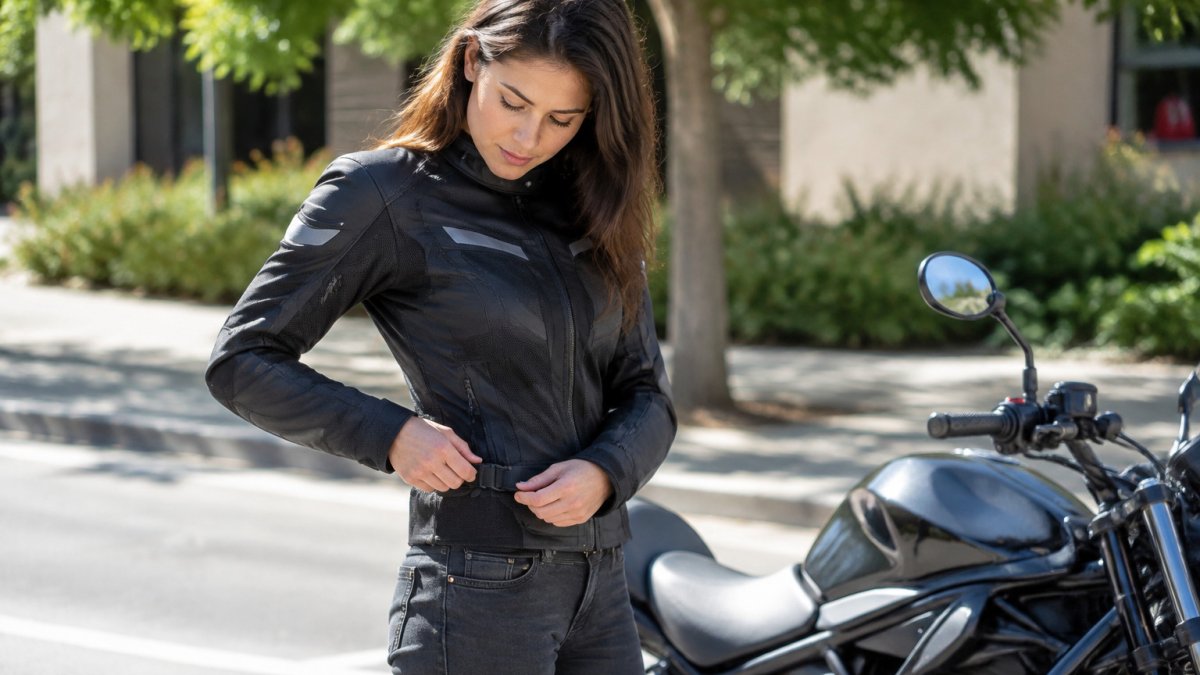
Leather, textile and hybrid construction
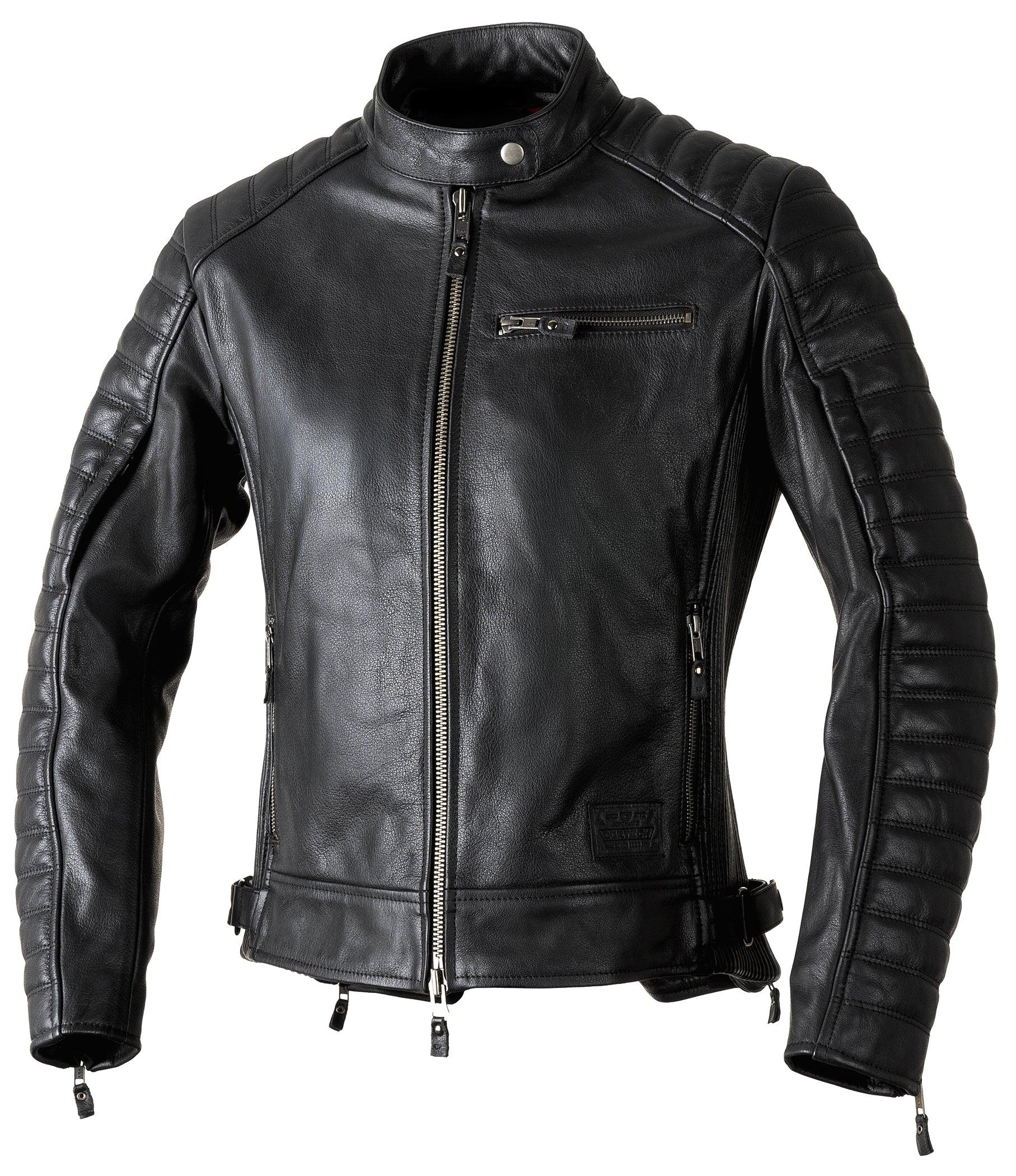
Leather offers the highest abrasion resistance and holds its shape for years. The Cortech Hoyden Womens Leather Jacket (view the Hoyden jacket), at $249.99, is built from 1.1 to 1.2mm drum-dyed cowhide with CE level 1 armor in the back, shoulders, and elbows.
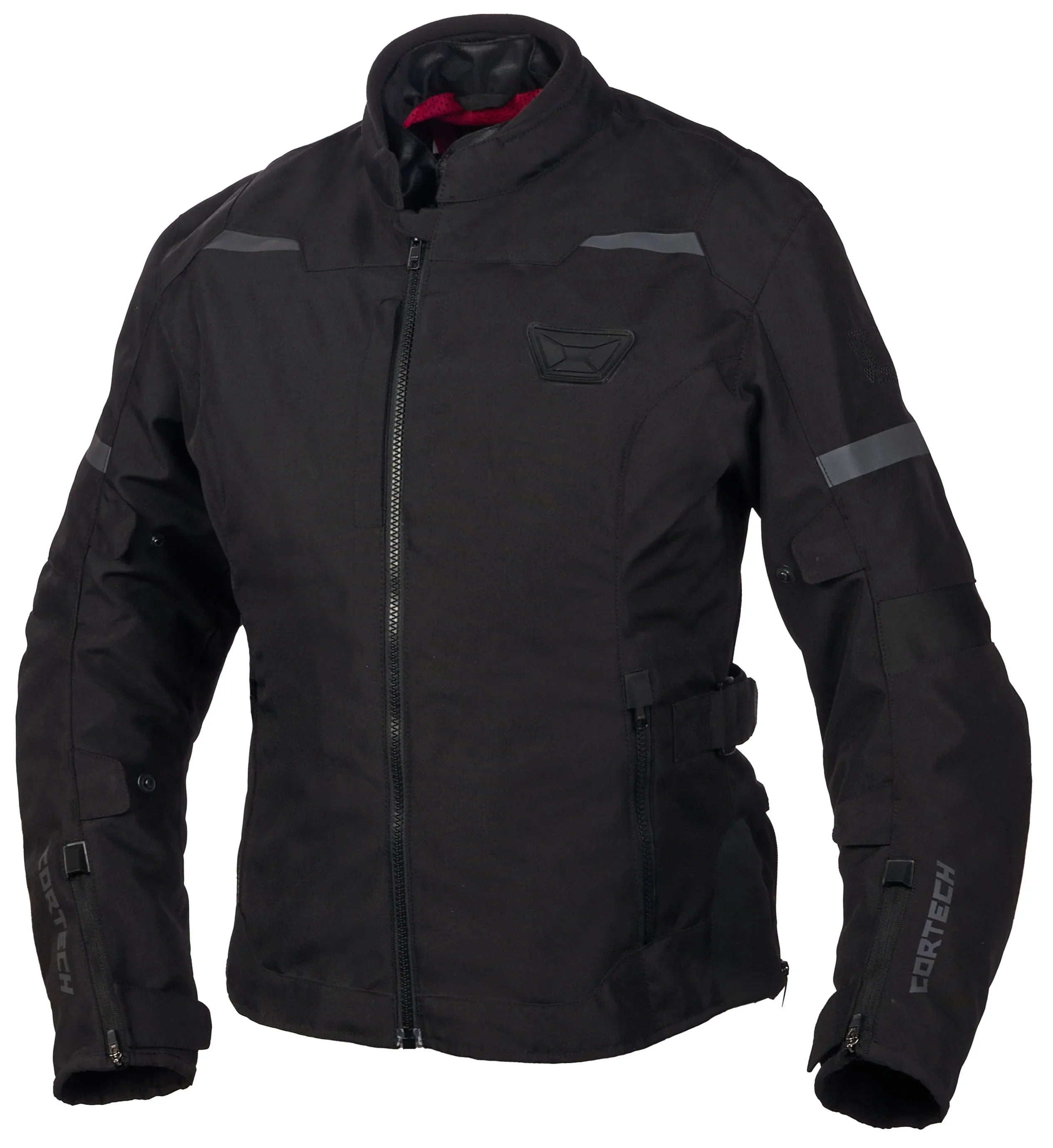
Textile jackets are lighter, more breathable, and easier to wear across temperatures. The Cortech Aero-Tec V2 Jacket Womens (see the Aero-Tec V2 jacket), at $179.99, uses a 600-denier polyester chassis with Aqua-Barrier waterproof and thermal liners, and CE certified to EN 1621 Level 1.
Hybrid jackets combine both, usually leather at high-wear areas and textile through the torso and sleeves, a middle ground for riders who want abrasion protection with better airflow than full leather.
Pros and cons by construction:
- Leather: Best abrasion resistance and durability; heavier and warmer, with a higher price.
- Textile: Lighter, breathable, and weather-versatile; needs a liner for cold weather.
- Hybrid: Balanced protection and airflow; construction varies, so check the material breakdown.
For a casual, everyday option, the ICON Women's Fallblock CX Flannel Jacket, priced at $250.00, looks like a regular flannel shirt but carries D3O impact protectors in the back, shoulders, and elbows.
Armor ratings and what CE certification confirms
Armor labels confuse many riders. CE certification under EN 1621 means the protector has been impact tested in a lab against a set threshold.
CE certification confirms the protector passed a defined test; it does not mean the jacket prevents every injury.
Look for the CE mark on the product listing and check whether the armor is removable, since replaceable protectors let you upgrade over time. The Motorcycle Jacket Safety Levels Explained guide (read the CE armor guide) walks through the rating categories in more detail.
The three main jacket constructions compare as follows.
| Construction | Best for | Key difference |
|---|---|---|
| Leather | Highway riders, cooler climates | Highest abrasion resistance, heavier and warmer |
| Textile | Daily commuters, changing weather | Lighter and breathable, needs a liner for cold |
| Hybrid | Balanced protection and airflow | Leather at high-wear areas, textile elsewhere |
Women's Motorcycle Gear Plus Size: Finding Fit Beyond Standard Sizing
Plus-size riders often find that a size chart stops being useful once they move past the largest standard size.
Measure chest at the fullest point, waist at the natural waistline, hips at the widest point, and sleeve length from shoulder seam to wrist with your arm slightly bent.
Look for stretch panels at the sides, back, and inner arms, plus accordion or articulated shoulder panels that let the jacket move with you instead of pulling across the back.
Our Size Charts page lists the measurements for each product, and the Women's Motorcycle Helmets fit guide (see the women's helmet guide) covers how head shape and size affect helmet selection, which matters just as much as body size when you are building a full kit.
Women's Motorcycle Gloves, Pants and Boots: Protecting the Rest of You
A jacket protects your torso, but hands, legs, and feet need equal attention. Gloves are the most neglected piece, and they matter because hands are reflexively thrown out in a fall. Pants and boots are close behind, and the difference between a good pair and a compromise shows up in fit and armor placement more than appearance.
Gloves: knuckle protection and finger fit
Look for leather palms and hard knuckle protection, and check that the fingers are sized to your hand. A glove that bunches at the fingertips reduces dexterity and makes braking less precise, so make a full fist and confirm the glove does not restrict the motion.
Coverage matters as much as the rating, so confirm the knuckle guard sits over the knuckles when your hand is closed around the grip, not just when the hand is open.
Pants: knee and hip armor that stays in place
Riding pants should cover the hip and knee with CE-rated armor and have a reinforced seat. Many women's pants use a higher rise and narrower leg than unisex versions, keeping the knee armor from rotating out of position when you sit on the bike.
When you try pants on, sit in a riding position and check that the knee armor sits over the kneecap rather than above it, and that the waist does not gap at the back when you lean forward.
Boots: ankle coverage and a sole that shifts
Boots should reach above the ankle, have a stiff sole for shifting, and fasten firmly so they stay on in a slide.
Watch out: a boot that fits in the store but slips at the heel once broken in will let the foot rotate in a fall, so confirm the ankle strap or buckle can be tightened after the leather softens.
Seasonal Layering, Care and When to Replace Your Gear
In cold weather, a thermal liner under a textile or leather jacket adds warmth without bulk over the armor.
Leather needs cleaning with a leather-specific product and conditioning a few times a year to prevent cracking.
Replace gear after a crash, even if the damage looks minor, armor that has absorbed an impact may no longer protect as rated, and the shell can hide structural damage.
Building Your Women's Riding Kit at Helmet Shop
Helmet Shop carries apparel from ICON, NORU, Cortech, Tourmaster, and Z1R alongside helmets from ICON, HJC, Shoei, Arai, Daytona, and Scorpion.
For a starter kit, consider the NORU MARUCHI LEATHER JACKET WOMENS at $99.99, with a quilted zip-out liner.
Helmet Shop also stocks several helmets with Bluetooth headsets already installed, which is useful if you want to stay connected on longer rides without a separate installation.
Frequently Asked Questions
What motorcycle gear should a woman wear?
A complete women's motorcycle gear setup covers a full-face or modular helmet, a jacket with armor at the shoulders, elbows and back, riding pants or a one-piece suit, gloves, and over-the-ankle boots. Each piece should cover you fully in a crash, not just look the part. Start with the helmet and jacket, since head and torso injuries carry the most risk, then add pants, gloves and boots as your budget allows. Helmet Shop carries Cortech, NORU and ICON apparel options.
How should women's motorcycle gear fit?
Riding gear should be snug without restricting movement. Sit on a bike or in a riding position to check that sleeves, pants and the jacket hem stay in place, and that you can reach the handlebars and controls comfortably. Women-specific cuts usually have a shorter torso, narrower shoulders and a different hip and seat shape. Check sizing charts from the brand, and measure your bust, waist, hip and inseam before ordering. Helmets should sit level with no pressure points, and the cheek pads should be firm but not painful.
Is women-specific motorcycle gear safer than unisex gear?
Safety comes from the construction and certification of the gear, not the label on the cut. Women-specific gear is safer only when it fits properly, because loose armor or gaps at the wrists, waist and collar reduce protection in a crash. Look for CE-rated armor, abrasion-resistant leather or textile, and a fit that keeps the armor in position. Cortech's Hoyden Womens Leather Jacket and Aero-Tec V2 Jacket Womens both list CE-certified armor in their specifications.
What should a woman wear for her first motorcycle ride?
For a first ride, wear a certified helmet, a jacket with armor, long pants made of leather or abrasion-resistant textile, full-coverage over-the-ankle boots, and full-finger gloves. Avoid shorts, sandals and loose clothing. A starter kit does not need to cost a fortune, but it should fit correctly and carry clear safety certification. Bluetooth headsets are optional, but many beginners find them useful for hearing navigation and staying in touch with a riding partner.
How do you choose a motorcycle jacket for women?
Choose a jacket by construction, armor and fit. Leather offers high abrasion resistance and stays in place on impact, while textile jackets are lighter and better suited to mixed weather, often with removable liners. Confirm that the back, shoulder and elbow armor is CE-certified. Check that the jacket reaches your waist when you sit forward, and that sleeves cover your wrists in a riding position. The Cortech Aero-Tec V2 Jacket Womens at $179.99 and the NORU Maruchi Leather Jacket Womens at $99.99 show how price and feature sets differ.
Can women wear men's motorcycle gear?
Yes, but men's gear often fits poorly through the chest, waist and hips, and sleeves or pant legs can be too long or too wide. Poor fit reduces protection because armor can shift and gaps can open in a fall. If you buy men's gear, check fit carefully and consider alterations. Women-specific gear is designed around a different body proportion, which generally makes it easier to get a secure fit.
What motorcycle gear is available in plus sizes?
Availability varies by brand and style, so check size charts before buying. Plus-size riders should measure chest, waist, hips, inseam and arm length, then compare against each brand's chart rather than assuming a letter size carries across brands.
How do you clean and care for motorcycle riding gear?
Leather should be cleaned with a leather-safe cleaner and conditioned periodically to prevent cracking, and stored away from heat and direct sun. Textile gear can usually be spot-cleaned or washed according to the label, but remove armor and liners first where the manufacturer allows it, and air dry. Replace any gear that has been through a crash, since impact damage may not be visible. Check armor and stitching before each season.


