

Table of Contents
- Where to Buy HJC Helmets: Authorized Dealers and What to Check
- HJC Helmet Models You Can Buy Today
- HJC Helmet Sizing Guide: Getting Fitment Right the First Time
- DOT vs Snell Helmet Safety Ratings: What Each Certification Means
- Bluetooth Integrated Motorcycle Helmets: HJC Options for Staying Connected
- Shipping, Returns, and Support When You Buy HJC Helmets Online
- Conclusion: Buying an HJC Helmet With Confidence
- Frequently Asked Questions
Last Updated: September 13, 2026
Where to Buy HJC Helmets: Authorized Dealers and What to Check
If you're wondering where to buy HJC helmets, the safest answer is an authorized dealer. HJC's volume makes it a frequent target for counterfeiters and gray-market sellers. Buying authorized protects your warranty, guarantees authenticity, and ensures the correct US DOT certification for your model.
This guide from Helmet Shop covers the models you can buy now, sizing, DOT and Snell ratings, and how shipping and returns work online.
The biggest mistake buyers make is chasing the lowest price without checking authorization. A counterfeit or gray-market helmet can fail in a crash, and no warranty covers it. Below, we'll show you how to verify a seller and pick the right HJC for your riding style.
How to Verify an Authorized HJC Dealer
An authorized HJC dealer is approved by the manufacturer to sell its helmets, so the product is genuine and covered by warranty. Verification takes about two minutes:
- Check the retailer's product pages for full manufacturer specifications, not vague descriptions
- Confirm the store publishes a real return policy and a reachable customer support line
- Look for a physical business address and a toll-free contact number
- Ask directly whether the helmet ships with the original HJC packaging and tags
A legitimate dealer will answer all four without hesitation. Helmet Shop stocks HJC alongside Shoei, Arai, and Scorpion, and every helmet ships with the manufacturer's documentation intact.
HJC Helmet Models You Can Buy Today
HJC's lineup splits into modular and full-face designs. Modular helmets let you flip the chinbar up at stops, which commuters love. Full-face helmets trade that convenience for a fixed, stiffer structure that resists flex better in a high-speed impact.
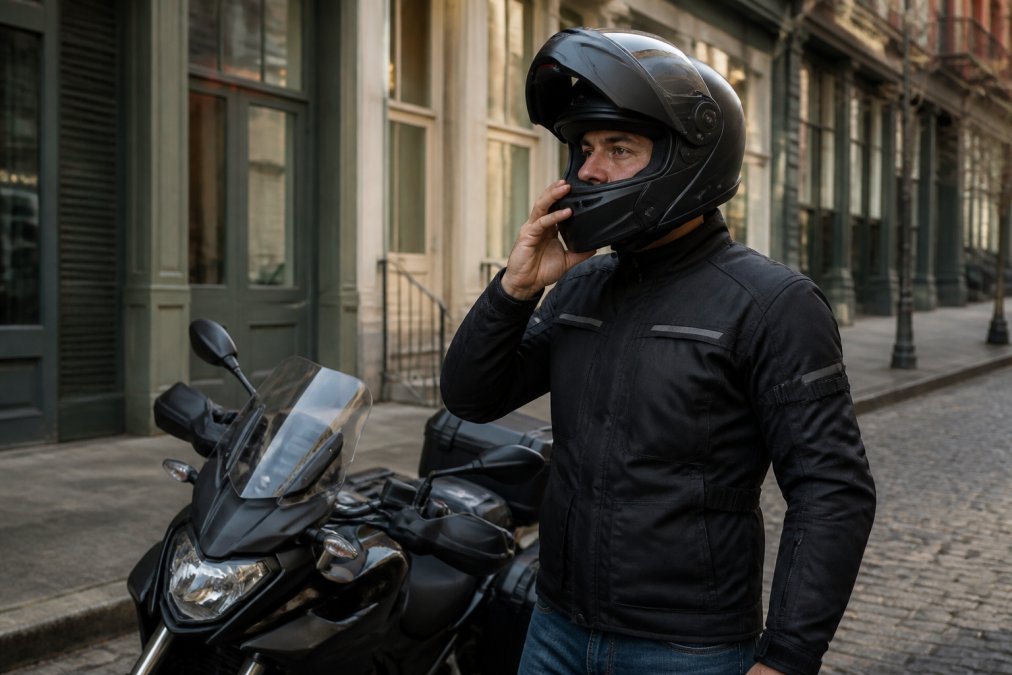
Here are four HJC models available now, with the details that actually separate them:
| Model | Type | Shell | Weight Class | Best For |
|---|---|---|---|---|
| HJC C91 Modular Helmet - Solid | Modular | Polycarbonate composite | Standard | Daily commuting |
| HJC i91 Modular Helmet - Solid | Modular | Lightweight composite | Mid | Touring and cruising |
| HJC RPHA 91 Modular Helmet - Solid | Modular | PIM EVO carbon-aramid | Lightest | Long-distance touring |
| HJC i11 Full Face Helmet - Solid | Full face | Advanced polycarbonate | Standard | Sport and city riding |
What the shell materials actually mean. Polycarbonate composite is the workhorse material, impact-resistant, affordable, and slightly heavier than premium shells. The HJC C91 Modular Helmet - Solid uses an advanced polycarbonate composite shell with an adjustable chinbar and a Pinlock-prepared HJ-17 shield that blocks 99% of UV. Pinlock preparation lets you add an anti-fog insert later without buying a new shield.

The mid-tier step up. The HJC i91 Modular Helmet - Solid is built for touring, with improved aerodynamics and a multi-step sun visor you can position at several stops rather than just up or down, a practical difference on long rides where sun angle changes constantly.

The premium shell. For the lightest option, the HJC RPHA 91 Modular Helmet - Solid uses a PIM EVO shell blending carbon-aramid and natural linen fiber. PIM (Premium Integrated Matrix) layers fibers for stiffness without the weight penalty of pure polycarbonate. Lighter helmets reduce neck fatigue on multi-hour rides, which is why touring riders gravitate here.

The full-face option. The HJC i11 Full Face Helmet - Solid brings a race-inspired shape with three intakes and five exhausts for airflow. The fixed chinbar means no hinge mechanism to flex, and the vent count is high for this tier, useful in stop-and-go summer traffic.
How to choose between them. Short commutes with chinbar-flipping convenience: the C91. Touring with better aero and a multi-position sun visor: the i91. Long distances where weight matters: the RPHA 91's carbon-aramid shell. Fixed chinbar for maximum rigidity: the i11.
Modular vs. full-face: the real trade-off. A modular chinbar hinge is a mechanical joint that can loosen over years of use; a full-face shell is one continuous piece. Neither is automatically safer, both pass the same DOT impact tests. But if you never ride with the chinbar up, a full-face design gives you one less mechanism to maintain.
What to check before you buy any of them. Confirm the shield is Pinlock-prepared for cold or humid conditions, the liner is removable and washable (all four are, but verify per colorway), and the helmet ships with original HJC packaging and tags, the fastest way to spot a gray-market unit.
HJC Helmet Sizing Guide: Getting Fitment Right the First Time
Getting your HJC helmet sizing guide right starts with one measurement: wrap a soft tape around your head about one inch above your eyebrows, keeping it level. Measure in centimeters, then match that number to the model's size chart.
Fitment matters more than any feature. A loose helmet can rotate in a crash; a tight one causes pressure headaches within an hour. How to check fit before you commit:
- The helmet should feel snug all around, with no hot spots
- Cheek pads should press your cheeks firmly but not painfully
- Try to roll the helmet forward with your hands; the skin on your forehead should move with it
- Wear it for 10-15 minutes. If pressure builds at the temples or crown, size up
Most riders land between sizes. Go with the smaller shell and adjust padding if the model allows it, cheek pads break in over the first few rides, so an initially firm fit usually settles into comfortable.
DOT vs Snell Helmet Safety Ratings: What Each Certification Means
DOT vs Snell helmet safety ratings measure different things, and understanding the difference helps you buy with confidence. Here's the fuller picture, including the third standard you'll see on some helmets and how to read the label inside the liner. Proper fitment remains the primary factor in protective gear efficacy, just as you must measure motorcycle jacket dimensions accurately to ensure the armor stays positioned correctly during an impact.
DOT (Department of Transportation). DOT certification is a legal minimum set by the National Highway Traffic Safety Administration and required for on-road use in the U.S (nhtsa.gov). A DOT-compliant helmet has passed defined impact attenuation, penetration, and retention-system tests. Every HJC helmet sold by an authorized dealer for the U.S. market carries DOT certification; without it, a helmet isn't legal for street riding here.
Snell. Snell certification is a stricter, voluntary standard administered by the Snell Memorial Foundation. It tests for higher impact energy and adds penetration resistance beyond the DOT baseline. A Snell-rated helmet exceeds the legal minimum, but Snell isn't required, and many safe helmets are DOT-only.
ECE 22.06. ECE is the European standard, sometimes referenced on globally sold helmets. ECE 22.06 is the current revision and includes rotational impact testing that DOT and Snell do not. A helmet can carry DOT, ECE, or both. For a U.S. buyer, DOT is what matters legally; ECE signals additional testing but doesn't replace DOT for street use here.
How to read the certification label. On a genuine HJC helmet, the DOT label is affixed inside the liner, usually on the EPS foam or the back of the comfort liner. It should be permanent and tamper-resistant, not a peeling sticker or printed graphic, and includes the manufacturer's name, model designation, and DOT symbol. If it's missing, printed rather than affixed, or looks like a photocopy, that's a warning sign of a counterfeit or gray-market unit.
What the ratings don't tell you. Neither DOT nor Snell guarantees a perfect outcome in every crash, they confirm the helmet passed defined tests under controlled conditions. Fit matters as much as certification: a certified helmet that's too loose can rotate off your head in an impact. That's why the sizing section above matters as much as this one.
For a deeper look at how these standards are written and enforced, the NHTSA motorcycle helmet regulations explain the federal requirements, while the Snell Memorial Foundation certification standards detail the voluntary testing protocol.
The counterfeit angle. HJC's volume makes it a frequent counterfeiting target. A counterfeit shell may carry a convincing DOT label but use substandard foam that won't absorb impact energy. The label check above is your first line of defense; buying from an authorized dealer is your second. When you buy HJC helmets from an authorized retailer, you get the correct certification label for the market the helmet was built for, not a relabeled unit intended for another region.
Bluetooth Integrated Motorcycle Helmets: HJC Options for Staying Connected
Bluetooth integrated motorcycle helmets let you take calls, hear GPS directions, and talk to a riding partner without fumbling for a separate device. HJC offers Bluetooth-ready helmets with speaker pockets built into the liner.
Installation is simpler than it sounds: most systems mount to the side of the shell and route speakers into pre-formed pockets. The main thing to check is compatibility, confirm the headset fits your specific HJC model before ordering.
Helmet Shop specializes in Bluetooth headsets and carries several helmets with Bluetooth systems pre-installed, so you can skip the installation step entirely. Brands like Sena and Cardo make units that pair with most modern HJC shells.
Shipping, Returns, and Support When You Buy HJC Helmets Online
Ordering online is safe when the retailer backs it up. Helmet Shop offers free shipping on orders over $49 and a 30-day return policy, so you can order, try the fit at home, and exchange the size if needed.
A hassle-free return process should include clear instructions, a straightforward shipping method, and no restocking games. Before ordering anywhere, read three things: the shipping policy, the return policy, and how to reach customer support. A dealer that hides any of these isn't worth your money.
- Confirm the return window and whether worn helmets qualify
- Check whether exchanges for a different size are free
- Verify a toll-free support number or live chat is available
- Save your order confirmation and packaging until you've confirmed the fit
For riders who need larger sizes, check stock before ordering. Helmet Shop carries many sizes across its HJC selection, but availability varies by model and color.
Conclusion: Buying an HJC Helmet With Confidence
Buying the right HJC helmet comes down to three things: a verified authorized dealer, a correct fit, and the certification that matches your riding. Get those right and you'll ride safer and avoid return headaches.
At Helmet Shop, we stock HJC models like the C91, i91, RPHA 91, and i11, alongside Bluetooth headsets from Sena and Cardo and helmets with systems pre-installed. With free shipping over $49, a 30-day return policy, and fitment support, getting the right helmet is straightforward.
Get started with Helmet Shop and find an HJC helmet built for your ride.
Frequently Asked Questions
Are HJC helmets DOT approved?
HJC helmets sold through authorized dealers carry DOT certification, which is the legal minimum for on-road use in the U.S. Some models also meet Snell standards, which test the same shell against higher-impact thresholds. Check the label inside the helmet before you buy: it lists every certification the model passed. Buying from an authorized dealer matters here, because counterfeit helmets often carry a DOT sticker without ever being tested.
How do I choose the right size HJC helmet?
Measure your head circumference about one inch above your eyebrows, then match it to the size chart for the specific model. HJC shells run differently across lines: a medium in one model can fit like a small in another. The helmet should press evenly on your forehead and cheeks without pinching. If you are between sizes, size up and use thicker cheek pads, which are replaceable on most HJC models.
What is the difference between HJC full-face and modular helmets?
Full-face helmets like the HJC i11 have a fixed chinbar and a single shield, which gives the strongest impact protection and the quietest ride. Modular helmets like the HJC C91 and i91 have a chinbar that flips up, so you can talk, drink, or put on glasses without removing the helmet. Modulars weigh slightly more and can be noisier at highway speed. Commuters and touring riders usually prefer modular; track and sport riders usually prefer full-face.
Can I add Bluetooth to any HJC helmet?
Most HJC helmets accept a Bluetooth communicator, but the cleanest installs come on models with a dedicated speaker pocket and routing channel. Some HJC models, such as the HJC RPHA 91, are designed to integrate Bluetooth systems seamlessly. On other models, clamp-on units from Sena and Cardo fit the shell edge and take about 20 minutes to install. Match the communicator to your helmet's interior shape before ordering.


