

Why should a simple pair of frames dictate the quality of your ride? For many riders, the struggle is all too familiar. You find a helmet that looks great, but the moment you pull it on, your glasses get crushed against your temples or the lenses fog up before you even leave the driveway. It's frustrating when your gear works against your vision instead of protecting it.
We believe that comfort is just as critical as safety. Finding the best modular helmets for glasses shouldn't be a guessing game of trial and error. Our 2026 guide highlights the top-rated options designed with specialized interior channels and flip-up mechanisms that allow you to keep your frames in place. You'll discover how the latest ECE 22.06 certified models from brands like Shoei and HJC eliminate pressure points and prevent sun shields from hitting your lenses. We'll walk you through the most reliable, eyeglass-friendly features available today so you can focus on the road ahead.
Key Takeaways
- Learn why the flip-up chin bar mechanism is the most effective solution for putting on and taking off your gear without removing your glasses.
- Identify critical design features like dedicated eyeglass grooves and specialized padding density that prevent frame bending and temple pressure.
- Explore our 2026 picks for the best modular helmets for glasses, featuring the premium Shoei Neotec series and high-value HJC models.
- Master the proper helmet entry protocol and the 15-minute home test to ensure your frames remain comfortable during long-distance tours.
- Understand how to integrate Sena or Cardo Bluetooth systems without compromising the fit or comfort of your prescription eyewear.
Why Modular Helmets are the Ultimate Choice for Riders with Glasses
For years, riders with prescription eyewear felt forced to choose between the protection of a full-face lid and the convenience of an open-face model. Modular helmets changed that dynamic. By incorporating a hinged chin bar, these helmets offer a unique geometry that simplifies the lives of glasses wearers. The primary reason they are often cited as the best modular helmets for glasses is the physical clearance they provide during the most difficult part of the ride: putting the helmet on and taking it off.
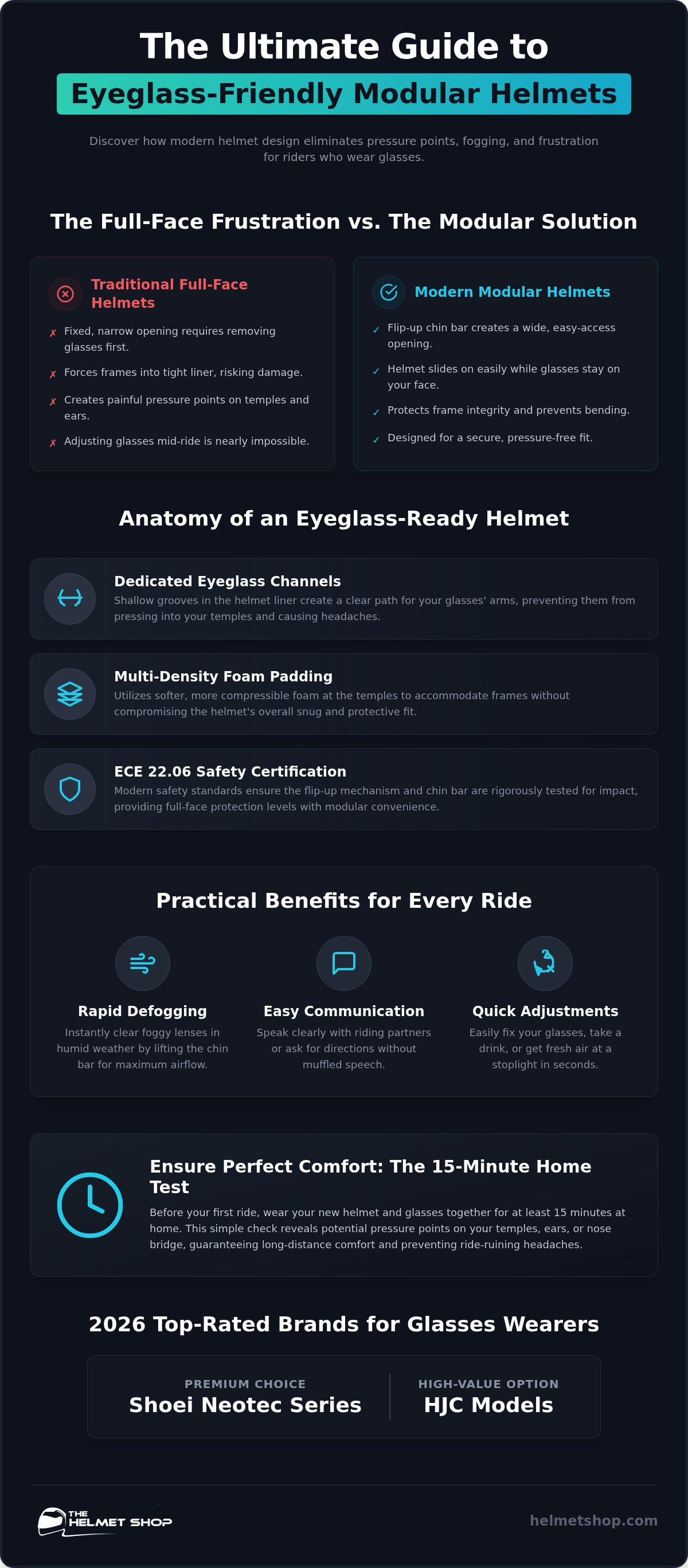
In a traditional full-face helmet, the opening is fixed and narrow. This requires you to remove your glasses, pull the helmet over your head, and then attempt to slide your frames into a tight space between the liner and your temples. This process often bends frames or causes painful pressure. Modular designs allow you to lift the entire front section. This action expands the lateral opening, letting you slide the helmet on while your glasses remain firmly on your face.
To better understand how these designs benefit eyeglass wearers, watch this helpful video:
Modern engineering has significantly closed the safety gap between modular and full-face helmets. Early modulars were sometimes viewed as less robust, but contemporary testing proves otherwise. Most high-end modulars now meet rigorous Motorcycle helmet safety standards like ECE 22.06. This standard includes testing for rotational forces and impact points on the chin bar itself. You don't have to sacrifice structural integrity for the convenience of a flip-up design.
The Mechanical Advantage of the Flip-Up Design
The magic happens in the hinge. When the chin bar is raised, the helmet's side walls flex slightly outward. This reduction in friction prevents the "ear-crush" sensation common with tight seals. It also ensures that the arms of your glasses aren't forced into your scalp. By providing this extra room, the best modular helmets for glasses maintain a secure fit without compromising the alignment of your lenses. This design protects the structural integrity of your frames, saving you from expensive repairs or replacements over time.
Convenience on the Road
Beyond the initial fit, modular helmets offer practical benefits that full-face models can't match. If your glasses slide down during a long ride, you can simply flip the bar up at a stoplight and adjust them in seconds. This versatility is essential for touring and urban commuting. Consider these specific advantages:
- Rapid Defogging: If your lenses fog up in humid weather, opening the chin bar provides instant, total airflow that clears your vision faster than any vent.
- Easy Communication: Speak clearly with riding partners or ask for directions without muffled speech or the need to de-helmet.
- Hydration: Take a quick drink during a short break while keeping your eyewear perfectly positioned.
These features turn a modular helmet into a tool that works with your vision needs rather than against them. It's a specialized solution for a specific problem that many riders face every time they gear up.
Key Features to Look for in Eyeglass-Friendly Modular Helmets
Identifying the specific engineering that separates average gear from the best modular helmets for glasses is essential for long-term comfort. It isn't just about the flip-up bar; it's about the internal landscape of the helmet. Many riders mistakenly believe they need to buy a size larger to accommodate frames. This is a safety risk that compromises the helmet's ability to protect you during an impact. When choosing the right helmet, you must prioritize a snug, secure fit while looking for internal features designed for optics.
The core of an eyeglass-friendly design lies in the padding density and the shape of the Expanded Polystyrene (EPS) liner. High-quality modulars utilize multi-density foam. This means the foam at your temples is softer and more compressible than the firm foam used for the cheek pads. This variation prevents the helmet from pinching your frames against your skull, which is the leading cause of "temple headaches" during long rides. If you're unsure which interior shape fits your frames, you can browse our curated selection of modular helmets to see detailed specs on liner configurations.
Eyeglass Channels and Interior Geometry
Manufacturers like Shoei and HJC have mastered interior geometry by carving dedicated channels directly into the EPS and comfort liners. These recessed areas provide a clear path for the arms of your glasses, ensuring they sit naturally on your ears without being deflected upward or downward. Most premium models also feature removable and washable liners. This modularity allows you to fine-tune the fit or even swap in thinner temple pads if your frames are particularly thick. Dedicated eyeglass grooves have become a standard safety feature in 2026 to ensure riders don't compromise fit for vision.
Sun Visors and Optical Clarity
Internal drop-down sun shields are a massive benefit, but they can be a hazard if the clearance is too tight. A poorly positioned shield will hit your prescription lenses when deployed, potentially scratching both surfaces. Look for modulars that offer adjustable sun shield depths or high-clearance arcs to avoid this "shield-to-glass" collision. Optical clarity is also a matter of moisture management. Ventilation systems in 2026 now prioritize chin vents that direct air specifically across the interior of the shield. This helps clear the micro-climate around your glasses, especially when paired with a Pinlock-ready visor that prevents fogging in cold or humid conditions.
By focusing on these specific technical details, you can find a helmet that feels like it was custom-made for your prescription. The right combination of EPS channels, soft temple foam, and clear shield clearance makes the difference between a painful distraction and a focused ride.
Top-Rated Modular Helmets for Glasses: Our 2026 Picks
Choosing the right gear involves more than just a style preference; it's about finding a lid that respects your vision. Our curated list of the best modular helmets for glasses for 2026 focuses on models that meet current motorcycle safety standards while offering superior frame clearance. We've evaluated these picks based on padding density, temple grooves, and overall ease of entry. Each of these manufacturers has taken a different approach to solving the "glasses squeeze," but they all share a commitment to rider comfort and safety.
The Shoei Neotec 2: A Premium Choice for Eyewear
The Shoei Neotec series remains the gold standard for riders who prioritize a quiet, comfortable environment. The Neotec 2 features the 3D Max-Dry interior system, which is specifically designed to dissipate sweat while maintaining a plush feel against the skin. For glasses wearers, the most critical element is the way the cheek pads and upper liner interface. Shoei leaves a distinct path for the arms of your frames, ensuring they don't get pushed into your temples during long-distance touring. You can learn more about why this brand is a top-tier choice in our detailed guide on Shoei Helmets: Why Premium Protection is a Worthy Investment. The build quality and attention to detail make it one of the best modular helmets for glasses available today.
HJC Modular Performance and Accessibility
HJC has carved out a massive following by offering high-end features at a more accessible price point. Their modular lineup utilizes advanced CAD technology to engineer the interior shape. This ensures a consistent fit that accounts for the human head's natural contours and the common placement of prescription eyewear. HJC's entry-level models provide excellent value, but their high-end carbon fiber shells offer a significant weight reduction that lessens neck strain. Another standout feature is the RapidFire shield replacement system. This allows you to swap visors quickly without disturbing your glasses, making it a practical choice for riders who transition from clear to tinted shields throughout the day.
Arai takes a slightly different approach with its modular options by focusing on the R75 shape. This design emphasizes a rounder, smoother shell to better manage impact energy. Inside, Arai provides a high degree of customization with peel-away foam layers in the cheek pads. If your glasses feel tight, you can simply remove a 5mm layer of padding to create the perfect amount of space. This level of granular adjustment is rare and highly valued by those with thicker frames.
For riders who find traditional modulars too heavy, Daytona offers specialized lightweight modulars. These helmets focus on reducing the overall mass of the shell. A lighter helmet puts less downward pressure on your head, which in turn reduces the likelihood of your glasses shifting or sliding down your nose. While they are more minimalist in design, they provide a focused solution for urban commuters who need a quick flip-up mechanism without the bulk of a heavy touring lid.
How to Properly Fit Your Modular Helmet While Wearing Glasses
Finding the best modular helmets for glasses is only the first step. The real success of your gear depends on a precise fitment process. Unlike standard helmets, a modular lid requires a specific entry protocol to ensure your frames remain aligned and undamaged. If you don't follow a structured testing method, you might discover painful hotspots two hours into a ride when it is too late to make adjustments. Proper fitment ensures that your safety gear and your corrective lenses work as a single, cohesive system.
The standard entry protocol for a modular helmet always begins with the chin bar in the fully raised position. This action expands the bottom opening and allows the side padding to flex outward. Pull the helmet down over your head while keeping your glasses on. Once the helmet is seated, lower the chin bar and lock it into place. You should immediately check the visor clearance. There must be enough space between your prescription lenses and the internal sun shield to prevent a collision when you deploy the visor. If the shield touches your glasses, the helmet's internal geometry is not a match for your face shape.
Never judge a fit based on the first thirty seconds. Perform a 15-minute home test before committing to a long ride. Wear the helmet around your house with your glasses in place. This duration is necessary because the foam takes time to compress and reveal "temple pinch," a dull ache caused by the arms of your glasses being pressed into your skull. If you feel any sharp pressure or notice red marks on your skin after removing the lid, you need to adjust the padding or consider a different shell shape.
The 4-Step Eyeglass Fitment Test
To ensure you have chosen one of the best modular helmets for glasses, run through this quick evaluation:
- Slide Test: With the helmet on and the chin bar locked, try to slide your glasses slightly forward and back. They should move with minimal resistance, indicating the channels are properly aligned.
- Pressure Check: Focus on the area directly behind your ears. This is a common hotspot where the helmet liner can force the arms of the glasses into the bone.
- Movement Test: Rotate your head side-to-side and up-and-down. Your glasses should stay firmly in place without shifting or vibrating.
- Optical Alignment: Look through your lenses to ensure the helmet isn't pushing the frames upward, which can distort your peripheral vision or change your focal point.
Proper airflow is also a factor in fitment. If your glasses sit too close to your face, they will fog up regardless of the helmet's quality. For detailed strategies on maintaining clear vision, see our guide on Motorcycle Helmet Ventilation for professional fog prevention tips.
Customizing the Interior
If the fit is almost perfect but slightly too snug at the temples, look into customizing the interior. Most premium manufacturers like Shoei and HJC offer optional cheek pads in different thicknesses. Swapping to a thinner pad can create the necessary clearance for thicker plastic frames without compromising the overall security of the helmet. To verify if a helmet is too tight for your frames, check for red marks on your temples or a lingering dull ache after a few minutes of wear. When your glasses are seated correctly, you should barely feel the arms of the frames against your head.
Ready to find a lid that fits your vision? Explore our full range of modular helmets with customizable interiors to find your perfect match today.
Maximize Your Ride with The Helmet Shop’s Expert Selection
Finding the best modular helmets for glasses is simpler when you have access to a curated inventory. At The Helmet Shop, we don't just stock every lid on the market. We carefully select models that meet the highest standards of safety and comfort. Our team understands the specific challenges of riding with prescription eyewear. We focus on providing gear that eliminates the common pain points of temple pressure and lens fogging. Whether you're a daily commuter or a cross-country tourer, we have the expertise to help you choose a helmet that feels like a natural extension of your gear.
Communication is another critical factor for modern riders. Integrating a headset into a modular helmet requires precision, especially when you're already managing the arms of your glasses. We specialize in Sena and Cardo Bluetooth integration. Our experts can advise you on which systems fit best within the specialized channels of your chosen helmet. This ensures your speakers and microphone don't interfere with your frames or your vision. For a deep dive into the latest tech, read our Bluetooth Motorcycle Headsets: The Ultimate Buyer’s Guide for 2026.
We take the guesswork out of gear selection with national US shipping and specialized customer support. If you aren't sure how a specific shell shape will interact with your frame style, our gear experts are a phone call away. We provide the personalized advice of a local shop with the inventory of a national leader. This commitment to service ensures you spend less time worrying about your gear and more time focused on the ride.
Premium Brands, Proven Protection
Our selection represents the best modular helmets for glasses because we prioritize brands with proven track records. We trust Shoei and HJC for riders with specialized needs because of their consistent innovation in liner design. These manufacturers stay at the forefront of 2026 helmet technology, utilizing advanced materials and rigorous testing to meet the latest safety ratings. When you purchase from us, you're investing in a piece of equipment that has been vetted for quality, durability, and real-world performance. We're proud to be an authorized dealer for the industry's most respected names.
Next Steps for Your Search
Ready to upgrade your riding experience? Your search for the perfect fit doesn't have to be a struggle. Browse our online collection to compare the latest features and styles from the comfort of your home. If your frames have a unique shape or if you're transitioning to a modular lid for the first time, reach out to our team. We'll help you navigate the technical details to find a solution that offers total optical clarity and all-day comfort. Don't settle for a helmet that pinches or fogs.
Explore our full range of Modular Motorcycle Helmets and discover the difference that expert curation makes for your next journey.
Your Vision Deserves Premium Protection
Riding with prescription eyewear shouldn't be a source of pain or distraction. By selecting a modular design with dedicated eyeglass channels and adjustable padding, you create a seamless interface between your safety gear and your vision. A proper fit ensures that your frames remain secure and your lenses stay clear in any riding condition. As an authorized Shoei and Arai dealer, we curate our inventory to meet these specific technical needs. Our team provides expert gear consultation to help you navigate different shell shapes and padding options tailored to your unique frame style. With fast national shipping, the right equipment is always within reach.
Choosing from the best modular helmets for glasses allows you to focus on the road instead of your frames. We're committed to helping you find a lid that offers both elite protection and long-distance comfort. Don't let frame pressure dictate the quality of your journey.
Find the Best Modular Helmets for Glasses at The Helmet Shop
Your next adventure is waiting, and we're here to help you see it clearly. Gear up with confidence and enjoy the ride.
Frequently Asked Questions
Can I put on a modular helmet without taking off my glasses?
Yes, you can typically put on a modular helmet while keeping your glasses on your face. By raising the chin bar to the fully open position, the bottom of the helmet shell flexes slightly outward. This creates enough clearance to slide the gear over your head without snagging your frames. It is one of the primary reasons these are considered the best modular helmets for glasses by touring riders.
Do modular helmets have special grooves for eyeglass frames?
Many high-quality modular helmets feature dedicated eyeglass grooves carved into the comfort liner and EPS foam. These channels provide a recessed path for the arms of your glasses to sit naturally against your head. This design prevents the helmet from pushing your frames out of alignment or forcing them into your skin. Always check the product specifications for eyeglass-friendly interior features before purchasing.
What is the best brand of modular helmet for riders with thick frames?
Shoei is widely regarded as a top choice for riders with thick frames due to their specialized interior systems. The Neotec series offers generous temple channels that accommodate various frame thicknesses without causing pressure. Arai is another excellent option because they allow you to peel away 5mm layers of foam from the cheek pads. This granular customization ensures a perfect fit even for bulky or heavy designer frames.
Will a modular helmet fog up my glasses more than a full-face?
Modular helmets generally offer better fog management than traditional full-face lids. While any sealed helmet can trap moisture, the ability to flip up the chin bar at stoplights provides instant airflow to clear your lenses. Additionally, most premium modulars are Pinlock-ready. This system uses a secondary lens to create a thermal barrier that prevents condensation on both the visor and your prescription glasses.
Are modular helmets safe enough for highway speeds?
Modular helmets are fully capable of protecting you at highway speeds if they carry modern safety certifications. Look for models that meet the ECE 22.06 standard, which involves rigorous testing for impact and rotational forces. When the chin bar is locked, these helmets provide a secure environment comparable to full-face models. They are a stable and reliable choice for long-distance interstate travel and high-speed touring.
How do I know if my glasses are too big for a modular helmet?
Your glasses are too big if the frames touch the hard EPS liner or if the helmet pushes the lenses against your eyelashes. You should be able to slide the frames slightly forward and back while the helmet is locked. If the frames are immovable or if you feel sharp pressure behind your ears, the helmet's internal geometry doesn't match your specific eyewear dimensions.
Can I install a Bluetooth headset in a modular helmet if I wear glasses?
You can easily install a Bluetooth headset in a modular helmet without interfering with your eyewear. Systems from Sena and Cardo use slim speakers that fit into dedicated pockets behind the comfort liner. This placement ensures the hardware doesn't add extra pressure to your temples. We recommend routing the wiring carefully to keep the eyeglass channels clear for your frames.
What should I do if my modular helmet causes pressure on my temples?
If you experience temple pressure, first verify that your glasses are seated correctly in the dedicated channels. If the ache persists, you may need to swap your standard cheek pads for a thinner set. Many manufacturers offer optional pads in various sizes to help customize the internal fit. This adjustment often resolves temple pinch while maintaining the helmet's overall safety and stability on your head.


