

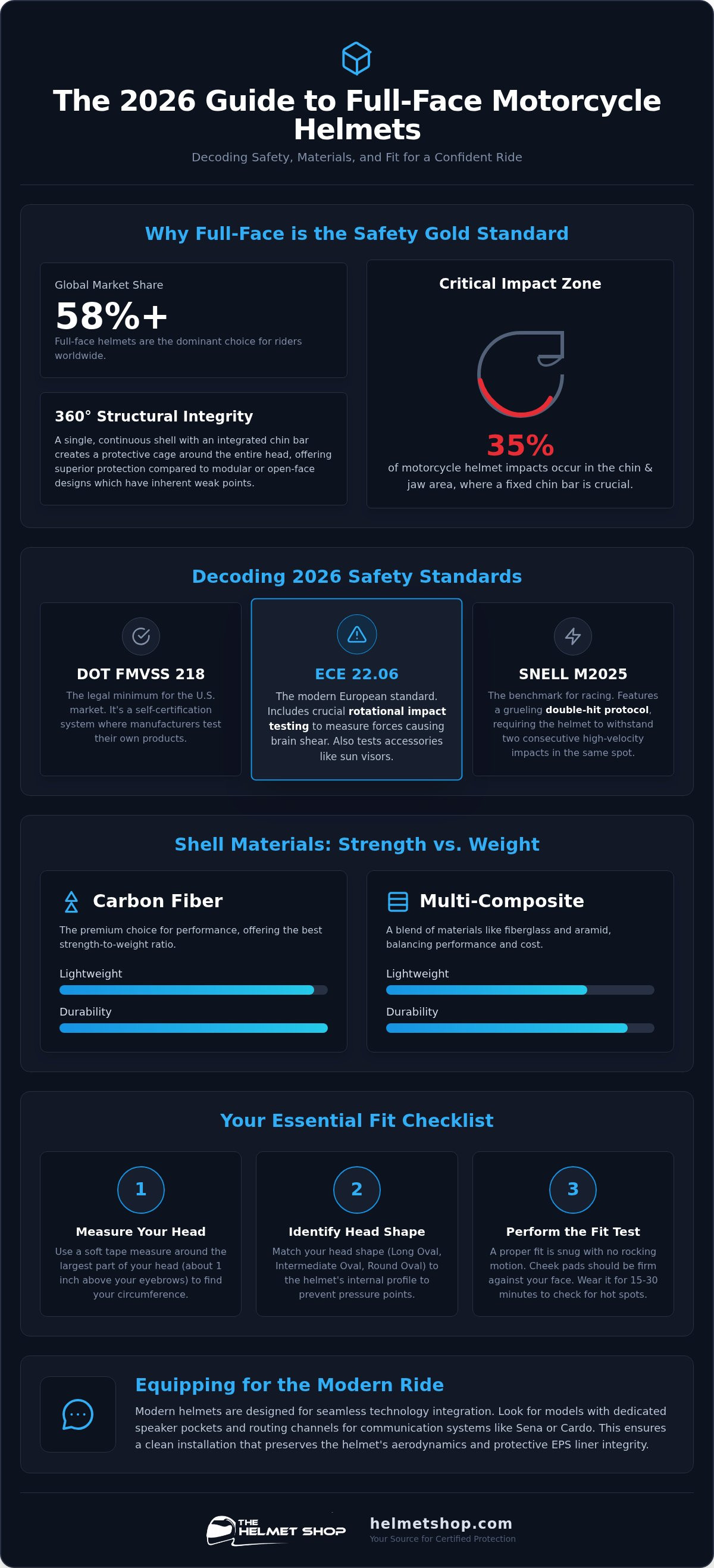
Did you know that full-face helmets now account for over 58% of the global market? By 2026, the full face motorcycle helmet has evolved from a simple protective shell into a precision instrument designed to mitigate rotational forces and eliminate rider fatigue. You know that your gear is the most critical investment you make, but the technical jargon can be overwhelming. It's frustrating to weigh ECE 22.06 against SNELL M2025 while worrying if a helmet will be too noisy or heavy for long weekend rides.
We believe that safety shouldn't be a guessing game. This guide helps you decode the latest 2026 safety standards so you can ride with total confidence. You'll discover how premium brands like Shoei and Arai use advanced shell materials to create lightweight, ventilated designs that protect without the bulk. We also look at how to ensure your new helmet fits your unique head shape and integrates perfectly with Bluetooth communication systems like Sena or Cardo. From understanding impact engineering to finding the perfect fit, here is everything you need to stay protected on the road.
Key Takeaways
- Identify the critical differences between ECE 22.06 and SNELL M2025 ratings to ensure your gear meets the highest 2026 standards.
- Learn why a high-quality full face motorcycle helmet provides the 360-degree structural integrity that modular designs cannot match.
- Compare advanced shell materials like carbon fiber and multi-composites to choose a helmet that balances lightweight comfort with maximum durability.
- Master the essential steps for measuring your head and identifying your oval shape to prevent wind noise and pressure points.
- Discover how to integrate dedicated Bluetooth headsets from Sena or Cardo while preserving the aerodynamic performance of your helmet.
Why the Full-Face Motorcycle Helmet Remains the Safety Gold Standard
A full face motorcycle helmet is the most complete piece of safety equipment a rider can own. It consists of a single, continuous shell that integrates a fixed chin bar and a moveable face shield. This design is the foundation of the 360-degree protection philosophy. Modular and open-face helmets often leave the jaw and face vulnerable. By contrast, the full-face design creates a protective cage around your entire head. For a detailed Motorcycle helmet safety overview, it's clear that this one-piece construction is the primary choice for professional racers and safety-conscious commuters alike.
Many riders worry that a sealed shell will feel too hot. Modern engineering has largely eliminated this issue. Premium brands now use sophisticated intake and exhaust ports to pull cool air in and push warm air out. If you want to learn more about how these systems work, read our guide to motorcycle helmet ventilation. Beyond cooling, the one-piece gasket system provides excellent noise attenuation. It blocks the wind whistle that causes hearing damage and mental fatigue. You get a quieter, more focused riding experience.
Structural Integrity and the Fixed Chin Bar
The chin bar is not just a comfort feature. Statistics show that roughly 35% of motorcycle helmet impacts occur in the chin and jaw area. In these scenarios, the rigid protection of a fixed bar is unmatched. Modular helmets rely on mechanical hinge points and latches which can be a point of failure under extreme stress. A fixed shell doesn't have these weak spots. It manages energy distribution more effectively by spreading impact forces across the entire surface of the helmet. This helps the internal EPS liner absorb energy as it was designed to do.
Aerodynamics and Reduced Rider Fatigue
Safety also includes your ability to stay alert. A poorly designed helmet causes neck strain and buffeting at highway speeds. The aerodynamic shape of a modern full face motorcycle helmet is engineered to reduce lift. Manufacturers like Shoei and Arai use wind tunnel testing to refine their shell shapes. They add rear spoilers and diffusers to stabilize your head in the wind stream. When your head isn't being tossed around by the wind, you don't get tired as quickly. You stay sharper, react faster, and enjoy the ride more; you can also learn more about targeted exercises to strengthen your neck against wind resistance.
Decoding 2026 Safety Standards: DOT, ECE 22.06, and SNELL
Choosing a full face motorcycle helmet is about more than just finding a design you like. The safety rating on the back of the shell is your primary indicator of how well that gear performs during an accident. In the U.S., the DOT FMVSS 218 standard is the legal minimum. It is important to remember that DOT is a self-certification system where manufacturers test their own products. For riders who want independent, third-party verification, looking toward ECE and SNELL standards is essential. If you are unsure how to spot a safe lid, NHTSA's guide to choosing a motorcycle helmet provides a solid foundation for identifying legitimate gear and avoiding dangerous novelty products.
Novelty helmets are a significant risk on the road. These "brain buckets" often lack the internal EPS liners needed to absorb energy and may carry fraudulent certification stickers. They offer zero protection in a slide or impact. A genuine, certified helmet is a precision-engineered tool. You can explore our curated selection of certified full-face helmets for sale to find a model that meets elite 2026 safety benchmarks.
The Shift to ECE 22.06: More Than Just a Label
The 2026 riding season is dominated by the ECE 22.06 standard. This regulation replaced the older 22.05 benchmark to address modern crash data more accurately. The most significant update is the inclusion of rotational impact testing. These oblique hits measure the forces that cause brain shear, which is a leading cause of serious injury. Manufacturers must also test official accessories, such as integrated sun visors, to ensure they don't shatter or compromise the shell's integrity. You might notice that some 22.06-certified helmets feel slightly larger. This is often due to increased EPS density required to pass more rigorous impact tests at both high and low speeds.
SNELL M2025 and High-Velocity Impact Testing
For track-day enthusiasts and professional racers, SNELL M2025 remains the target. Unlike other ratings, SNELL uses a double-hit protocol. This requires the full face motorcycle helmet to withstand two consecutive impacts in the exact same location. It's a grueling test designed to simulate high-velocity racing accidents where a rider might hit a curb or another bike. While these shells are incredibly stiff, they are optimized for high-energy management. The trade-off is a shell that may feel less "plush" in a low-speed tip-over but offers maximum protection during a high-speed track incident.
Premium Shell Materials: Carbon Fiber vs. Multi-Composite
The shell of a full face motorcycle helmet is your first line of defense against impact and abrasion. While all road-legal helmets must adhere to the Federal Motor Vehicle Safety Standard 218, the materials used to meet those requirements vary significantly in performance and weight. Most entry-level helmets use polycarbonate, which is an injected plastic. It is cost-effective but heavier and more prone to UV degradation over time. Fiberglass composites sit in the middle, offering better energy dispersion through a hand-laid fiber network. Carbon fiber represents the pinnacle of shell technology, providing extreme rigidity at the lowest possible weight.
Multi-Composite is a blend of organic fibers and high-performance resins for optimal flex. This construction allows the shell to be strong enough to resist penetration while remaining flexible enough to assist the internal EPS liner in energy absorption. Premium materials maintain their structural integrity longer than polycarbonate. Plastic shells often have a recommended five-year lifespan because the material becomes brittle. Composite shells are more resilient, though we still recommend regular inspections for any signs of stress or damage.
The Carbon Fiber Advantage: Weight and Strength
Carbon fiber is prized for its incredible strength-to-weight ratio. For a long-distance tourer or a track enthusiast, every gram matters. Choosing lightweight full face helmets is the most effective way to reduce neck strain and shoulder fatigue during extended rides. Beyond the functional benefits, carbon fiber has a distinct aesthetic appeal with its visible weave patterns. However, the true value lies in how the material behaves during a crash. It is designed to crack and delaminate upon impact, which is a controlled way of shedding kinetic energy before it reaches the rider.
Shoei and Arai: The Science of the Shell
Industry leaders like Shoei and Arai take shell construction to a specialized level. Shoei utilizes their Advanced Integrated Matrix (AIM), which uses multiple layers of organic fibers and resin to create a shell that is both light and incredibly tough. They use a hand-laid process to ensure consistent thickness across every square inch of the helmet. Arai follows a similar philosophy with their complex laminate construction. They focus heavily on the Arai R75 shape, which emphasizes a round, smooth shell. This design is engineered to "glance off" obstacles rather than catch on them, minimizing the rotational forces transferred to the brain. These brands refuse to use injected plastic for their top-tier models because they prioritize the superior energy management of hand-crafted composites.
The Essential Checklist for Choosing Your Full-Face Helmet
Selecting a full face motorcycle helmet is a technical task that goes beyond aesthetic appeal. A helmet that looks great but fits poorly is both uncomfortable and dangerous. To ensure you are getting the maximum protection from your gear, follow this systematic checklist before making your final choice.
- Step 1: Measure your head circumference accurately. Use a soft cloth tape measure. Wrap it around your head about a half-inch above your eyebrows and ears to find your largest measurement in centimeters.
- Step 2: Identify your head shape. Look in a mirror or ask a friend to look down at the top of your head. Are you a Long Oval, Intermediate Oval, or Round Oval? Size is just a number; shape determines the fit.
- Step 3: Check for "hot spots." Wear the helmet for at least 15 minutes. If you feel localized pressure or pain on your forehead or temples, the shell shape is not a match for your anatomy.
- Step 4: Perform the "roll-off" test. With the chin strap fastened, grab the rear base of the helmet and try to pull it forward off your head. It should stay firmly in place.
- Step 5: Evaluate your field of vision. Ensure you have a clear peripheral view to see your mirrors and cross-traffic. Check if you can easily operate the visor tabs while wearing your riding gloves.
Getting these steps right ensures that the energy-absorbing liners can do their job during an impact. You can explore our expert-selected inventory at helmetshop.com to find a model that aligns with your specific measurements.
Intermediate Oval vs. Long Oval Head Shapes
Shape is often more important than raw size for long-term comfort. Most riders in North America fall into the "Intermediate Oval" category, which is slightly longer front-to-back than side-to-side. However, if you often experience forehead pressure in standard helmets, you likely need a "Long Oval" shell. Brands like Arai cater to this by categorizing specific models, such as the Signet-X, for longer head shapes. Don't try to fix a shape mismatch by sizing up. This creates dangerous gaps. Instead, use different cheek pad thicknesses to customize the snugness of the fit once you have the correct shell shape.
Ventilation and Shield Technology
Modern full-face designs have revolutionized climate control. In 2026, a Pinlock-ready shield is essential for fog-free riding in cold or humid conditions. This dual-pane system creates a thermal barrier that prevents condensation. When evaluating airflow, look for "active" ventilation intake ports on the chin and forehead. These allow you to manually open or close the vents depending on the weather. While internal sun shields offer great convenience for riding into the sunset, remember they add a small amount of weight and complexity to the internal shell design. Choose based on whether you prefer integrated features or the lightest possible weight.
Equipping Your Full-Face Helmet for the Modern Ride
A full face motorcycle helmet is the foundation of your safety kit, but its performance depends on how you equip and maintain it. Modern riders often require integrated technology for navigation and communication. Integrating bluetooth motorcycle headsets has become a standard requirement for the 2026 season. Brands like Sena and Cardo now offer "helmet-specific" units. These systems fit into pre-molded pockets within the EPS liner. This design ensures that speakers don't create uncomfortable pressure points or compromise the structural integrity of the shell during an impact.
Safety is a holistic concept. You should match your helmet with high-quality apparel to ensure consistent protection across your entire body. We recommend pairing your lid with Tourmaster jackets for weather resistance and Cortech gloves for tactile control. Consistency in gear quality prevents "weak links" in your defensive layers. Maintenance is also vital for long-term performance. Follow these simple steps to keep your gear in top condition:
- Wash removable liners regularly to prevent salt and oils from degrading the fabric.
- Use a drop of silicone oil on the visor gasket to maintain a tight, quiet seal.
- Clean the outer shell with mild soap and water only; avoid harsh chemicals that can damage composite resins.
- Inspect the visor for scratches that can cause glare and vision distortion at night.
Shoei, Arai, and HJC: Choosing Your Path
Each premium brand offers a distinct philosophy. Shoei is the benchmark for refinement and quiet operation. Many riders find that Shoei helmets are a worthy investment because they provide a perfect balance of luxury and safety. Arai remains the choice for those who prioritize ultimate safety and the "glancing off" philosophy. HJC provides exceptional performance value, offering race-ready features at a more accessible price point. Choosing a high-quality full face motorcycle helmet is the single most important piece of motorcycle gear you will own. It protects your most vital asset while defining your riding experience.
Next Steps: Professional Fitment and Selection
Graphics and colors are exciting, but they should never overshadow safety ratings and fitment. Prioritize ECE 22.06 or SNELL certification above all else. If you are a national customer, our team at The Helmet Shop is available to provide technical advice and fitment guidance. We help you navigate the complexities of head shapes and shell materials to find your perfect match. Take the next step in your safety journey and browse our curated collection of full-face motorcycle helmets today.
Invest in Your 2026 Riding Safety
Choosing the right full face motorcycle helmet is the most critical decision you'll make for the upcoming season. We've explored how the latest ECE 22.06 and SNELL M2025 standards have redefined impact protection through rigorous rotational testing. You now understand that shell materials like carbon fiber and multi-composites do more than just save weight; they manage energy to keep you safe when it matters most. By following a systematic fitment checklist and accounting for your unique head shape, you can eliminate the hot spots and wind noise that cause rider fatigue.
At The Helmet Shop, we act as your reliable guide in this specialized market. As an authorized premium dealer for Shoei, Arai, and HJC, we offer a curated selection of gear that meets the highest global standards. Our team provides expert technical support for national customers to ensure your new gear fits perfectly and integrates seamlessly with your communication systems. Don't leave your protection to chance. Shop Premium Full Face Helmets at The Helmet Shop and ride with the confidence that comes from professional-grade protection. We look forward to helping you find your perfect fit.
Frequently Asked Questions
Is a full-face helmet really safer than a modular helmet?
Yes, a full-face helmet provides superior structural integrity because it features a single-piece shell. It lacks the mechanical hinge points and latches found in modular designs, which can be points of failure under extreme stress. This rigid construction ensures that impact forces are distributed across the entire shell surface. Since roughly 35% of impacts occur in the chin area, the fixed chin bar offers the most reliable protection available.
How often should I replace my full-face motorcycle helmet?
You should replace your helmet every five years or immediately after any impact. The protective EPS liner and composite resins degrade over time due to UV exposure, temperature changes, and salt from sweat. Even if the exterior looks perfect, the internal materials become brittle and lose their ability to absorb energy. Check the manufacture date on the chin strap or under the comfort liner to track your helmet's age accurately.
What is the quietest full-face motorcycle helmet available in 2026?
The Shoei RF-1400 and Arai Corsair-X remain the quietest options for the 2026 season. These premium brands use extensive wind-tunnel testing to create aerodynamic shapes that minimize wind turbulence. A properly fitted full face motorcycle helmet with a high-quality neck roll and chin curtain will always outperform other styles. These features create a tight seal around the base of your head to block the wind whistle that causes hearing fatigue.
How should a full-face helmet fit when it's brand new?
A new helmet should feel snug and firm without causing painful pressure points on your forehead or temples. Your cheeks should be slightly compressed, similar to a "chipmunk" look, and the helmet shouldn't shift when you shake your head. Remember that the interior comfort padding will break in and compress by about 15% to 20% after your first few hours of riding. If it's loose now, it'll be too big later.
Can I wear glasses with a full-face motorcycle helmet?
Yes, many modern helmets feature dedicated eyeglass channels built into the cheek pads. Brands like HJC and Shoei specifically design their interiors to accommodate frames without pressing them against your temples. Always try on a helmet with your glasses to ensure the visor can close completely without hitting the frames. If you have trouble with fogging, look for a helmet that includes a Pinlock-ready shield to keep your vision clear.
What is the difference between ECE 22.06 and DOT approved helmets?
ECE 22.06 is a rigorous, third-party testing standard that includes rotational impact and multi-speed testing. It's the mandatory benchmark for the 2026 European market. By contrast, DOT is a self-certification system where the manufacturer guarantees the helmet meets minimum U.S. federal standards. Most safety-conscious riders prioritize ECE 22.06 or SNELL ratings because they involve comprehensive independent verification and more demanding crash simulations.
Are carbon fiber helmets safer or just lighter than fiberglass?
Carbon fiber is primarily used for its exceptional strength-to-weight ratio. While both materials can pass the same safety tests, a carbon fiber full face motorcycle helmet reduces rider fatigue by putting less strain on the neck and shoulders. This improved ergonomics helps you stay alert and react faster during long rides. Carbon fiber also has unique energy-shedding properties, as the material is designed to delaminate and crack to absorb kinetic energy.
How do I clean the inside of my full-face helmet?
Remove the comfort liner and cheek pads to hand-wash them using a mild baby shampoo or specialized gear cleaner. Air-dry them completely before reassembly to prevent mold and odors. For helmets without removable liners, use a damp cloth and a gentle soap solution to spot-clean the interior fabric. Never use harsh chemicals or high heat, as these can damage the EPS foam liner and compromise your safety.


