

Last Updated: November 5, 2026
Quick Summary
Helmet fogging in cold weather is caused by warm breath condensing on the cold inside of your visor. The most reliable fix is a Pinlock insert, a second clear lens that traps moist air and keeps the outer lens clear, combined with proper chin vent use and a clean visor.
- Condensation forms when warm, moist breath hits the cold inside of your visor.
- A Pinlock insert creates a sealed air gap that keeps the outer lens clear.
- Open the chin vent fully to move breath-moisture away from the visor at low speed.
- Clean the visor's inside with mild soap, then rinse and dry it with a soft towel.
- Do not install a Pinlock insert on a visor with factory anti-fog coating or spray.
Table of Contents
- Why Your Motorcycle Helmet Visor Fogs Up in Cold Weather
- Diagnose Why Your Specific Helmet Is Fogging
- Pinlock Visor Inserts: How They Work and How to Install One
- DIY Helmet Anti Fog: Sprays, Dish Soap and Cleaning Your Visor
- Helmet Ventilation and Breath Deflectors That Reduce Fogging
- Clearing Fog Safely While Riding and Choosing the Right Fix by Budget
- Choose Your Next Fog-Free Helmet Setup at The Helmet Shop
- Frequently Asked Questions
Why Your Motorcycle Helmet Visor Fogs Up in Cold Weather
When it's cold outside and you're riding with a full-face helmet, helmet fogging can set in fast on your visor. Our women's motorcycle helmets guide walks through fit, safety and selection so you can find a setup that suits you. That fog blocks your view at the exact moment you need to see clearly.
Fogging happens because of the difference between your warm breath and the cold visor surface. Here's how it works.
How breath and temperature difference create condensation
Your breath is warm and full of moisture. When that warm, wet air hits the cold inside of your visor, the moisture turns into tiny water droplets.
The bigger the temperature gap, the worse the helmet fogging gets. Cold air, humid conditions, and stop-and-go riding all make it worse. Hard exertion also means you breathe harder, which pushes more moisture onto the visor.
Diagnose Why Your Specific Helmet Is Fogging
Not every fogging problem has the same cause. Before you buy anything, check a few things:
- Ventilation: Are the vents closed, or is the chin area sealed tight?
- Breath path: Does your breath hit the inside of the visor, or does it flow down and out?
- Visor condition: Is the inside of the visor scratched, dirty, or coated with old anti-fog residue?
If your visor fogs only when you stop at lights, the issue is likely airflow at low speed. If it fogs the moment you start riding in the cold, condensation from your breath is the main cause.
Pinlock Visor Inserts: How They Work and How to Install One
A Pinlock insert is a second clear lens that sits on the inside of your visor. It creates a sealed air gap between the two layers.
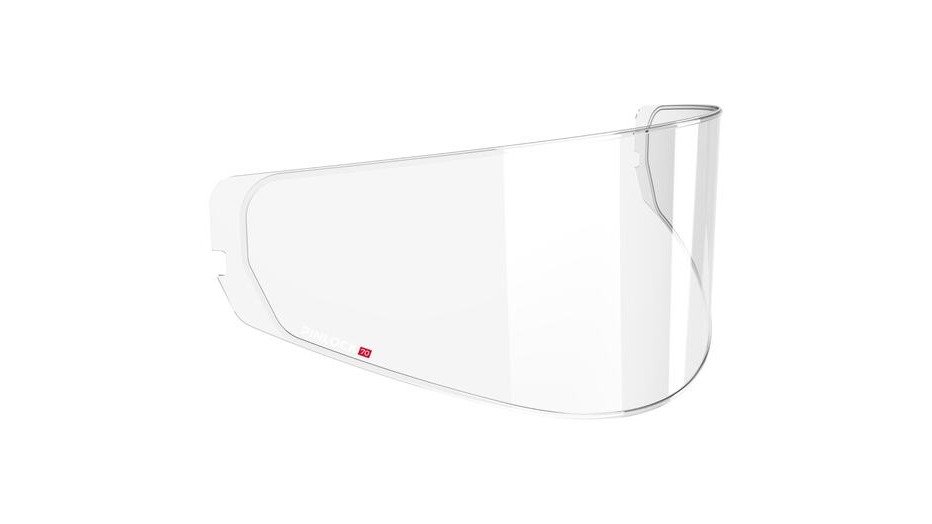
For a reader who wants a long-term fix, a Pinlock insert is one of the most reliable options. The Icon Domain Helmet Pinlock Prepared Shield is one example of a visor set up to take an insert.

To install one, follow these steps:
- Clean the visor's inner and outer surfaces with a soft cloth.
- Confirm the insert matches your visor model.
- Line up the insert's pins with the visor's mounting points.
- Press the insert into place and check that the seal is tight.
- Wipe the outside of the visor to remove fingerprints.
If you need a replacement insert for your helmet, the Pinlock 120 Lens Viper Replacement Shield Clear is built for that purpose.
Matching a Pinlock lens to your helmet model
Pinlock lenses are not one-size-fits-all. Before ordering, check that the lens is made for your helmet model and visor shape.
If you are comparing sizes, the Pinlock 70 Lens Clear is worth a look.
Watch out: Do not install a Pinlock insert on a visor that already has a factory anti-fog coating or an anti-fog spray applied.
Pinlock inserts are one of the most reliable long-term fixes, and the article's install steps translate into this quick reference.
| Step | What to do | Note |
|---|---|---|
| 1 | Clean the visor's inner and outer surfaces | Use a soft cloth |
| 2 | Confirm the insert matches your visor model | Lenses are not one-size-fits-all |
| 3 | Line up the pins with the mounting points | Align before pressing |
| 4 | Press the insert in and check the seal | Seal must be tight |
| 5 | Wipe the outside of the visor | Removes fingerprints |
DIY Helmet Anti Fog: Sprays, Dish Soap and Cleaning Your Visor
Many riders use a simple anti-fog spray. It works by forming a thin film that keeps droplets from forming.
-
Anti-fog spray: Creates a thin film that stops droplets from forming. Reapply it often.
-
Cleaning: Dirt and oil on the visor make fog worse. Clean the inside with mild soap, rinse well, and dry with a soft towel.
The HELMET ANTI-FOG 4 OZ EA is priced at $8.95 and is designed to form a long-lasting barrier on the inside of your visor. Apply a few sprays to the inside of the visor. Do not use it on a visor with a Pinlock insert or factory anti-fog coating.

Helmet Ventilation and Breath Deflectors That Reduce Fogging
Airflow is the other half of the fix. Fresh air moving past your face keeps the visor warmer and drier, while stale humid air settles on the glass. But ventilation is not a single switch, it is a set of paths you have to manage together, and the right settings change with speed and weather.
How helmet airflow actually works
A full-face helmet typically has three airflow paths that matter for fogging:
- Chin vents: Pull outside air across your mouth and nose, which is where most moisture comes from. These do the most anti-fog work at low speed.
- Forehead and crown vents: Push air over the top of your head and out the rear exhaust. They cool your head but do less for the visor unless the chin path is also open.
- Rear exhaust vents: Give humid air somewhere to go. If the exhausts are blocked by a neck roll, a scarf, or a backpack strap, the incoming air has nowhere to escape and fog builds.
A common pattern is that riders open the top vents and leave the chin vent closed, then wonder why the visor still fogs. At a stop, the chin vent is the one that matters most because it puts air right where your breath is.
Vent settings by condition
- Cold morning start: Open the chin vent fully and crack the visor one notch until you are moving. Once airflow is established, close the visor and keep the chin vent open.
- Stop-and-go traffic: Keep the chin vent open even when it feels cold. The low-speed airflow is exactly when you need it, and fogging is worst at lights.
- Rain and high humidity: Open chin and rear exhaust vents together so moist air can leave. Closing everything to stay dry traps moisture and fogs faster.
Breath deflectors and breath guards
A breath deflector, sometimes called a breath guard, is a soft or semi-rigid piece that clips inside the chin bar and directs your exhaled air down and away from the visor.
Two things determine whether it works:
- Seal against your face: The deflector has to sit close enough to your nose and cheeks that breath goes through it rather than around it. A gap at the sides lets warm air escape straight up onto the visor.
- Correct part for your helmet: Deflectors are molded for specific chin bar shapes. A universal trim-to-fit piece can work, but an OEM part seats better.
For a replacement breath deflector on an HJC DS-X1, the DS-X1 BREATH GUARD is a genuine OEM part priced at $13.99.

Watch out: A breath deflector that presses on your nose or blocks your mouth can make you breathe harder, which pushes more moisture out and can make fogging worse.
Fit and the neck seal
A snug helmet that lets air move past the seal can reduce fogging more than a loose one, but the neck roll and chin curtain matter just as much. If your helmet has a removable chin curtain, fit it for cold-weather riding.
Wearing glasses? A helmet that fits well over them matters too. How to Choose Helmet Size for Glasses explains how to size a helmet for eyewear.
Clearing Fog Safely While Riding and Choosing the Right Fix by Budget
Most guides treat "open the visor" as a single tip. In practice, what is safe at a stop is very different from what is safe at speed, and mixing the two is where riders get into trouble. This section separates the two and then helps you pick a fix by budget.
What is safe at a stop
At a light or a pull-off, you have time and both hands free. This is when you can:
- Open the visor fully and let it clear.
- Wipe the inside with a soft, clean cloth, but only after you have stopped.
- Adjust vents, reseat a breath deflector, or check that a Pinlock insert is seated.
What is safe while moving
While riding, your options are limited on purpose. The safe actions are:
- Crack the visor one notch at low speed to let humid air out. Do this at low speed and in a safe spot, and keep your eyes on the road.
- Open the chin vent if it is closed. This is a hand movement you can make without looking down.
- Adjust your breath, breathe through your nose and direct air down, which a breath deflector helps with.
Watch out: Opening a visor fully at highway speed is risky. The visor can catch air and pull, the wind can tear your eyes and make them water, and the sudden airflow can be loud enough to mask traffic. Never take your eyes off the road or your hands off the bars to wipe the visor while moving.
Why fogging gets worse at the worst time
Fogging is worst at low speed and at stops because there is little airflow to carry moisture away, and it is worst on cold mornings because the temperature gap is largest. That combination, cold start plus stop-and-go, is exactly when riders are most tempted to wipe the visor while moving. Plan for it: set your vents and deflector before you pull away, and accept that you may need to crack the visor at the first light.
Choosing the right fix by budget
Once you know your cause, pick the fix that matches it rather than buying everything at once.
- Under $15: Anti-fog spray and a clean visor. Low cost, reapplied often. Best for riders who fog occasionally or want a backup.
- Around $15 to $40: A breath deflector or ventilation upgrade for your helmet. Best for riders who fog mainly from breath, especially at stops.
- Around $35 to $50: A Pinlock insert. This is the most reliable long-term option for most riders, and it is the fix that holds up in cold and rain rather than needing reapplication.
The PINLOCK HJ-39 PINLOCK LENS is priced at $39.99 and the PINLOCK HJ-33 PINLOCK LENS is priced at $34.99.
A practical order for most riders: start with a clean visor and correct vent settings, add a breath deflector if breath is the cause, then move to a Pinlock insert if you ride in cold or humid weather regularly.
Choose Your Next Fog-Free Helmet Setup at The Helmet Shop
Fog-free riding comes from knowing your cause and picking the right fix. At Helmet Shop, we carry helmets from brands like ICON, HJC, Shoei, Arai, and Daytona, along with Pinlock inserts, anti-fog products, and breath guards. Start with a clean visor and proper ventilation, then add a Pinlock insert if you ride in cold or humid weather. Browse the helmet selection and add the right anti-fog setup for your next ride.
Frequently Asked Questions
How do I keep my motorcycle helmet from fogging up?
Combine a few steps: fit a Pinlock-style insert if your helmet supports one, apply an anti-fog treatment to a clean visor, and make sure your helmet's ventilation and breath deflector are open and directing exhaled air downward. Keep the visor closed at speed, and open it briefly at a stop to clear moisture. If fogging persists, check the seal and the fit, since a loose helmet lets warm breath reach the visor more easily.
Does Dawn dish soap prevent fogging?
A thin, even film of mild dish soap can reduce fogging on some visors because it leaves a surfactant layer that breaks up droplets. Use a small amount, rinse with clean water, and buff dry with a soft microfiber towel so no streaks remain. It is a short-term, low-cost option, and it does not replace a Pinlock insert or a dedicated anti-fog product, which last longer and are designed for the job.
What is the best anti-fog solution for a motorcycle helmet?
A Pinlock insert is a sealed second lens that creates an air gap between the two layers of the visor. For a quick, low-cost option, Molecule Helmet Anti-Fog ($8.95, 4 oz) is applied to the inside of the shield. Do not use it on a shield that already has a Pinlock insert or a factory anti-fog coating.
Is it safe to ride with a fogged motorcycle visor?
No. A fogged visor cuts the visibility you rely on to spot hazards, and it can get worse quickly as you ride. Pull over somewhere safe and stop before you try to clear it. Opening the visor briefly at a stop can clear moisture, but do not fiddle with the visor or helmet while moving. If fog keeps returning, address the cause before your next ride.


