

Is your mesh jacket a legitimate piece of safety equipment or just a glorified t-shirt? Many riders worry that high-airflow mesh motorcycle jackets trade essential protection for basic comfort. The reality is that modern gear engineering allows you to stay cool without compromising your skin. Material placement and construction quality are far more important than the sheer weight of the fabric.
We understand the frustration of suffering through heat soak during a mid-July ride. It is difficult to focus on the road when you are drenched in sweat, yet the fear of gear failure during a slide is always in the back of your mind. You deserve gear that performs in the heat and protects in a crash. This guide will help you master the science of stay-cool riding by teaching you how to evaluate, fit, and maintain high-airflow jackets.
We will break down technical specifications like Denier ratings and EN 17092 abrasion standards. You will also learn why upgrading to CE Level 2 armor can increase impact energy absorption by approximately 20 percent. By the end of this article, you'll know exactly how to find a jacket that balances maximum ventilation with professional-grade protection.
Key Takeaways
- Understand how open-weave polyester and nylon construction prevents heat stroke and rider fatigue during extreme summer heat.
- Learn to decode technical safety specs, including why a 600D rating is the benchmark for high-impact protection in the slide zones of mesh motorcycle jackets.
- Compare full-mesh and hybrid designs to determine which configuration best suits your specific urban commuting or long-distance touring needs.
- Discover the correct way to measure for a summer jacket to ensure your armor stays perfectly positioned over your shoulders and elbows.
- Explore performance-oriented options from trusted brands like Tourmaster and Cortech that balance modern innovation with dependable durability.
What is a Mesh Motorcycle Jacket and Why Do You Need One?
A mesh jacket is a specialized piece of riding gear designed specifically for high-temperature environments. Unlike traditional solid textile or leather coats, these garments utilize an open-weave polyester or nylon construction. This design creates a porous surface that allows air to flow directly through the fabric to your body. In the broader context of motorcycle personal protective equipment, mesh serves as the primary defense against heat-related riding hazards.
Choosing mesh motorcycle jackets is about more than just comfort; it's a critical safety decision. High temperatures lead to rider fatigue, slower reaction times, and even heat stroke. When you're physically exhausted from the sun, your ability to manage your bike diminishes. Mesh gear allows you to maintain the ATGATT (All The Gear, All The Time) philosophy without risking heat exhaustion. It provides a viable alternative for riders who might otherwise be tempted to ride in a t-shirt, which offers zero protection against road rash.
The Science of Evaporative Cooling on a Bike
Riding in a t-shirt is actually less effective at cooling you down than wearing a high-quality mesh jacket. Direct sun exposure on bare skin raises your core temperature and causes sweat to evaporate too quickly to cool you effectively. A mesh jacket creates a controlled micro-climate. It shields your skin from the sun's radiant heat while allowing constant airflow to interact with your sweat. This process facilitates consistent evaporative cooling, which is the body's natural way to regulate temperature. Manufacturers often measure this efficiency using CFM (Cubic Feet per Minute) ratings. This metric tracks the volume of air passing through the mesh panels every minute to ensure the rider stays refreshed.
Mesh vs. Perforated Leather: Which is Better?
Leather remains the benchmark for abrasion resistance, but it has limitations in extreme heat. Perforated leather features thousands of tiny holes to allow air through, yet the material's inherent thickness retains significant heat. Mesh is significantly lighter and provides vastly superior airflow. Most riders find the "cross-over" temperature to be around 85 degrees. Below this, perforated leather is manageable. Above this point, the weight and bulk of leather often become a liability. Modern motorcycle gear has evolved to bridge this gap. You can now find hybrid jackets that utilize mesh for airflow on the chest and back while using heavy textiles or leather in high-impact slide zones like the shoulders and elbows. This provides a balanced approach to summer safety without sacrificing the structural integrity needed during a slide.
Evaluating Safety: How Mesh Jackets Protect You in a Slide
Many riders fear that mesh motorcycle jackets will simply disintegrate during a slide. This concern is understandable given the lightweight, porous nature of the fabric. However, safety depends on material engineering rather than sheer thickness. Manufacturers use Denier (D) ratings to indicate the strength of the textile used in specific areas. Denier is the mass in grams per 9,000 meters of fiber. For effective protection, you should look for gear that uses 600D or higher polyester or nylon in the "hit zones." These zones include the shoulders and elbows, which take the brunt of the impact and friction during a fall.
Solid reinforcement in these high-impact areas is non-negotiable. While the mesh panels provide the airflow, the structural textile provides the abrasion resistance. According to NHTSA motorcycle safety guidelines, keeping your limbs fully covered is a fundamental rule of the road. High-quality jackets ensure this coverage remains intact by utilizing double or triple stitching. This construction increases the burst strength of the seams, preventing the jacket from splitting open when it hits the pavement. Without these reinforced seams, even the strongest fabric could fail at the joints.
There is a common myth that mesh will melt into your skin due to friction heat. Modern high-tenacity polymers are engineered to resist this. While low-quality, "no-name" mesh might fail, reputable brands use heat-resistant materials that maintain their integrity through a typical street-speed slide. The friction heat generated during a slide is significant, but quality textiles are designed to dissipate that energy without compromising the rider's skin.
Understanding Armor in Summer Gear
Armor provides the impact protection that fabric alone cannot. CE Level 1 armor is the industry standard, while CE Level 2 absorbs approximately 20 percent more energy. In summer gear, traditional bulky pads can block airflow and cause sweat spots. Look for "vented" armor like D3O Ghost or SeeSmart. These protectors are thin and perforated, allowing air to pass through while still meeting rigorous safety standards. Many jackets ship with a simple foam back pad. We recommend replacing this with a dedicated CE-rated back protector for genuine spinal safety.
Material Breakdown: Cordura, Kevlar, and High-Tenacity Mesh
Branded materials offer more predictable performance. Cordura is an industry favorite because its slide times are well-documented and consistent. Some premium options now feature Kevlar-blended mesh, which provides professional-grade abrasion resistance without adding unnecessary weight. If you're looking for the best balance of safety and airflow, you can browse our collection of armored jackets to find a model that fits your riding style. Choosing materials with a proven track record ensures your gear performs exactly when you need it most.
Types of Mesh Jackets: Finding Your Perfect Match
Selecting the right gear depends entirely on your riding environment. Not all mesh motorcycle jackets are built for the same mission. A short urban commute requires different features than a multi-day tour through varying climates. Understanding the categories helps you prioritize either maximum airflow or enhanced structural integrity.
Full mesh jackets offer the highest possible ventilation. These garments use mesh panels across almost the entire shell. They're ideal for low-speed city riding where airflow is limited by traffic. Commuter-specific models are often cut slightly larger. This design allows them to fit comfortably over work clothes while remaining lightweight enough to stow in a backpack or top case. Noru Apparel offers excellent entry-level options in this category that provide essential protection without excessive bulk.
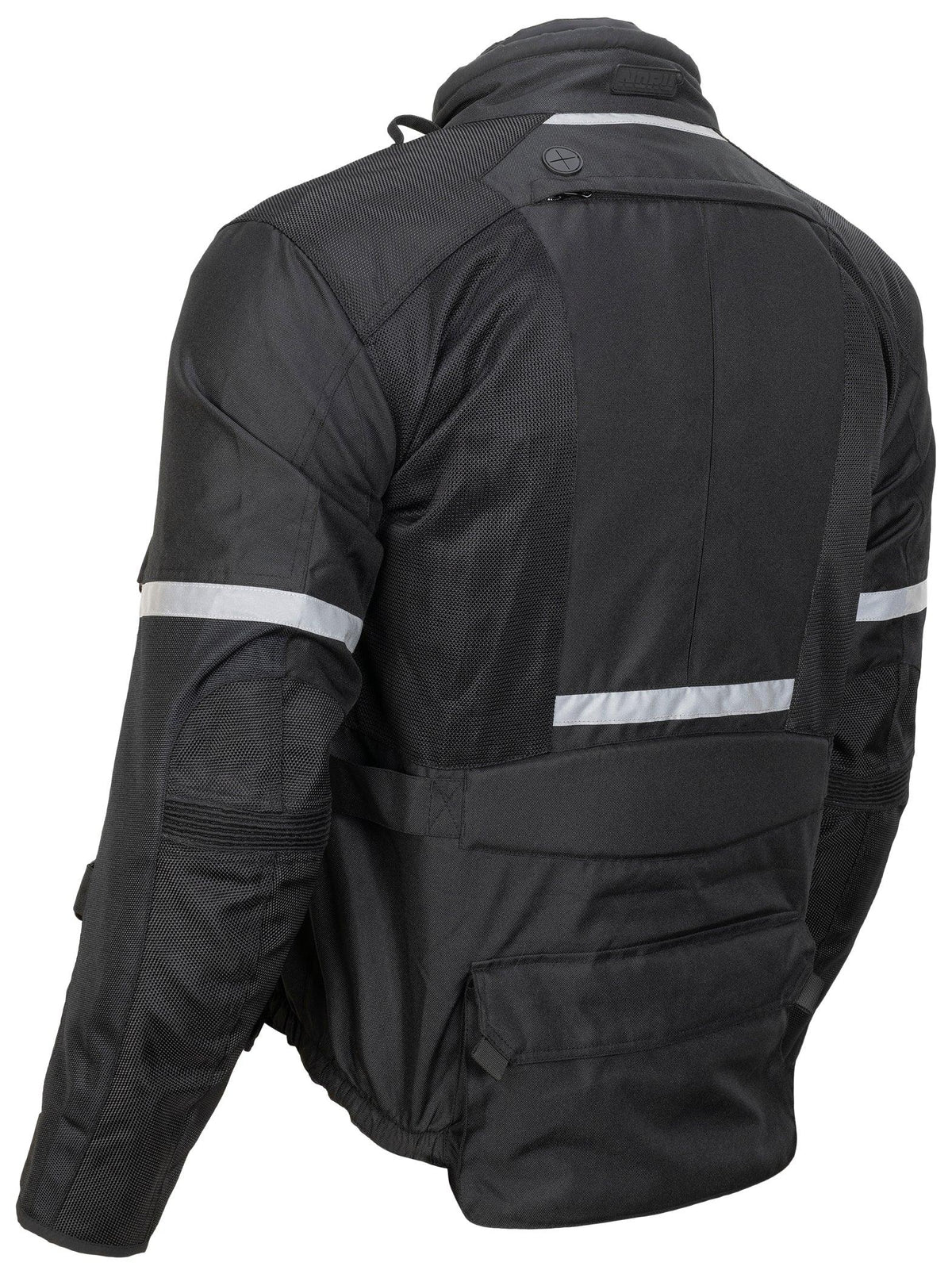
Adventure and touring mesh options provide a longer "three-quarter" cut. These jackets, such as those from Tourmaster, feature multiple external pockets for gear and adjustable waist straps. They're designed for riders who spend hours in the saddle and need gear that doesn't ride up or become uncomfortable over time. These models often include sophisticated adjustment points at the forearms and waist to prevent the fabric from flapping at highway speeds.
The Hybrid Advantage: Safety Meets Airflow
Hybrid jackets are widely considered the gold standard for safety-conscious riders. Brands like Cortech Gear lead this category by combining high-tenacity textile with strategic mesh panels. The design focuses on the "impact triangle": the shoulders, elbows, and back. These areas use solid 600D or higher polyester to ensure maximum abrasion resistance during a slide. The mesh is reserved for the chest, inner arms, and back where impact is less likely.
You can spot a high-quality hybrid by examining the transitions between materials. Premium jackets use reinforced overlays and triple-stitched seams where the mesh meets the solid textile. Cheap imitations often use low-grade mesh in high-impact areas or skip the necessary reinforcements to save on manufacturing costs. A true hybrid provides the peace of mind of high-level protection while maintaining the airflow of a dedicated summer garment.
Multi-Season Mesh: Liners and Versatility
Many modern mesh motorcycle jackets feature multi-season capabilities through the use of drop-liners. A windproof or waterproof liner can transform a summer jacket into a capable piece of gear for 60-degree mornings. When the temperature climbs to 90 degrees in the afternoon, you simply remove the liner and store it. This versatility is essential for touring riders who encounter varying elevations and weather patterns.
Thermal liners are less common in mesh shells but do serve a purpose for riders in desert climates where temperatures drop significantly at night. However, the most versatile setup is a mesh jacket paired with a windproof liner. This combination blocks the "chill" of high-speed airflow during cooler hours without adding the bulk of a full winter coat. It makes your summer gear a viable option for three seasons of riding.
How to Fit and Maintain Your Mesh Riding Jacket
A protective jacket only works if it stays in place during a crash. Finding the right fit for mesh motorcycle jackets requires more than just checking a size chart. Because mesh is lighter than leather, it's more prone to moving around on your body. Follow these steps to ensure your gear remains secure and effective.
- Step 1: Measure accurately. Use a soft measuring tape to check your chest and waist. Always take these measurements while wearing the base layer you plan to use on summer rides. A jacket that fits over a heavy hoodie will be far too loose over a moisture-wicking t-shirt.
- Step 2: Verify armor placement. Once the jacket is on, feel for the internal protectors. The armor must sit directly on the point of your shoulder and the center of your elbow. If the pads shift easily when you move your arm, they won't be there to protect you when you hit the pavement.
- Step 3: Eliminate flutter. The jacket should feel snug against your torso. Loose fabric causes oscillation at highway speeds, which leads to physical fatigue and premature wear.
- Step 4: Perform the reach test. Sit on your bike or mimic your riding position by reaching forward. Ensure the sleeves still cover your wrists and the back of the jacket doesn't ride up too high.
Preventing the "Sail Effect": The Importance of Snug Fit
Loose gear is dangerous gear. If your jacket is too large, the "sail effect" can pull the armor away from your joints during a slide. This displacement leaves your skin vulnerable to abrasion. Use the adjustable straps on the forearms and waist to cinch the material tight. This prevents buffeting and keeps the protectors locked in place. When testing the collar fit, wear your Shoei helmet to ensure there is no interference between the jacket and the helmet's base. A proper fit allows for a full range of head movement without the gear bunching up.
Cleaning and Care: Keeping the Pores Open
Road grime, oil, and bugs are the enemies of airflow. Over time, these contaminants clog the open weave of the fabric, significantly reducing the cooling efficiency of mesh motorcycle jackets. Regular maintenance is essential for peak performance. First, remove all internal armor and liners. Hand-wash the shell in a tub with mild detergent or use a gentle machine cycle if the care tag allows. Never use fabric softeners; they leave a coating on the fibers that traps heat and blocks air. Always air-dry your gear. High-heat dryers can damage the synthetic polymers and cause the fabric to shrink or melt. If you need a fresh start for the season, shop our latest collection of summer jackets to find a high-airflow model that meets your safety needs.
Top Mesh Jacket Brands and Selection at The Helmet Shop
Choosing the right mesh motorcycle jackets is easier when you narrow your search to brands with proven track records. At The Helmet Shop, we curate our inventory to include manufacturers that prioritize both airflow and abrasion resistance. Buying from a specialized retailer ensures you receive the latest safety revisions and up-to-date armor standards. We act as your reliable guide to help you distinguish between entry-level gear and professional-grade protection.
Tourmaster and Cortech: Engineered for the Long Haul
Tourmaster is a staple for touring riders who demand durability. Their Draft Air series is a prime example of pure ventilation paired with long-distance comfort. These jackets often include removable windproof liners to handle the varying temperatures of a cross-country trip. If you start your ride in a cool mountain pass and end in a desert valley, Tourmaster gear adapts to your environment.
Cortech Gear offers a more performance-oriented approach. They focus on aggressive styling and integrated armor systems with high-denier reinforcements in the slide zones. Cortech is known for its precise fit, which minimizes fabric flutter at high speeds. Both brands are designed to accommodate modern Bluetooth motorcycle headsets. This allows for seamless communication during summer touring without bulky wires interfering with your jacket's collar or airflow. A well-integrated headset ensures you stay connected while the mesh keeps you cool.
Noru: Accessible Safety for Every Rider
Noru Apparel provides exceptional value for riders who need essential protection on a budget. The Noru Kaze and Ganjo series demonstrate that reliable safety can be accessible. These jackets are perfect for new riders or urban commuters who need dependable gear for daily use. Noru focuses on the fundamentals: high-airflow mesh shells and CE-rated protectors in the elbows and shoulders. They provide the necessary slide protection without the premium price tag of high-end touring gear.
Before you make your final selection, use this checklist to ensure your new gear meets the standards we've discussed. A quick verification can be the difference between a comfortable ride and a safety compromise.
- Textile Strength: Check for 600D or higher reinforcements in the shoulders and elbows.
- Armor Rating: Verify that the internal protectors are at least CE Level 1.
- Fit Adjustability: Ensure the jacket has straps at the waist and forearms to prevent armor displacement.
- Seam Construction: Look for double or triple stitching in high-impact areas to ensure burst strength.
- Visibility: Confirm the jacket includes reflective piping or panels for night riding safety.
By following these guidelines and choosing a trusted brand, you can enjoy the freedom of summer riding with total confidence. Stay cool, stay protected, and keep your focus on the road ahead.
Ride Cool Without Compromising Safety
You now possess the technical insights needed to choose gear that balances high-airflow cooling with professional-grade impact protection. Remember that safety depends on material placement and a snug, adjustable fit to keep armor locked in place. By keeping your gear clean and the mesh pores open, you ensure maximum evaporative cooling during the hottest days of the season. Don't let the summer heat force you to choose between comfort and your skin.
The Helmet Shop is an authorized dealer for industry leaders like Tourmaster, Cortech, and Noru. Our expert gear advisors are available to answer your specific fitment questions and help you evaluate the technical specs of mesh motorcycle jackets. We also offer fast national shipping on all riding apparel to get you back on the road quickly. Browse our curated collection of protective Mesh Motorcycle Jackets and experience the difference that engineered ventilation makes. Enjoy the freedom of the open road with total confidence in your equipment.
Frequently Asked Questions
Is a mesh motorcycle jacket safe for highway speeds?
Yes, high-quality mesh motorcycle jackets are engineered for highway safety as long as they include reinforced impact zones. Look for 600D or higher textile on the shoulders and elbows to provide the necessary abrasion resistance. While the mesh panels allow for cooling, these solid panels ensure the jacket doesn't shred instantly during a high-speed slide on asphalt.
Do mesh jackets melt in a crash?
Modern mesh gear made from high-tenacity polyester or nylon will not melt into your skin during a typical street crash. These materials are tested to withstand the friction heat generated during a slide. While a mesh jacket is usually a "one-and-done" item that needs replacement after a crash, its primary job is to sacrifice itself to protect your skin.
How much airflow can I actually expect from a mesh jacket?
You can expect maximum airflow that feels almost identical to riding in a t-shirt. Because the open-weave fabric allows air to move directly through the garment, it facilitates constant evaporative cooling. This is significantly more effective than perforated leather, which still retains a layer of warm air against your body.
Should I buy a size larger to fit a hoodie underneath my mesh jacket?
No, you should never size up to accommodate heavy layers under a mesh shell. A summer jacket must fit snugly over your thinnest base layer to keep the armor correctly positioned. If you need warmth for a cool morning, use a dedicated windproof liner or a thin moisture-wicking compression shirt rather than a bulky hoodie.
Can I wear a mesh jacket in the rain?
You can wear a mesh jacket in the rain, but you will get wet almost instantly without a waterproof liner. The open-weave design that provides airflow also allows water to pass through freely. Many riders carry a compact rain shell to wear over their mesh motorcycle jackets when the weather turns unexpectedly.
What is the difference between CE Level 1 and CE Level 2 armor in mesh gear?
CE Level 2 armor provides a higher level of impact protection by absorbing roughly 20 percent more energy than Level 1. While Level 1 is the standard for most lightweight gear, Level 2 is recommended for riders who prioritize safety at higher speeds. Many modern Level 2 protectors are now vented to maintain airflow in summer jackets.
How long does a typical mesh jacket last before it needs replacement?
Most mesh jackets have a functional lifespan of five to seven years depending on UV exposure and care. Over time, the synthetic fibers can degrade from constant sun exposure or improper washing. Inspect your gear annually for frayed seams, fading, or brittle armor; replace it immediately if you've been involved in any type of slide.
Is black mesh hotter than white or hi-viz mesh while riding?
Black mesh absorbs more radiant heat when you're stopped, but the color makes little difference once you are at speed. The massive volume of airflow through the panels quickly dissipates any heat absorbed by the fabric. Choosing white or hi-viz mesh is generally a better strategy for increasing your visibility to other drivers rather than just staying cool.


