

You shouldn't have to choose between a helmet that looks good and one that actually saves your life. Many riders settle for bulky gear that causes significant neck strain just to stay legal, while others risk safety with novelty caps that won't hold up in a slide. It's a frustrating trade-off that often leads to the dreaded "mushroom head" look. Daytona helmets have redefined this category by proving that a low-profile design can still meet the strictest safety requirements.
We understand that you want gear that feels weightless during a long-distance tour without compromising on reliability. This guide will show you how Daytona helmets utilize advanced materials like carbon fiber to create some of the smallest D.O.T. approved shells on the market. You'll learn how these helmets reduce wind resistance and fatigue while staying fully compliant with Federal Motor Vehicle Safety Standard 218. We will explore the latest models and fitment options to help you find the perfect balance of minimalist style and verified protection.
Key Takeaways
- Learn how Daytona helmets achieve a low-profile look without sacrificing D.O.T. FMVSS 218 safety standards.
- Compare the lightweight performance of carbon fiber shells against the value-driven protection of polycarbonate options for long-distance touring.
- Identify which style—from the iconic Slim Line half helmet to versatile modular designs—best suits your specific riding environment.
- Master the art of helmet fitment by identifying your head shape to eliminate pressure points and ensure a secure, comfortable ride.
- Understand the technical differences between shell materials to make an informed investment in your long-term safety and comfort.
What Sets Daytona Helmets Apart in the Riding Community?
Daytona helmets occupy a unique space in the motorcycle industry. Most riders want a helmet that looks sleek and fits close to the head, but traditional safety standards often require thick, bulky padding. This leads to the undesirable "mushroom head" look that many cruiser enthusiasts try to avoid. The brand has solved this by engineering shells that meet the Department of Transportation's FMVSS 218 standard while maintaining an incredibly low profile. This niche focus allows them to serve riders who refuse to compromise between aesthetics and legal protection.
The brand's commitment to lightweight materials directly addresses rider fatigue. A lighter helmet reduces the constant strain on your neck muscles during long rides, allowing you to stay focused on the road ahead. Unlike unrated "novelty" caps that offer no real impact protection, these helmets are legitimate safety gear designed for real-world scenarios. Each model undergoes testing to ensure the shell and liner work together to manage energy during a crash. This dedication to quality has made Daytona helmets a staple for those who value a minimalist aesthetic without sacrificing their well-being.
To better understand the design and fit of these low-profile options, watch this helpful video:
The Engineering of Low-Profile Protection
Daytona achieves its signature slim fit through precise shell-to-EPS (Expanded Polystyrene) ratios. By using higher-density EPS liners, they can reduce the overall thickness of the padding without compromising its ability to absorb energy during an impact. This specialized construction ensures the helmet contours closely to your skull rather than sitting high on top of it. It's a technical balance that requires high-quality materials and rigorous quality control. To enhance the riding experience, they include moisture-wicking interiors. These liners draw sweat away from your skin, keeping you cool and comfortable even in high-heat environments. This combination of a thinner profile and superior interior materials makes daytona helmets a top choice for daily commuters and touring riders alike.
Safety Ratings: D.O.T. vs. ECE 22.06 Standards
In the United States, every legal Motorcycle helmet must meet FMVSS 218 requirements. This testing measures impact attenuation, penetration resistance, and the strength of the retention system. Daytona helmets are rigorously tested to ensure they pass these benchmarks every time. For riders seeking even higher standards, the newer C6 Pro models now meet the ECE 22.06 global standard. This certification is more stringent, involving more impact points and mandatory testing for rotational forces. It's a significant step up from basic "novelty" caps, which are often sold as headwear but provide zero protection in an accident. Many novelty caps look similar to the Slim Line, but they lack the internal structure needed to save your life. Choosing a verified D.O.T. or ECE-rated helmet is the only way to ensure your gear performs when you need it most.
Material Performance: Carbon Fiber vs. Polycarbonate Shells
Choosing the right shell material is the most important decision you'll make when browsing daytona helmets. The material determines not just the weight on your neck, but also how the helmet reacts during an impact. Carbon fiber is a premium helmet material that reduces neck strain by up to 20% compared to traditional composites. This weight reduction is a game changer for long-distance touring riders who spend eight or more hours in the saddle. By lowering the physical burden on your cervical spine, you can maintain better head position and stay more alert during high-mileage trips.
The difference in impact dispersion between these materials is rooted in their structural properties. Carbon fiber uses a rigid, tightly woven lattice that spreads energy across a wide surface area upon impact. This rigidity is why it's the preferred choice for professional racing gear. In contrast, polycarbonate shells are made from high-grade, flexible plastics. These shells are designed to flex slightly to absorb energy, acting as a buffer between the road and the internal EPS liner. Both materials are engineered to meet strict standards for motorcycle safety, ensuring you have reliable protection regardless of your budget.
The Daytona C6 Series: Premium Carbon Engineering
The C6 Pro series represents the pinnacle of the brand's technical achievement. Available in both modular and open-face configurations, these helmets utilize a specialized carbon fiber weave that is both incredibly strong and visually striking. You can find these models in various colored weaves, such as silver or red, which provide a custom look without compromising the shell's integrity. The C6 Pro Modular is particularly impressive, weighing in at approximately 3.5 pounds even with the added hardware of a flip-up chin bar. This makes it one of the lightest modular options available that still carries both DOT and ECE 22.06 certifications. If you're looking for the highest level of performance, you should explore the Daytona carbon fiber collection to see the latest designs.
Standard Polycarbonate: Reliability and Value
While carbon fiber gets the headlines, the standard polycarbonate line remains the backbone of the industry for a reason. These shells are exceptionally durable and stand up well to the daily wear and tear of commuting. Daytona applies high-quality, UV-resistant clear coats to these helmets to prevent the finish from fading or peeling after long-term sun exposure. This makes them an excellent choice for budget-conscious riders who want a dependable helmet that looks great for years. If you don't mind a few extra ounces of weight in exchange for significant cost savings, the polycarbonate line offers the best value in the industry. It's the ideal entry point for new riders or those who primarily stick to shorter, local trips where extreme weight reduction is less critical.
Daytona Styles: Half Helmets, Open Face, and Modular Options
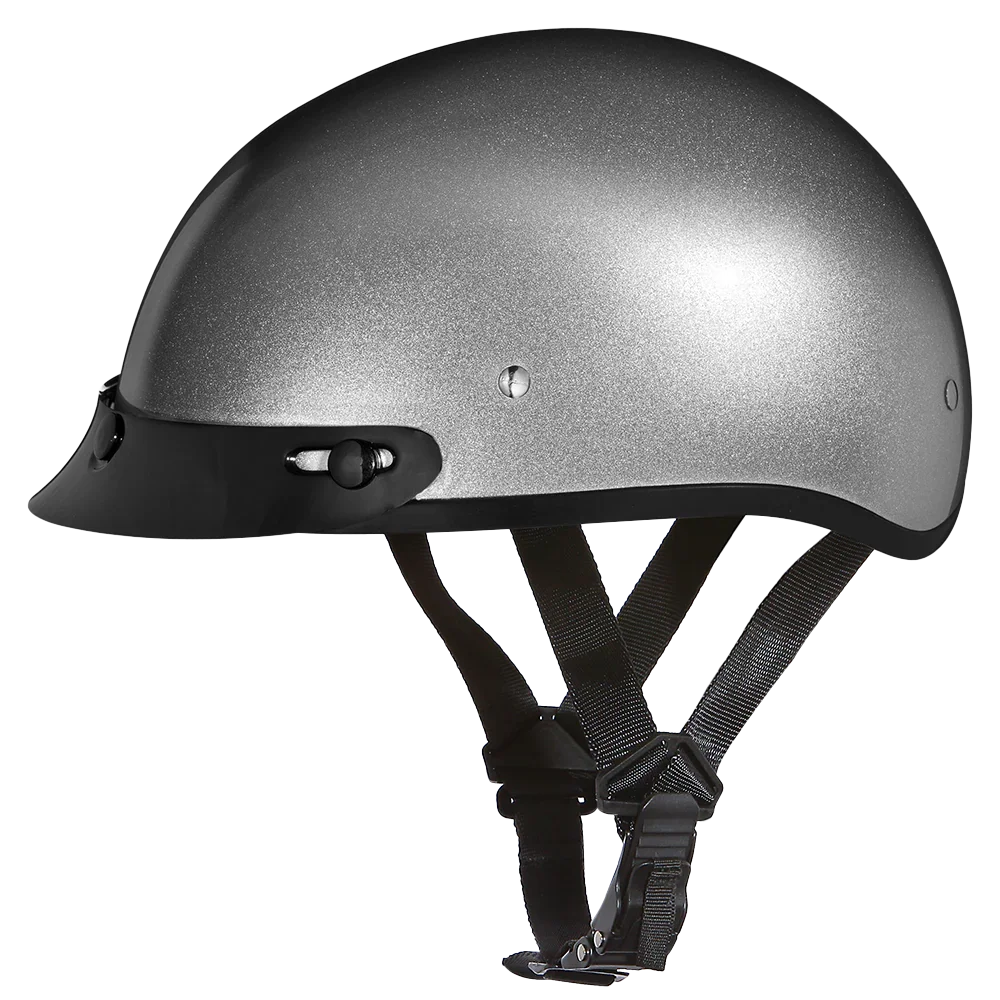
Selecting the right silhouette for your riding style is essential for both comfort and safety. Daytona helmets are most famous for their presence in the V-twin and cruiser communities, where the Slim Line Half Helmet has become a definitive icon. This style dominates the market because it provides a streamlined look that complements classic motorcycles. While the aesthetic is minimalist, the engineering remains focused on impact management. Riders who prioritize a traditional look often find that these low-profile designs offer the best balance of wind-in-the-face freedom and necessary head protection.
Beyond the half-shell market, open face 3/4 helmets provide a functional middle ground. These models offer increased temporal protection and cover the ears, which can significantly reduce wind noise on the highway. This classic design is popular among vintage enthusiasts and touring riders who want more coverage than a skull cap but aren't ready for a full face unit. When choosing the right helmet, it is important to evaluate whether your typical route involves high-speed interstate travel or low-speed city cruising. Each style offers different levels of environmental protection and sensory feedback.
Half Helmets: The Slim Line and Skull Cap Series
The variety within the half-helmet category allows for a high degree of personalization. There are distinct differences between the standard Skull Cap and the Hawk polo-style designs. The Skull Cap features a traditional, rounded contour that follows the natural shape of the head. In contrast, the Hawk style offers a slightly elongated "polo" brim that provides a unique profile. Both series utilize advanced nylon strap systems equipped with a quick-release lever. This hardware allows you to secure or remove your gear with a single hand, even while wearing gloves. For added convenience, select half-shell models include internal sun shields. These smoke-tinted visors retract into the shell, giving you instant relief from sun glare without requiring you to carry extra eyewear.
Full Protection: Daytona’s Modular and Full Face Entry
The brand has successfully expanded into the touring market with its modular and full-face offerings. These helmets feature sophisticated ventilation systems designed specifically for summer riding. Multiple intake and exhaust ports ensure constant airflow, preventing heat buildup during long days in the saddle. These flip-up models are frequently highlighted as some of the best modular helmets for glasses wearers. The pivoting chin bar creates a wider opening, making it much easier to put the helmet on or take it off without disturbing your frames. While these units provide a lightweight alternative to premium shoei helmets, they maintain high safety standards with inner retractable smoke shields and reinforced locking mechanisms. This versatility makes them an excellent choice for riders who transition between city traffic and open highway stretches.
The Slim Line Advantage: Fitment and Sizing Mastery
Achieving a perfect fit is the difference between a helmet you forget you're wearing and one that ruins your ride. Most daytona helmets utilize an Intermediate Oval internal shape, which is slightly longer from front to back than it is wide from side to side. This is the most common head shape in North America, but it's vital to confirm yours before purchasing. If you have a Round Oval shape, you may experience pressure on your forehead even if the circumference measurement is technically correct. A properly fitted Daytona helmet should sit just above the eyebrows without shifting when the rider shakes their head.
To find your size, use a flexible cloth tape measure. Wrap it around the widest part of your head, which is usually about one inch above your eyebrows and just above the ears. Take this measurement in both inches and centimeters to ensure the most accurate comparison against the manufacturer's chart. Don't guess based on your size in other brands. Each manufacturer uses different shell molds, and Daytona's low-profile engineering requires a precise match to your skull's dimensions for maximum safety.
Overcoming the "Wind Lift" Phenomenon
Riders of half helmets often complain about the "parachute effect" at highway speeds. This happens when air gets trapped under the front brim, causing the helmet to pull upward against the chin strap. The Slim Line design specifically reduces this lift by keeping the leading edge of the shell closer to your brow. Proper chin strap tensioning is the second half of this equation. You should only be able to fit two fingers between the strap and your chin when it's fully secured. This stability is especially important when you pair your helmet with motorcycle rain gear. In heavy storms, high winds and wet surfaces demand that your gear stays exactly where it belongs.
Daytona Sizing Chart Nuances
Daytona offers one of the most inclusive sizing ranges in the industry, spanning from 2XS to 4XL. This broad selection ensures that riders with very small or very large head circumferences can still find a D.O.T. approved option that looks proportional. If your measurement falls exactly between two sizes, we recommend sizing down for a more secure fit. The interior padding will compress slightly over the first few weeks of use, creating a custom contour to your face. These shells are also designed with sufficient interior clearance to accommodate bluetooth motorcycle headsets. You can install your speakers and microphone without creating uncomfortable pressure points, keeping you connected on the longest tours. Find your perfect size in our full Daytona inventory.
Why Buy Your Daytona Helmet from The Helmet Shop?
Choosing where to purchase your safety gear is just as important as the gear itself. At The Helmet Shop, we provide a curated selection of daytona helmets that meet our strict internal standards for durability and rider comfort. Our team understands the technical nuances of helmet construction. We can explain exactly how a carbon fiber shell differs from a polycarbonate one in real-world riding conditions. This expertise ensures you don't just buy a helmet; you buy the specific protection your riding style demands. We take pride in acting as a knowledgeable bridge between complex technical options and your daily riding needs.
We offer complete solutions for every type of rider across the United States. Beyond head protection, you can find Tourmaster touring jackets or Cortech apparel to complete your safety setup. This holistic approach to gear means you can build a full-body protection kit in one place. We provide reliable national shipping and expert customer support to help with any questions regarding fitment or technical specifications after your order arrives. Our goal is to build long-term relationships through dependable service and high-quality inventory.
The Helmet Shop Expert Curation
We trust Daytona for cruiser and touring riders because they consistently deliver on their promise of a low-profile fit without cutting corners on safety. Every model in our inventory is D.O.T. approved, meaning it meets the federal safety requirements necessary for legal road use. We refuse to stock unrated novelty caps because your safety is our primary concern. To help you integrate your new helmet into a complete safety system, our motorcycle gear guide provides essential tips for selecting jackets, gloves, and boots that work together to keep you safe in 2026. This curated approach ensures that every piece of gear you buy from us serves a clear, protective purpose.
Final Checklist Before You Buy
Before you finalize your order, verify the helmet laws in your specific state to ensure you remain compliant. While daytona helmets are D.O.T. certified, some states have unique requirements for eye protection or reflective materials. Next, consider which finish fits your motorcycle's aesthetic. Gloss finishes are durable and easy to clean, while matte and raw carbon fiber weaves offer a modern, stealthy appearance. Make sure you have measured your head according to our sizing guide to avoid the inconvenience of a return. Ready to ride? Browse our full Daytona collection here and find the lightweight protection you've been looking for.
Upgrade Your Ride with Precision Protection
Daytona helmets provide a definitive solution for riders who refuse to sacrifice safety for a low-profile look. By utilizing advanced materials like carbon fiber and high-density polycarbonate, these helmets eliminate the "mushroom head" aesthetic while meeting strict D.O.T. safety standards. Whether you prefer the classic Slim Line half shell or a versatile modular design, the right fit will significantly reduce neck fatigue and wind lift during your next long-distance tour. Choosing the correct shell material and shape ensures you stay comfortable and protected regardless of the miles ahead.
As an authorized dealer of premium brands, The Helmet Shop maintains an extensive inventory of D.O.T. approved gear to ensure you find exactly what you need. Our team provides expert technical support to help you navigate sizing nuances and material performance. We're committed to helping you build a safety kit that lasts for years. Explore the Lightest D.O.T. Approved Daytona Helmets at The Helmet Shop and experience the difference that professional-grade engineering makes on the open road. Your next journey deserves the perfect balance of style and security.
Frequently Asked Questions
Are all Daytona helmets D.O.T. approved?
The vast majority of daytona helmets are D.O.T. approved and meet or exceed the Federal Motor Vehicle Safety Standard 218. While the brand does offer a selection of novelty items for off-road use or display, their primary catalog consists of legal, safety-rated gear. You can always verify the status of a specific model by checking for the permanent D.O.T. certification symbol on the back of the shell.
How do I know if I have a "mushroom head" helmet or a Slim Line?
A "mushroom head" helmet typically sits high on the skull, creating a bulky and top-heavy appearance that looks out of proportion. In contrast, the Slim Line series uses specialized shell sizing to ensure the helmet contours closely to your head. If your current helmet leaves a large gap between your ears and the shell, it's likely a standard bulky design rather than a low-profile model.
What is the lightest Daytona helmet available?
The carbon fiber half helmet models are the lightest options currently available in the brand's lineup. These helmets provide the same level of impact protection as polycarbonate versions but at a significantly reduced physical weight. Choosing a carbon fiber shell is the most effective way to minimize neck strain during long-distance rides while still maintaining full legal compliance on the road.
Can I install a Bluetooth headset in a Daytona half helmet?
You can install a Bluetooth headset in most Daytona half helmets, though the process differs from full-face installations. Since half helmets lack deep ear pockets, you will typically use a headset with a boom microphone and slim speakers that attach to the Y-strap or the interior lining. Many riders choose Sena or Cardo systems that are specifically designed for open-face and half-shell configurations.
How should a Daytona helmet fit compared to a full-face helmet?
A Daytona helmet should feel just as snug as a full-face model but without the specific pressure on your cheeks. The interior liner must make firm contact with your entire forehead and the crown of your head. If the helmet can roll forward over your eyes or backward off your head when the strap is secured, it's too large and requires a smaller shell size.
What is the difference between Daytona’s Carbon Fiber and C6 Pro models?
The primary difference lies in the safety certifications and technical engineering standards. Standard carbon fiber models focus on D.O.T. compliance and significant weight reduction for the North American market. The C6 Pro series represents a premium tier that often meets the more rigorous ECE 22.06 global standards. These models feature advanced resin systems and reinforced weaves designed for superior impact management in high-speed scenarios.
How often should I replace my Daytona helmet?
You should replace your helmet every five years or immediately after any significant impact. The internal EPS liner degrades over time due to sweat, hair oils, and temperature fluctuations, which reduces its ability to absorb energy. Even if the exterior shell looks perfect after a drop, the internal structure may be compromised and unable to protect you effectively in a future accident.
Does Daytona make helmets for large head sizes (3XL-4XL)?
Yes, the brand offers one of the most inclusive sizing ranges in the industry, including 3XL and 4XL options. These larger daytona helmets are engineered with proportional shell dimensions to maintain a low-profile look even for riders with larger head circumferences. This ensures that every rider can find a secure fit that provides reliable protection without the excessive bulk found in other brands.


