

You've finally reached the front of the line at a red light, only for your vision to vanish behind a thick wall of fog on your lenses. Every rider who wears frames knows that struggle, along with the dull ache of temple arms being crushed against their skull during a long Saturday ride. Finding the best modular helmets for glasses is about more than just convenience; it's about maintaining safety and focus on the road. It's frustrating when your gear feels like it's working against your eyesight, and you shouldn't have to settle for discomfort.
This guide highlights top-rated lids that utilize advanced eyeport designs and dedicated temple channels to eliminate pressure. You'll discover how the latest flip-up mechanisms expand the entry point, allowing for easy transitions without the constant struggle of removing your frames. We'll preview the top ECE 22.06 certified options for 2026, including premium models from Shoei and HJC. From integrated Pinlock systems to 180-degree chin bar rotation, we'll show you how modern engineering ensures a pressure-free fit and clear sightlines in any weather condition.
Key Takeaways
- Understand how modular flip-up designs expand the helmet shell to allow for seamless glasses placement without removing your frames.
- Discover the specific engineering features, such as dedicated temple channels, that define the best modular helmets for glasses in 2026.
- Compare high-performance models from Shoei and HJC to find the right balance between premium long-distance comfort and innovative interior design.
- Learn how to combat lens fogging by integrating Pinlock Evo inserts that maintain clear vision during temperature shifts.
- Explore professional sizing strategies to prevent temple pressure and ensure your eyewear remains stable at high speeds.
The Modular Advantage for Riders with Glasses
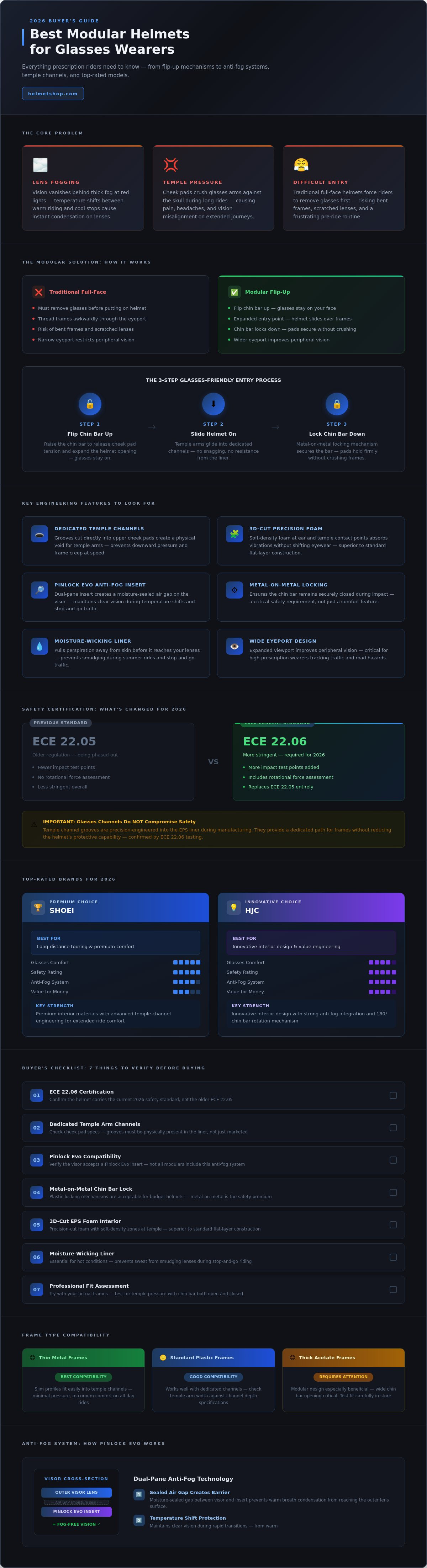
Modular helmets represent a versatile hybrid in the riding world. They provide the structural coverage of a full-face design while offering the accessibility of an open-face model. For many, a motorcycle helmet is just a safety tool; however, for those who wear prescription lenses, it is a daily interface challenge. The primary advantage of a modular lid lies in its pivoting chin bar. This mechanism allows you to put the helmet on while your glasses are already on your face. It's a simple change that transforms the entire pre-ride routine.
In a traditional full-face model, you face a "helmet-first" struggle. You must remove your glasses, pull the helmet over your head, and then awkwardly thread your frames through the eyeport. This often results in bent frames or scratched lenses. The best modular helmets for glasses eliminate this dance. By flipping the chin bar up, you expand the entry point. This allows the helmet to slide over your head and around your frames without interference. It's an efficient solution for daily commuters and long-distance tourers alike.
To better understand this concept, watch this helpful video:
Mechanical Benefits of the Flip-Up Design
The hinge mechanism is the secret to comfort. When the chin bar is raised, the tension on the cheek pads is temporarily reduced. This creates a wider path for your glasses' temple arms to slide into place without the frames snagging on the interior liner. Once the chin bar is locked down, the pads secure the helmet without crushing your frames against your skull. This design is especially beneficial for riders who wear thick acetate frames. Additionally, the wider eyeport view typical of modular designs improves peripheral vision. This is a critical factor for riders who rely on high-prescription lenses to track traffic and road hazards.
Safety Ratings and Glasses Compatibility
Safety remains the top priority. Modern modulars meet rigorous DOT and ECE 22.06 standards. The ECE 22.06 standard is the current and more stringent safety certification for 2026, replacing the older ECE 22.05 regulation. These tests now include more impact points and rotational force assessments. Some riders worry that interior glasses channels might weaken the protection. These grooves are precision-engineered into the EPS liner during manufacturing. They provide a dedicated path for frames without reducing the protective capability of the helmet. When shopping, look for metal-on-metal locking mechanisms. These ensure the chin bar stays securely closed during an impact. Choosing the best modular helmets for glasses means you don't have to sacrifice safety for a pressure-free fit.
Key Features of Eyeglass-Friendly Modular Helmets
When searching for the best modular helmets for glasses, look beyond the shell design. The internal architecture determines your daily comfort level. Manufacturers now integrate dedicated eyeglass channels directly into the upper cheek pads. These grooves create a physical void where the temple arms of your frames sit. This prevents the helmet from pushing your glasses downward or digging the stems into your skin. It's a simple engineering choice that solves the primary complaint of prescription-wearing riders.
Sweat management is another critical factor. Moisture-wicking liners pull perspiration away from your skin before it can reach your lenses. This helps prevent the frustrating smudging that occurs during summer rides. A high-quality liner keeps the interior climate stable. This ensures your vision remains clear even during stop-and-go traffic where airflow is minimal. If you're ready to upgrade your gear, you can browse a curated selection of modular helmets designed with these specific features in mind.
Liner Materials and Temple Channels
High-end modulars often feature 3D-cut foam instead of standard flat layers. This precision cutting creates a contoured fit around the ear and temple area. Soft-density foam is used at these specific contact points to prevent frame creep. Frame creep happens when the helmet's movement causes your glasses to slide forward or tilt. By using more compliant foam in these zones, the helmet absorbs vibrations without shifting your eyewear. To ensure you select a model with the correct safety and fit specifications, consult NHTSA's guide to choosing the right helmet. Removable and washable liners are also vital. They allow you to keep the temple channels free of debris that could scratch your frames.
Integrated Sun Visors and Optics
Integrated sun visors are a game-changer for prescription wearers. These internal shields drop down behind the main visor with the slide of a lever. This eliminates the need to carry a second pair of prescription sunglasses or struggle with clip-ons. Optical clarity is vital here. The best modular helmets for glasses use shields that minimize distortion to prevent double-vision effects when looking through two layers of plastic and one layer of glass. Ensure both the main shield and the internal visor feature anti-scratch coatings. This longevity is crucial because any surface damage can create glare that interferes with your prescription lenses. Adjustable cheek pad thickness further enhances this setup, allowing you to create a custom fit that doesn't interfere with the visor's movement.
Top-Rated Modular Helmets for Glasses in 2026
Selecting the best modular helmets for glasses requires looking at how brands balance interior volume with shell safety. In 2026, several manufacturers have refined their designs to accommodate prescription frames without compromising the snug fit needed for high-speed stability. These models represent the pinnacle of current engineering, ensuring that your vision remains clear and your temples stay pain-free during long days in the saddle.
Premium Performance: Shoei and Arai
The Shoei Neotec series continues to set the standard for touring excellence. The Neotec 3 features an ultra-plush liner specifically designed to accommodate wide frames. This is achieved through multi-density foam that stays soft at the temples but remains firm at the jawline for a secure fit. You can learn more about their construction and build quality in this guide on Shoei Helmets: Why Premium Protection is a Worthy Investment. The precision of the Shoei interior ensures your glasses don't vibrate even when riding over rough pavement.
Arai takes a different but equally effective approach with their modular designs. Their focus on the "R75" shell shape ensures a rounder, smoother profile for glancing off impacts. Inside, Arai models often feature "peel-away" temple pads. This allows you to customize the interior width by 5mm if your glasses frames are particularly thick. It's a level of personalization that few other brands offer. When choosing between these high-end options, always verify they meet the latest DOT safety standards for helmets to ensure maximum protection on the road.
A common challenge for riders is combining eyewear with communication systems. Premium models like the Neotec 3 often feature integrated bays for Sena Bluetooth headsets. By using these built-in channels, these helmets prevent the external clamp of a traditional Bluetooth unit from pressing your glasses into your head. This integration is a major factor in maintaining long-distance comfort, as it keeps the interior layout clean and free of unnecessary pressure points.
Versatility and Value: HJC and Daytona
HJC offers exceptional value with their i100 and RPHA series. These models include a dedicated "glasses groove" built into the EPS liner. This channel is deep enough to accept sport frames and traditional wire stems alike. HJC’s ventilation systems are also highly effective. They direct a steady stream of air across the interior of the shield, which helps keep both the visor and your prescription lenses clear of moisture. This makes them a reliable choice for riders who commute in varying weather conditions.
Daytona modular helmets are a preferred choice for riders seeking lightweight performance. Heavy helmets can exacerbate the pressure felt at the bridge of the nose where your glasses rest. By using lightweight shell materials, Daytona reduces overall neck strain. This weight reduction makes a noticeable difference during all-day rides. Their interior layouts are simple and effective, providing enough room for most standard frame sizes without adding excessive bulk to the helmet's profile.
Solving the Fogging and Fitment Dilemma
Fogging is the most persistent annoyance for riders with prescription eyewear. While a helmet visor might stay clear, your glasses often cloud up at the first stoplight. This happens because your lenses sit much closer to your face. They trap heat and moisture in a small, stagnant pocket of air. To maintain clear vision, you need a multi-layered approach to airflow and temperature control. The best modular helmets for glasses prioritize this by using specialized ventilation layouts that target the eyeport area.
Modern modulars utilize Pinlock Evo inserts to create a dual-pane thermal barrier on the main shield. While this technically protects the visor, it allows you to keep the helmet closed in cold weather without the visor fogging. This prevents external humidity from rushing in and settling on your glasses. Additionally, look for helmets with oversized chin vents. These vents should be designed to direct a specific stream of air across the interior surface of your eyewear, effectively scrubbing away moisture before it can condense. If you're struggling with visibility in difficult weather, check out our guide on Motorcycle Rain Gear for professional tips on staying dry and clear.
Frame selection also plays a vital role in fitment. Thin titanium stems are generally preferred over thick plastic frames. Titanium is flexible and has a lower profile, which allows it to sit deeper within the helmet's temple channels. If you prefer thick acetate frames, ensure your helmet has adjustable cheek pads to prevent the foam from pushing the frames into your nose bridge. You can shop our full modular inventory to find models that offer the interior space required for your specific frame style.
Advanced Anti-Fog Solutions
Breath deflectors are essential tools for redirecting warm, humid air downward and away from your lenses. Most premium modulars include a removable deflector that clips into the chin bar. For the lenses themselves, only use anti-fog coatings specifically labeled as safe for polycarbonate or high-index materials. Harsh chemicals can strip the factory coatings off your prescription glasses. A dedicated anti-fog cloth or specialized spray creates a hydrophilic surface that prevents water droplets from forming.
Bluetooth Integration for Glasses Wearers
Adding a communication system often introduces new pressure points. Standard headset speakers can be thick, causing them to press against your eyeglass stems. This leads to a dull ache behind the ears after just thirty minutes of riding. We recommend choosing Bluetooth Motorcycle Headsets that feature ultra-slim speakers. When installing the unit, route the wiring carefully behind the comfort liner. Ensure the wires don't cross the temple channels, as even a thin cable can interfere with how your glasses sit on your face.
Finding Your Perfect Fit at The Helmet Shop
Modular helmets are the definitive choice for riders who refuse to compromise on vision or comfort. By combining a versatile flip-up mechanism with technical interior features, these helmets provide the space your frames require without sacrificing a secure fit. Finding the best modular helmets for glasses is a process that ends with a perfect fit, and that starts with accurate measurements. A helmet that fits correctly ensures your eyewear stays stable, your vision remains clear, and your focus stays on the road ahead.
We encourage every rider to utilize a professional size guide before making a final selection. A common mistake is choosing a shell that is too tight at the temples, which leads to a dull helmet headache within twenty minutes of riding. Conversely, a helmet that is too loose will allow your glasses to vibrate at high speeds. The goal is a snug, uniform pressure across the cheeks and forehead that keeps your frames perfectly aligned with your eyes. Always test your new helmet with the specific glasses you use for riding, as the thickness of your stems will interact differently with every liner.
Expert Fitment and Selection
The Helmet Shop specializes in identifying gear that meets specific ergonomic needs. Our team understands the nuances of interior liner design, helping you find models with pre-cut eyeglass grooves that accommodate various frame thicknesses. We prioritize premium brands like Shoei, HJC, and Arai because they consistently invest in rider ergonomics. These manufacturers design their interiors with the understanding that many riders wear prescription lenses. This ensures the EPS liner and comfort padding work in harmony with your eyewear rather than fighting against it.
Ready to Ride Comfortably?
Your gear should work together to provide a seamless riding experience. Beyond the helmet, consider how your entire setup impacts your comfort. For example, high-quality Tourmaster jackets offer collars designed to interface cleanly with modular helmet neck rolls, which helps reduce wind noise and turbulence. We carry a curated selection of apparel and accessories to ensure you are fully protected from head to toe. Our commitment to curated excellence means every product in our inventory has been chosen for its dependability and performance.
Don't let temple pressure or fogging ruin another ride. Explore our full collection of modular designs to find the one that fits your face shape and your frames perfectly. Our online resources and expert staff are here to act as your reliable guide in selecting the right protection for your next journey. You deserve a ride that is as clear as it is comfortable.
Shop the Best Modular Helmets for Glasses at The Helmet Shop.
Upgrade Your Ride with Precision Fit
Your vision shouldn't be a secondary concern when you're out on the open road. By choosing a modular design, you eliminate the daily struggle of threading frames through a tight eyeport and gain the benefit of dedicated temple channels. These technical innovations ensure that your glasses stay exactly where they belong without causing painful pressure points. Whether you're managing fogging with Pinlock inserts or utilizing an internal sun shield, the right gear makes every mile more enjoyable.
Finding the best modular helmets for glasses is straightforward when you rely on an expert source. We are an authorized dealer for premium brands like Shoei, ARAI, and HJC, offering an expertly curated inventory designed for maximum riding comfort. We provide national shipping on all premium gear to ensure you get the protection you need regardless of your location. Our team is here to help you navigate these technical options and find a lid that feels as good as it looks.
Don't settle for gear that doesn't fit your lifestyle. Browse Our Eyeglass-Friendly Modular Helmets today and experience the difference that professional fitment makes. We look forward to helping you gear up for your next adventure.
Frequently Asked Questions
Can I wear any modular helmet with glasses?
No, you cannot assume every modular helmet will accommodate your eyewear comfortably. While the flip-up design makes putting the helmet on easier, you still need a model that features dedicated temple channels in the interior liner. Without these specific grooves, the cheek pads will likely press your frames against your head. This leads to significant discomfort or even bent frames during longer rides.
Do modular helmets fog up more than full-face helmets for glasses wearers?
Modular helmets generally fog up less than full-face models because they often feature more advanced chin ventilation and the ability to lift the chin bar at stoplights. However, glasses fogging is primarily caused by your breath being trapped behind the lenses. Using a Pinlock insert and a breath deflector is the most effective way to keep your vision clear in any weather condition.
What is the best brand of modular helmet for thick-framed glasses?
Shoei and Arai are the superior choices for riders with thick-framed glasses because they offer highly customizable interior liners. Shoei models use multi-density foam that accommodates wider stems without losing its shape. Arai provides "peel-away" pads that allow you to create an extra 5mm of space at the temples. These features make them the best modular helmets for glasses with substantial frames.
How do I put on a modular helmet while wearing glasses?
You put on a modular helmet by first raising the chin bar to its fully open and locked position. This action expands the helmet's entry point and allows you to slide the shell over your head without disturbing your frames. Once the helmet is seated and your glasses are properly aligned, you simply pull the chin bar down until it clicks. This process is much safer for your eyewear.
Are there specific glasses made for motorcycle helmets?
Yes, several eyewear manufacturers produce glasses with straight, thin titanium temples designed to slide easily into helmet liners. These frames usually lack the traditional "hook" behind the ear, which prevents the helmet from pulling the glasses out of alignment. Choosing these specialized frames can significantly improve your comfort level when paired with a high-quality modular helmet. They are a great investment for daily commuters.
Will wearing glasses in a helmet affect my safety in an accident?
Wearing glasses does not compromise the structural integrity of a certified helmet, but the frames themselves can pose a minor risk during a severe impact. Modern ECE 22.06 certified helmets are tested to ensure the interior padding manages energy correctly even with eyewear present. To maximize your safety, choose frames made of shatter-resistant materials like polycarbonate and ensure your helmet meets current DOT standards.
How can I stop my glasses from sliding down inside my helmet?
You can stop your glasses from sliding by ensuring your helmet's cheek pads provide the correct amount of lateral pressure. If your glasses still shift, consider using a specialized eyeglass strap or choosing frames with rubberized temple tips. A properly sized helmet should hold your eyewear stable without causing pain. If the helmet is too loose, your glasses will inevitably move as the shell vibrates at speed.
Do I need a special Bluetooth headset if I wear glasses and a modular helmet?
You don't need a special headset, but you should prioritize units with ultra-slim speakers to avoid crowding the ear pocket. Systems from Sena or Cardo often feature low-profile drivers that leave enough room for your glasses' stems. Careful routing of the wires behind the comfort liner is essential to ensure they don't cross the dedicated glasses channels or create new pressure points against your head.


