

Table of Contents
- The Five-Year Replacement Interval
- Motorcycle Helmet Lifespan: What Affects It
- When to Replace a Motorcycle Helmet After a Crash
- Signs a Motorcycle Helmet Needs Replacing
- How to Check Motorcycle Helmet Expiration Date
- Manufacturer Guidance vs. Legal Requirements
- Extending Your Helmet's Service Life
- Conclusion
- Frequently Asked Questions
Last Updated: October 11, 2026
The Five-Year Replacement Interval
The most common recommendation you'll hear is that you should replace motorcycle helmet every five years. This timeline comes from manufacturers, safety organizations, and experienced riders who understand how helmet materials break down over time. However, this five-year window isn't a hard rule, it's a practical guideline based on typical riding patterns and material degradation.
The five-year recommendation assumes average use and proper storage. A helmet exposed to heat, sunlight, and humidity ages faster than one in a cool, dry closet. The five-year mark is a starting point, not an expiration date, your helmet may need replacing sooner or remain safe longer depending on riding habits and storage conditions.
A helmet's outer shell, impact-absorbing liner, comfort padding, chin strap, and visor all deteriorate gradually. Understanding these changes helps you make a smarter replacement decision.
Motorcycle Helmet Lifespan: What Affects It
Helmet aging depends on riding habits, storage conditions, and use frequency. A daily commuter faces different aging pressures than a weekend rider with climate-controlled storage.
How Riding Frequency and Intensity Matter
Daily use accelerates wear through sweat exposure, padding compression, and handling stress. Moisture breaks down foam and adhesives, softening the EPS liner and weakening shell integrity.
Track and aggressive street riding create additional stress on the retention system and padding. Helmets used for track days may need replacement sooner than casual-use helmets.
Casual riders with ideal storage may extend beyond five years; daily commuters should replace closer to the five-year mark or sooner if wear is visible.
Storage, Heat, and UV Exposure
Storage location is critical: heat breaks down foam, UV exposure degrades the shell, and moisture causes mold and weakens adhesives.
Sunny shelves, hot garages, and temperature extremes accelerate aging. Coastal and tropical humidity speeds degradation of the comfort liner.
Store helmets in cool, dry places away from sunlight, use a helmet bag or closet shelf, not windowsills or vehicles. Avoid garages with temperature extremes or high humidity.
When to Replace a Motorcycle Helmet After a Crash
A crash or significant impact is the clearest reason to replace motorcycle helmet immediately, regardless of age or apparent condition. Even if the helmet looks fine from the outside, internal damage may have compromised its protective ability.
The EPS liner crushes to absorb impact and cannot fully recover. A helmet that has absorbed a major impact cannot absorb the same energy twice, putting you at serious risk in a second crash.
Replace your helmet after any noticeable crash, drop, or ground contact, even waist-height drops can cause internal EPS fractures without visible damage.
Signs a Motorcycle Helmet Needs Replacing
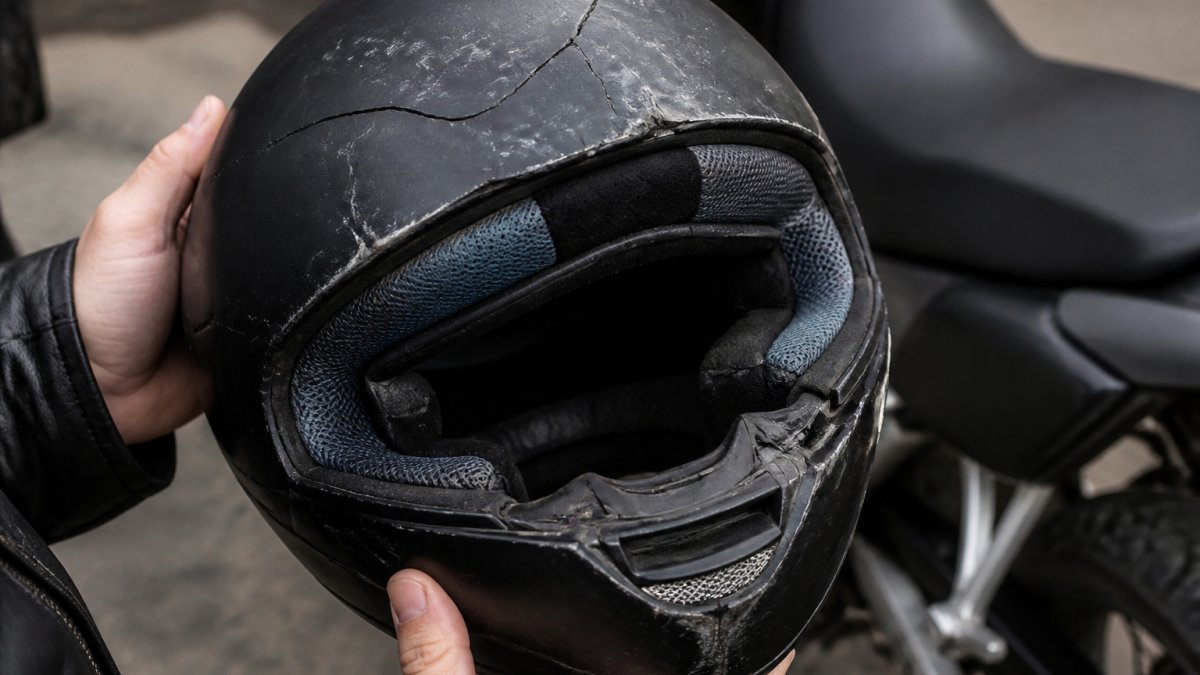
Visible and tactile signs indicate when replacement is needed. Inspect your helmet before each ride and during off-season storage.
Pre-Ride Inspection Checklist
Outer Shell
- Look for cracks, splits, or stress fractures, even hairline cracks indicate structural compromise.
- Check for dents, gouges, or permanent deformations. The shell should feel rigid; soft or collapsed areas indicate damage.
- Inspect for peeling paint or graphics, which indicate UV degradation.
- Feel for rough spots or exposed material layers; deep scuffs compromise the protective shell.
Impact-Absorbing Liner (EPS Foam)
- Look for visible cracks, compression, or missing chunks. Use a flashlight to inspect interior foam from multiple angles.
- Press the foam gently; it should feel firm and springy. Soft, mushy, or permanently compressed foam has lost protective capability.
Retention System (Chin Strap and Side Straps)
- Fasten the chin strap; it should tighten securely without slipping.
- Inspect for fraying, cracking, brittleness, or loss of elasticity. The strap should have give but return to original length.
- Check the D-ring and attachment points for damage or separation from the shell.
Comfort Liner and Interior Padding
- Feel the padding; it should be firm and supportive. Compressed or thin padding indicates lost protective capability.
- Look for loose padding or material peeling from the EPS liner.
- Check for mold, mildew, or musty smells, signs of moisture damage and deterioration.
Visor or Shield
- Check that the visor moves smoothly, seals properly, and doesn't rattle.
- Inspect for cracks, crazing, cloudiness, or scratches that obstruct vision.
- Look for separation from the shell or cracked attachment points.
- Test the locking mechanism; it should click securely and not pop open.
Overall Fit and Function
- Put the helmet on; it should feel snug but not tight. Loose or shifting helmets indicate compressed padding and compromised safety.
- Shake your head gently; the helmet should move with your head, not independently.
- Fasten the chin strap; the helmet should stay in place when you move your head.
When to Replace Immediately
Do not ride in a helmet if you observe any of the following:
- Visible cracks or splits in the shell or EPS liner
- Dents or deformations that do not pop back out
- Missing chunks of foam or shell material
- Loose or separating interior padding
- A chin strap that will not tighten or feels brittle
- A visor that is cracked, cloudy, or does not seal properly
- A fit that has become noticeably loose or unstable
- Any mold, mildew, or strong musty odor inside the helmet
- A helmet that has been involved in a crash or significant impact (regardless of visible damage)
Seasonal and Storage Inspections
Beyond pre-ride checks, perform a thorough inspection at the start of each riding season and before storing the helmet for an extended period. Look for signs of environmental damage: UV fading, moisture damage from humid storage, or deterioration from temperature extremes. If you store your helmet in a garage, attic, or outdoor shed, check it more frequently for signs of heat, moisture, or pest damage.
Shoei RF-1400 Knee Down Full Face Helmet →
How to Check Motorcycle Helmet Expiration Date
Every helmet has a manufacture date printed or stamped inside. This date reveals the helmet's true age, separate from purchase date. A helmet manufactured three years ago has already experienced material degradation even if unworn.
Where to Find the Manufacture Date
The manufacture date is typically on the interior comfort liner or shell surface, usually in the crown or rear area.
Shoei, ARAI, HJC, Scorpion, ICON, and AGV helmets typically have date stamps on the interior padding in the crown or rear area, formatted as month and year (e.g., "06/2023"). If not on the comfort liner, check the interior shell surface.

Interpreting the Date Code
Count forward five years from the manufacture date for your replacement window. This five-year period begins from manufacture, not purchase, a helmet on a shelf is still aging. Check the manufacture date before buying used or clearance helmets, as they may already be two or three years old.
Distinguishing Manufacture Date from Purchase Date
Manufacture date and purchase date differ. If you bought a helmet last month but it was manufactured two years ago, your five-year window started two years ago. Ask retailers when helmets arrived in inventory, or use the manufacture date as your reference and err on the side of caution if uncertain.
What If You Cannot Find a Date?
If your helmet has no visible manufacture date, contact the manufacturer directly. Most brands can identify the production date if you provide the helmet model number and shell color. The model number is usually printed on an interior label or the exterior shell. Manufacturers maintain production records and can often pinpoint the manufacture date within a few months.
If you cannot reach the manufacturer or identify the date, and the helmet shows visible wear or you have owned it for more than five years, replacement is the safest choice. You cannot reliably determine the helmet's age, so you cannot confidently assess whether it is still within its safe service life.
Manufacturer Guidance vs. Legal Requirements
Helmet manufacturers recommend five-year replacement intervals based on material science and testing. They understand how their specific materials degrade under typical conditions. This recommendation is conservative, it prioritizes safety over cost.
No federal law in the United States mandates helmet replacement at a specific interval. The Department of Transportation (DOT) sets safety standards for helmet construction and testing, but these standards don't specify when a helmet becomes unsafe due to age.
This means the five-year recommendation comes from manufacturers and industry best practices, not legal requirements. You're not breaking any law by riding in a ten-year-old helmet. However, you may be compromising safety.
The distinction matters: legal compliance and actual safety are different things. A helmet can be legal and still be unsafe due to age and wear. Follow manufacturer guidance for safety, not just legal compliance.
Extending Your Helmet's Service Life
If your helmet is still within the five-year window and shows no signs of damage or excessive wear, proper care can extend its useful life.
Clean your helmet regularly with mild soap and water. Avoid harsh chemicals or solvents that can degrade the shell and padding. Dry it thoroughly after cleaning.
Store your helmet properly between rides. Keep it in a cool, dry place away from direct sunlight. Use a helmet bag for protection during transport.
Check the retention system regularly. Tighten loose straps and replace the chin strap if it loses elasticity.
Inspect your helmet before each ride. Look for new cracks, loose padding, or other signs of damage. Catch problems early rather than discovering them after an incident.
Even with perfect care, your helmet will eventually need replacement. Material degradation is inevitable.
Conclusion
Knowing when to replace your motorcycle helmet protects you and ensures you're getting the safety performance you expect. The five-year timeline is a solid starting point, but your actual replacement needs depend on riding frequency, storage conditions, and visible wear. At Helmet Shop, we carry premium helmets from trusted brands like Shoei, ARAI, and HJC that offer the protection and durability serious riders need. Our extensive selection includes models designed for daily commuting, long-distance touring, and track use. With free shipping on orders over $49 and a 30-day return policy, finding your next helmet is straightforward. Shop Now to explore helmets that match your riding style and budget.

Frequently Asked Questions
What is the 5-year helmet rule?
The five-year replacement interval is a widely cited guideline suggesting riders replace their motorcycle helmet every five years from the date of manufacture, even if it shows no visible damage. This recommendation stems from material degradation in the outer shell and impact-absorbing liner over time. However, this is guidance rather than a legal requirement. If you ride frequently, store your helmet poorly, or notice signs of wear, you may need to replace it sooner.
Should you replace a motorcycle helmet after a crash?
Yes. Even if a helmet appears undamaged after a crash or impact, the EPS liner and outer shell may have sustained internal damage that compromises its ability to absorb future impacts. A single significant collision can reduce protective performance significantly. If your helmet has been involved in any crash or dropped from height, replacement is the safest choice. Never rely on a post-crash helmet for protection.
How do I find my helmet's manufacture date?
The manufacture date is printed on a label inside the helmet, typically on the inner padding or comfort liner. Look for a code showing the month and year the helmet was made, which differs from the purchase date. This date determines when the five-year service life begins. Check this date when buying used helmets or when deciding whether your current helmet is due for replacement.
What riding conditions require more frequent helmet replacement?
Heavy use, frequent crashes, intense heat exposure, and poor storage conditions all shorten helmet lifespan. Daily commuters in hot climates, riders who drop their helmets regularly, or those who store helmets in direct sunlight or high-humidity environments should inspect their gear more often and replace it sooner than five years. Moderate recreational riders with proper storage may safely use their helmets closer to the five-year mark.


