

HJC isn't just a value brand; it's a technology leader that offers the most diverse range of safety-certified shells in the industry. If you've ever felt overwhelmed by the alphabet soup of RPHA, i-series, and F-series models, you're not alone. It's tough to know if a more affordable helmet will actually keep the wind noise down at highway speeds or if the weight will strain your neck on long tours. Many riders worry that choosing hjc helmets means sacrificing premium protection for a lower price point.
You don't have to compromise on safety or comfort to stay within your budget. This guide clears the confusion by breaking down the 2026 HJC lineup, from the track-ready RPHA 12 to the versatile F71 daily commuters. We'll show you exactly how HJC meets the rigorous new ECE 22.06 and FIM FRHPhe-02 standards while maintaining the accessibility that made them the world's most popular brand. You'll learn how to identify the right shell for your head shape, compare the latest SMART HJC Bluetooth systems, and finally pick the perfect lid for your specific riding style.
Key Takeaways
- Decipher the HJC lineup by understanding the specific roles of the RPHA, i-Series, and F-Series models in your riding kit.
- Learn how the latest hjc helmets meet the 2026 ECE 22.06 and FIM safety standards to provide professional-grade protection.
- Discover the technical advantages of P.I.M. Plus shell construction and how it balances lightweight comfort with high-impact durability.
- Identify specialized solutions for touring and adventure riding, including the latest modular and off-road helmet designs.
- Master the step-by-step process for measuring your head shape and size to ensure a secure, quiet, and comfortable fit.
The HJC Helmets Legacy: Why It Is the World’s Top-Selling Brand
HJC has maintained its position as a global leader by controlling every step of the manufacturing process. Unlike many competitors who outsource production, HJC builds its gear in its own dedicated factories. This vertical integration is a core part of the HJC Helmets History, allowing the company to maintain strict quality control while keeping costs manageable for the average rider. By owning the entire lifecycle of a product, they ensure that the same standards apply to an entry-level shell as they do to a professional racing lid.
Since 1971, the brand's mission has focused on providing high-quality hjc helmets at a reasonable price. They produce more than one million helmets annually across three specialized facilities. This massive scale creates an efficiency that few other brands can match. It means you get professional-grade materials, like advanced carbon fiber composites, without the boutique price tag often found in the premium market. By owning the factories, they eliminate middleman markups and reinvest those savings into better shell technology and research.
To better understand how HJC balances performance and value, watch this helpful video:
Specialized Manufacturing and R&D
HJC invests heavily in its own high-end wind tunnel laboratories. These facilities allow engineers to refine shell shapes for better stability and significant noise reduction at highway speeds. By testing in-house, they quickly turn professional racing feedback into features for consumer-grade helmets. This cycle ensures that the aerodynamics protecting a MotoGP racer are available in the helmet you wear for your daily commute. Their 2026 innovation outlook focuses on even more refined airflow, reducing drag and neck fatigue for long-distance touring riders. This dedication to R&D makes high-performance gear accessible to everyone, not just those with a professional racing budget.
Safety Ratings You Can Trust
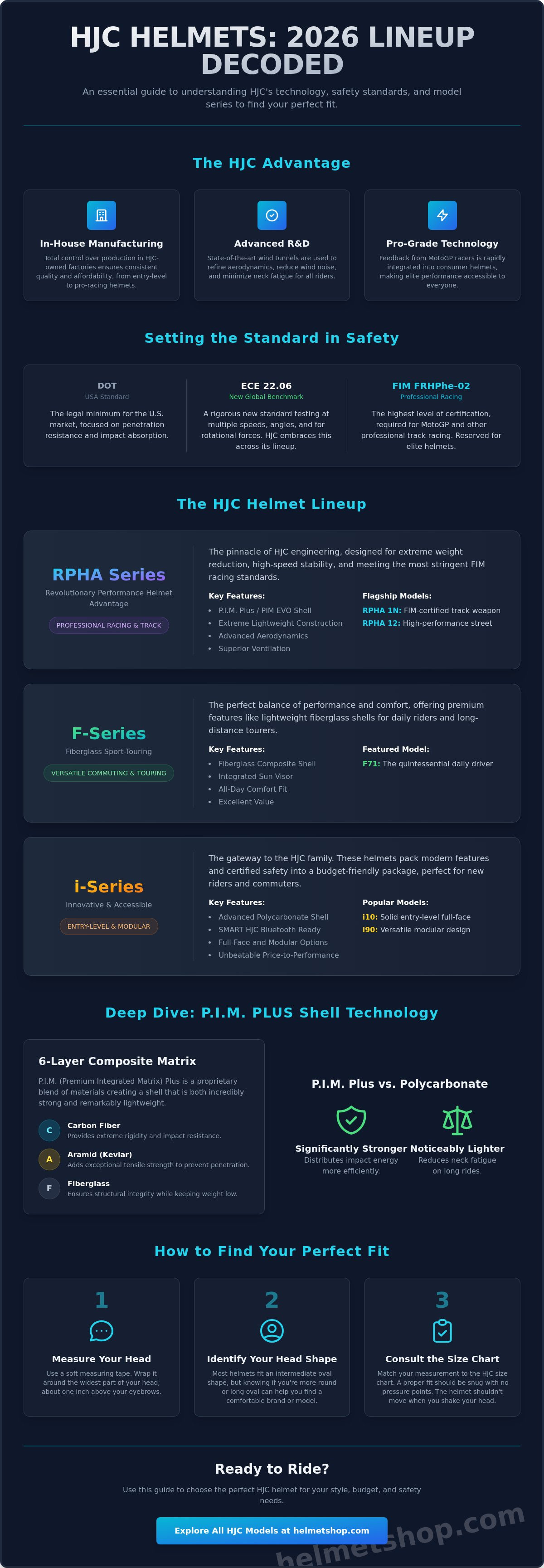
Safety is the top priority for any rider. In the 2026 market, the shift toward ECE 22.06 has set a new benchmark for impact testing. This standard is more rigorous than previous versions, testing for rotational acceleration and impact points at varying speeds. HJC has embraced these standards across their entire lineup. While DOT remains the legal minimum in the U.S., HJC's internal protocols often exceed these requirements. They use their own testing labs to simulate real-world crashes, making them a reliable choice for riders who prioritize certified protection. This commitment to safety ensures that even their most affordable models provide the peace of mind you need on the road.
HJC RPHA Series: Professional-Grade Performance and Racing Pedigree
HJC designed the RPHA series to compete with the world's most elite racing lids. RPHA stands for Revolutionary Performance Helmet Advantage. This lineup prioritizes high-speed stability and extreme weight reduction. For 2026, the RPHA 1N remains the flagship for professional competition, meeting the stringent FIM FRHPhe-02 standards required for the track. The RPHA 12 serves as the high-performance street choice, offering a refined aerodynamic profile that performs exceptionally well in both tucked and upright riding positions. These models represent the absolute pinnacle of current helmet engineering.
P.I.M. Plus Technology Explained
P.I.M. Plus is HJC’s proprietary high-performance matrix. This construction uses a sophisticated six-layer composite shell to ensure maximum protection. It combines several high-tech materials to achieve a specific balance of strength and flexibility:
- Carbon Fiber: Provides extreme rigidity and impact resistance.
- Aramid (Kevlar): Adds exceptional tensile strength and prevents penetration.
- Fiberglass: Offers structural integrity while keeping the shell lightweight.
While standard polycarbonate shells are durable, they often add significant weight that leads to neck fatigue during long sessions. A P.I.M. Plus shell is significantly lighter, distributing impact energy more efficiently across its layers. This advanced engineering is why many RPHA models consistently perform well in independent evaluations like the Virginia Tech Helmet Ratings. Choosing these hjc helmets ensures you are getting a shell that balances density and flexibility for maximum safety without the physical strain of a heavier lid.
Track-Ready Aerodynamics and Ventilation
Airflow is critical when you're pushing your limits on the track or commuting in summer heat. The ACS (Advanced Channeling Ventilation) system is a standout feature in the RPHA series. It uses internal channels to pull cool air through the front intakes and exhaust heat and humidity out the rear. This creates a consistent cooling effect without increasing wind noise. Safety isn't just about impact; it's also about post-crash care. The RPHA series includes emergency quick-release cheek pads. These allow medical personnel to remove the helmet safely without putting pressure on a rider's neck. While some riders consider brands like Shoei for high-end features, HJC offers comparable tech at a more accessible price. You can read more about how these brands compare in our guide on Shoei Helmets: Why Premium Protection is a Worthy Investment.
If you want track-level performance for your daily ride, browse our collection of hjc helmets to find the RPHA model that fits your goals. Whether you're chasing lap times or just want the lightest shell possible, the RPHA series delivers professional results.
Comparing HJC’s Mid-Range and Entry-Level Lineups
Finding the right balance in the HJC lineup requires matching your specific riding habits to the shell material and feature set. While the RPHA series offers elite racing tech, most riders find their perfect fit in the mid-range and entry-level categories. These hjc helmets use either advanced polycarbonate or fiberglass shells to provide ECE 22.06 certified protection at a fraction of the cost of carbon fiber models. Understanding the difference between these series helps you avoid paying for features you don't need or sacrificing comfort on long rides.
Rider Profile Matching Guide:
- The High-Mileage Commuter: You need the i71. Its internal sun shield and moisture-wicking liner make it ideal for changing light conditions and daily wear.
- The Weight-Conscious Sport Rider: You should look at the F71. It uses a fiberglass composite shell that reduces neck strain compared to polycarbonate, without reaching RPHA price points.
- The Budget-Focused Beginner: The C10 is your best entry point. It provides modern safety standards and a simple design that focuses on the essentials.
Safety testing confirms these value models don't cut corners on protection. You can verify this by checking the SHARP safety ratings for HJC helmets, which show high scores for many of their mid-tier offerings. These independent results prove that a "budget" shell can still offer top-tier impact management.
The i-Series: Feature-Rich Commuting
The i-Series is HJC's most popular category for a reason. It is the "sweet spot" where price meets premium features. Models like the i71 include integrated sun shields that drop down with a simple lever, eliminating the need to carry an extra visor. These helmets feature removable, washable comfort liners that use anti-bacterial fabric to stay fresh after a long week of riding. Because they meet the 2026 ECE 22.06 requirements, you get the latest in impact absorption technology in a shell designed for all-day comfort. It's the reliable choice for riders who value convenience and daily usability.
The C-Series: Entry-Level Excellence
If you are looking for your first helmet, the C10 is a standout choice for 2026. It replaces the older CL-series with a more aerodynamic shape and improved field of vision. Polycarbonate shells like the one used in the C10 are incredibly durable and typically have a service life of three to five years. The shield replacement system is simple and requires no tools, making it easy for new riders to maintain their gear. It is a no-nonsense option that prioritizes reliable, DOT-approved safety above all else, ensuring you don't have to spend a fortune to protect your head.
Specialized HJC Solutions: Modular, Off-Road, and Adventure
HJC caters to diverse riding styles by offering purpose-built shells for touring, dirt trails, and adventure routes. While their full-face models are famous, their specialized hjc helmets are often the preferred choice for riders who need versatility. Whether you're crossing state lines on a touring bike or hitting local motocross tracks, these models provide specific technical advantages. They solve common rider pains like excessive wind noise in modular designs and limited visibility in off-road gear.
Modular Versatility for Touring
Modular helmets are the ultimate tool for long-distance travelers who want the protection of a full-face lid with the convenience of an open-face design. The i100 and i91 models focus on this touring versatility. A key feature is dual homologation, often referred to as P/J certification. This means the helmet is legally and safely rated to be worn with the chin bar in both the closed and open positions. The i100 stands out with its 180-degree swing-back mechanism. Unlike traditional modulars where the chin bar sits on top of the head and catches wind, the i100 bar flips all the way to the rear. This design significantly reduces drag and prevents the "sail effect" at high speeds. HJC modulars are engineered to keep decibel levels low, making them a quieter alternative to many mid-range competitors.
Adventure and Off-Road Dominance
For those who leave the pavement, HJC offers the i50 and CS-MX II. These models focus on maximum airflow and goggle compatibility. The i50 utilizes SLID (Sliding Layer Impact Distribution) technology. This system helps manage rotational energy during an impact, which is a critical safety feature for off-road falls where the head might twist. The large eye-ports are designed to fit oversized goggles comfortably without compromising the seal against your face. Adventure riders often choose the RPHA 91 for its premium touring features during long on-road transitions. These dual-sport and off-road options feature adjustable peaks and sun visors. The peaks are aerodynamically tuned to prevent vibration at highway speeds while still blocking glare and debris on the trail.
HJC is also the undisputed leader in licensed graphics. They've partnered with major franchises to produce high-detail Marvel, DC, and Star Wars designs. You can find everything from Captain America to Boba Fett themes on their most popular shells. These aren't just basic decals; they are premium, high-quality paint jobs that maintain the helmet's structural integrity. It allows riders to show off their personality while wearing a shell that meets the same rigorous standards as their professional racing gear.
Ready to find a lid that matches your specific riding discipline? Explore our full range of hjc helmets to find the modular or off-road model that fits your next journey.
Choosing Your HJC: Fitment, Bluetooth, and Maintenance
Selecting the right shell from the 2026 lineup is only half the battle. To get the most out of your hjc helmets, you must ensure the fit is precise and the technology integrates with your riding style. A poorly fitted helmet isn't just uncomfortable; it's a safety risk that can lead to fatigue or reduced protection during an impact. By following a structured selection process, you can maximize both the performance and the lifespan of your investment.
Ensuring a Proper Fit
The first step in choosing a helmet is determining your head shape. Most HJC models are designed for an Intermediate Oval shape, which is slightly longer front-to-back than side-to-side. If you have a very round or very narrow head, you might experience "hot spots." These are specific points of pressure, usually on the forehead or temples, that cause dull headaches after thirty minutes of riding. To avoid this, measure your head circumference at its widest point, just above the eyebrows, and compare it to the HJC-specific size chart for that exact model.
A helmet must be snug enough to move the skin on your cheeks without pinching.
Don't be alarmed if the cheek pads feel tight at first. These pads require a break-in period of about ten to fifteen hours of riding before they compress to their final shape. Once you have the helmet on, perform these two safety checks:
- The Two-Finger Test: You shouldn't be able to fit more than two fingers between your forehead and the helmet liner.
- The Roll-Off Test: With the chin strap buckled, try to pull the helmet off from the back. If it shifts significantly forward over your eyes, it's too large.
Smart HJC and Bluetooth Integration
HJC offers seamless integration through their Smart HJC 2nd Generation systems, like the 50B and 21B. These units are co-developed with Sena and fit into dedicated cavities in the shell, maintaining the helmet's aerodynamic profile and reducing wind noise. While these integrated systems offer the cleanest look, many riders ask if they can use universal mounts. You can absolutely fit a Cardi Bluetooth headset or a standard Sena unit on most hjc helmets. Most models include deep speaker pockets and enough space for a clamp or adhesive mount on the shell's edge. If you're deciding between an integrated or universal setup, check out our Bluetooth Motorcycle Headsets: The Ultimate Buyer’s Guide for 2026.
Finally, remember that even the best helmet has a shelf life. Industry standards and HJC recommendations suggest replacing your helmet every five years, or immediately after any impact. The EPS foam inside the shell degrades over time and loses its ability to absorb energy. Keep your helmet clean by using mild soap and water on the shell and regularly washing the removable interior liners. Proper maintenance ensures your gear remains dependable until it's time for your next upgrade.
Gear Up for Your Next Ride with Confidence
HJC continues to set the standard for accessible performance by combining proprietary shell technology with the latest ECE 22.06 safety certifications. You've seen how the RPHA series delivers track-ready aerodynamics while the i-series and F-series provide exceptional value for daily commuters. Success on the road depends on selecting the right shell for your head shape and ensuring your Bluetooth integration is seamless. By following the fitment and maintenance steps we've covered, you can maximize the comfort and safety of your gear for years to come.
As an Authorized HJC Retailer, we are committed to helping you find the perfect match for your riding style. Our staff consists of real riders who provide expert fitment advice to take the guesswork out of your purchase. Shop our full collection of HJC Helmets at The Helmet Shop today. You'll enjoy free shipping on premium helmet orders and the peace of mind that comes with buying from a trusted industry veteran. Your next journey starts with a shell you can trust. We'll see you on the road.
Frequently Asked Questions
Are HJC helmets as safe as more expensive brands like Shoei?
HJC helmets provide the same level of certified protection as premium competitors by meeting the latest ECE 22.06 and FIM standards. While brands like Shoei offer different finish levels, HJC uses its own high end testing labs to ensure every shell manages impact energy effectively. The professional grade RPHA series even competes directly at the MotoGP level, proving that these helmets are engineered for the most demanding safety environments on the planet.
How often should I replace my HJC helmet?
You should replace your helmet every five years from the date of first use or immediately after any crash. Even if the shell looks fine, the internal EPS foam liner degrades over time and loses its ability to absorb impact. Factors like UV exposure and hair oils also break down the internal materials. Checking the manufacture date on the chin strap ensures you're riding with gear that is still structurally sound.
What is the difference between HJC RPHA and the i-series?
The primary difference lies in shell construction and intended use. The RPHA series uses a six layer P.I.M. Plus composite shell designed for lightweight racing performance. In contrast, the i-series features a polycarbonate shell tailored for commuters and weekend riders. While RPHA models focus on high speed stability, the i-series includes convenient features like integrated sun shields that are often absent from pure track helmets.
Do HJC helmets run small or large compared to other brands?
HJC helmets generally run true to size but are designed specifically for an Intermediate Oval head shape. This means they fit most riders well, though those with very round heads might experience pressure points. The cheek pads are often quite firm out of the box to ensure a secure fit, but they will soften during the first few weeks of riding. Always consult the HJC specific size chart for the most accurate fit.
Can I install a Cardo or Sena headset in an HJC helmet?
Yes, you can easily install universal Cardo or Sena headsets in most models. Most shells come equipped with recessed speaker pockets and enough clearance for standard clamp or adhesive mounts. For riders who prefer a more aerodynamic look, HJC offers the Smart HJC 2nd Generation systems. These integrated units fit directly into the shell to minimize wind resistance and maintain the balanced feel of the lid at highway speeds.
What does ECE 22.06 mean for hjc helmets in 2026?
ECE 22.06 is a mandatory safety standard that requires helmets to pass more stringent tests than the previous ECE 22.05 version. It includes new evaluations for rotational forces and impacts at twelve additional points on the shell. For hjc helmets, this means their 2026 lineup provides a higher level of verified protection. These helmets are tested at both high and low speeds to ensure the shell manages energy across various crash scenarios.
Are HJC helmets good for riders who wear glasses?
HJC is an excellent choice for riders who wear glasses because most of their modern liners include glasses grooves. These built in channels in the temple area prevent frames from pressing against your head, which eliminates headaches on long tours. This design also makes it much easier to slide your glasses on or off while the helmet is still on your head, making it a highly practical choice for daily use.
Which HJC helmet is the quietest for highway riding?
The RPHA 12 and the RPHA 91 modular are consistently rated as some of the quietest models available. These lids benefit from extensive wind tunnel testing to refine their aerodynamic profiles and minimize turbulence. Features like multi point visor locking systems and thick neck rolls help seal out external noise. A snug fit around the jawline is critical, as any gaps can allow wind to enter and create unwanted whistling at highway speeds.


