

Last Updated: October 31, 2026
Quick Summary
Comfort helmet padding typically lasts 1 to 3 years with regular use, while the rigid EPS foam liner lasts the life of the helmet unless it takes an impact. Sweat, heat, and compression shorten padding life the most. Replace comfort padding when it flattens, smells, or no longer holds fit.
- Comfort liners and cheek pads typically wear out within 1 to 3 years with regular use.
- EPS foam does not need replacing on a schedule; any impact means retiring the whole helmet.
- Daily commuters should plan to replace padding every 12 to 18 months.
- Hand wash liners in cool water with mild soap and air dry away from sunlight.
- Replace the padding when it stays flattened, feels crumbly, or no longer fits securely.
Table of Contents
- How Long Helmet Padding Typically Lasts
- What Wears Helmet Padding Out Fastest
- How Often Should You Change Helmet Padding
- Step-by-Step: How to Clean Motorcycle Helmet Padding
- Motorcycle Helmet Liner Replacement: How to Swap Worn Padding
- When to Replace a Motorcycle Helmet Instead of Just the Padding
- Choosing Replacement Padding for Your Helmet Shell
- Frequently Asked Questions
How Long Helmet Padding Typically Lasts
Here is the short answer most riders are actually looking for: the removable comfort padding in a motorcycle helmet typically wears out over time with regular use, while the impact-absorbing EPS foam liner is not a wear item you replace on a schedule. Those are two different materials with two different lifespans, and mixing them up is a common source of confusion on this topic.
Comfort padding (removable liners and cheek pads). These are the fabric-covered foam pieces that touch your skin. They compress, absorb sweat, and collect skin oils. Lifespan depends heavily on how often the helmet is ridden, how it is cleaned, and the climate it is used in.
EPS foam (the protective liner). This is the rigid, energy-absorbing foam bonded inside the shell. It does not wash, it does not compress from normal wear the way comfort foam does, and it is not sold as a replacement part for most helmets. EPS is designed to crush once to absorb impact. If it has taken a hit, the helmet should be replaced, because new comfort pads will not restore its protection.
| Layer | What It Is | Typical Lifespan | Replaceable? |
|---|---|---|---|
| Comfort liner | Fabric-covered soft foam, snaps or velcros out | 1-3 years with regular use | Yes, routinely |
| Cheek pads | Shaped soft foam at the jaw | 1-3 years, sooner if compressed | Yes, routinely |
| EPS foam | Rigid impact-absorbing foam bonded to shell | Life of the helmet, unless impacted | No, retire the helmet |
| Shell | Outer composite or polycarbonate | Manufacturer's stated service life | No |
What shortens comfort padding life:
- Riding frequency and hours per week
- Heat, humidity, and direct sun exposure
- Sweat volume and how often the liner is washed
- Whether the pads are removed and dried after wet rides
Check your owner's manual for the manufacturer's own guidance. Manufacturers such as Shoei, Arai, HJC, Scorpion, and AGV publish service-life and care information specific to their shells and liners, and that guidance takes precedence over general rules of thumb.
What Wears Helmet Padding Out Fastest
Sweat is the biggest enemy of helmet padding. Salt, skin oils, and moisture break down the fabric and foam over time, and the smell often shows up before the damage does. Heat and direct sunlight speed up the process, so a helmet left in a hot car or on a sunny dashboard will age faster.
Compression also matters. Foam that has been squashed flat for years stops cushioning your head well. Comfort padding and the protective EPS foam in the shell are different materials, and only the comfort layer is meant to be replaced routinely. Maintaining the structural integrity of these materials requires regular care, and mastering the nuances of cleaning protective padding ensures that your gear remains both hygienic and effective throughout its lifespan.
Watch out: Never use harsh chemicals or a hot dryer on helmet padding. Both can shrink, warp, or weaken the material.
How Often Should You Change Helmet Padding
A single replacement interval does not fit every rider, so use your riding pattern to set a realistic schedule.
| Riding Pattern | Typical Conditions | Suggested Pad Replacement Interval |
|---|---|---|
| Daily commuter, year-round | Sweat, heat, frequent wear | Every 12-18 months |
| Daily commuter, mild climate | Moderate sweat, regular washing | Every 18-24 months |
| Weekend rider, warm months | Seasonal heat and sweat | Every 2-3 years |
| Occasional rider, cool climate | Light use, stored indoors | Every 3 years, inspect annually |
| Track or sport riding | High sweat, high heat | Every 12 months, inspect each season |
Washing frequency shifts these numbers. A rider who hand-washes the liner every two weeks in summer will get more life out of it than one who lets sweat sit in the foam for months. Conversely, aggressive washing with harsh detergent or hot water can break down foam faster than sweat would, so the goal is regular, gentle cleaning rather than frequent scrubbing.
Inspect on a schedule, not just when something feels wrong. A quick check every few months catches problems before they affect fit:
- Compression check. Press the cheek pads and crown pad between your fingers. Healthy foam springs back quickly. Foam that stays flattened or feels crumbly is done.
- Fit check. With the helmet on and the chin strap fastened, try to roll the helmet forward and back. If it shifts more than it used to, the pads have compressed.
- Attachment check. Look at the snaps, tabs, and velcro. Loose or torn attachment points mean the pad will not sit correctly, even if the foam is fine.
- Odor and dampness check. A liner that still smells or stays damp after a proper wash has trapped bacteria or mildew in the foam.
- Surface check. Look for tears in the fabric cover, exposed foam, or cracked seams.
Your head shape and the helmet's fit change as padding compresses, so a helmet that felt perfect when new can start to feel loose long before the shell is due for retirement. When that happens, replacing the comfort pads is the correct fix, as long as the EPS foam is intact and the helmet has not been impacted. If the fit has changed and new padding does not correct it, that is a sign to look at a different shell size or head shape rather than keep swapping pads.
Step-by-Step: How to Clean Motorcycle Helmet Padding
Cleaning is the easiest way to extend padding life. Most liners can be removed, so start by checking whether yours snaps or velcros out.
- Remove the liner and cheek pads carefully, following the helmet's instructions.
- Hand wash them in cool water with a mild soap that is free of harsh chemicals.
- Rinse thoroughly until no soap remains.
- Press out extra water with a towel. Do not wring the fabric.
- Air dry away from direct sunlight and heat.
- Reattach the padding once it is completely dry, usually after a full day.
Clean your padding every few weeks during hot months, and more often if you sweat heavily.
Motorcycle Helmet Liner Replacement: How to Swap Worn Padding
Replacing worn padding is often simpler than most riders expect. Start by confirming your exact helmet model, since liners are not interchangeable across brands. Match the replacement part to your helmet's exact model before ordering.
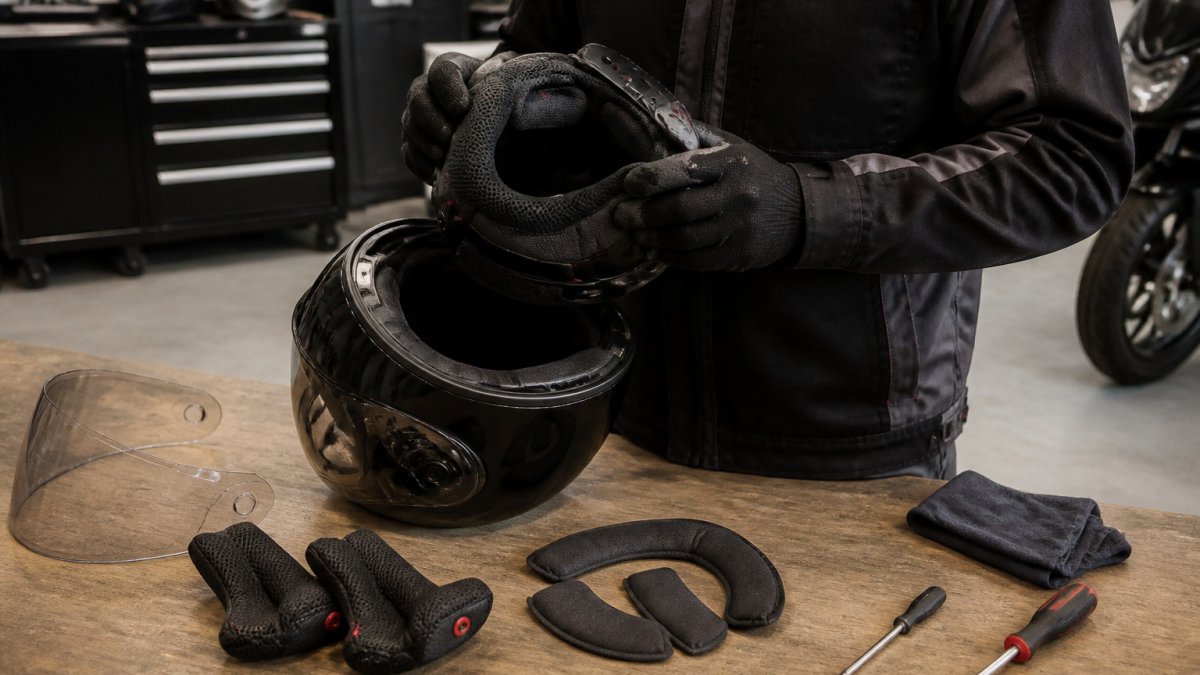
Follow these steps to swap the liner:
- Pull the old liner out gently from the shell, starting at the crown.
- Note how the snaps, tabs, or velcro attach.
- Line up the new liner with the same attachment points.
- Press it into place and check that it sits flat with no bunching.
- Put the helmet on and adjust the fit before your ride.
For cheek pads, a dedicated guide can help you choose the right thickness. You can read the Cheekpad Liner Guide for more detail on fit and fitting.
When to Replace a Motorcycle Helmet Instead of Just the Padding
Swapping the padding works well when the shell is still sound and the fit is good. Replacing the entire helmet is the right call in other cases.
Replace the whole helmet if:
- It has taken any impact, even if no damage is visible
- The shell has cracks, deep scratches, or soft spots
- The helmet is older than the manufacturer recommends
- The fit has changed and no padding fixes it
Guidance on how often to replace a full helmet is covered in How Often to Replace Motorcycle Helmet, which explains the timing in more detail.
Choosing Replacement Padding for Your Helmet Shell
Choosing the right replacement starts with your helmet's exact model. Match the part number or model name, and confirm compatibility before buying. Thickness options exist on some helmets, so you can fine-tune the fit for your head shape.
The TYPE-P CENTER PAD SET is a replacement center pad set for compatible SHOEI helmet models. If you need a full liner, you can browse the complete range of Helmet Liners to compare options for your helmet.
Here is a quick guide to replacement options:
| Padding Type | Best For | Replace When |
|---|---|---|
| Full liner | Complete interior refresh | Fit or hygiene declines |
| Center pad set | Central comfort and fit | Padding flattens or smells |
| Cheek pads | Side fit and comfort | Cheeks feel loose or compressed |
Once you have the right padding, keep it clean and dry, check it every few months, and replace it when it wears out.
Frequently Asked Questions
How often should you change helmet padding?
Padding should be replaced when it shows compression, odor that does not wash out, or loose fit. Frequent riders in hot, humid, or dusty conditions tend to wear padding out faster than occasional riders. Check the padding every few months, press on it to see whether it springs back, and remove it to clean it regularly. Replacement liners for Shoei helmets, such as the Type-P Center Pad Set, are sold with a 4-year warranty and are priced at $97.99.
Does washing helmet padding make it wear out faster?
Gentle hand washing with mild soap and cool water, followed by air drying away from direct sunlight, does not meaningfully shorten padding life. Heat from machine dryers, harsh detergents, and soaking can break down adhesives and foam. Removable, washable liners like the AGV K3 Helmet Liner, priced at $37.00, are designed for regular cleaning, so following the manufacturer's care instructions is the safest approach.
Can worn helmet padding affect helmet fit and safety?
Yes. Compressed or uneven padding can shift the helmet on your head, which may leave gaps that allow it to move during a crash. A helmet that rocks side to side or rides up on the forehead should be checked. Comfort padding and impact-absorbing EPS foam serve different purposes, so padding replacement should never be treated as a substitute for inspecting the shell and foam for damage.
When should you replace a motorcycle helmet after a crash?
Replace the helmet after any significant impact, even if no damage is visible, because the EPS foam may have compressed in ways you cannot see. Many manufacturers recommend replacement after any crash. Replacing only the padding after a crash does not restore the helmet's protective performance. Check your helmet manufacturer's guidance and inspect the shell and liner before deciding whether to keep using it.


